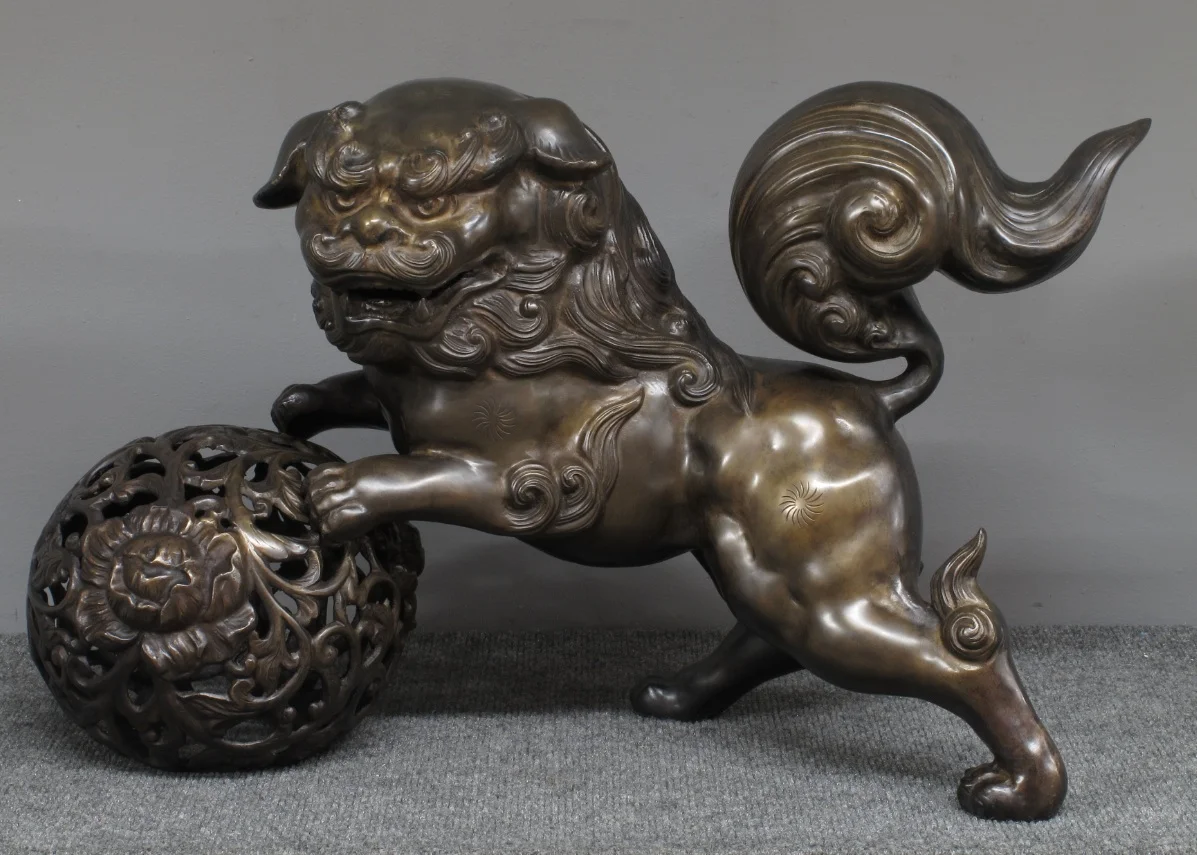
Traditional Chinese culture places strong emphasis on happiness and good fortune. The character 福, which is pronounced “Fú,” is frequently associated with Chinese New Year and can be seen mounted on the entrances of many Chinese households worldwide. However, luck wasn’t on Mary Ellen Hall’s side when disaster struck her house last spring—which damaged many of her cherished belongings, including a bronze “Foo Dog” she had acquired through an antiques dealer. Fortunately, The Conservation Center was able to save this family treasure.
The Conservation Center Responds to a Stormy Spring
Blue skies and warmer temperatures had giddy Midwesterners basking in sunshine lately after one of the cruelest winters in recent memory. But spring has also brought stormy weather to the Chicago area, and mother nature unleashed a different kind of misery on local residents: flooding. Many Midwestern cities, including Chicago, have been on guard for excess water that lead to issues such as clogged storm drains. The Conservation Center's Disaster Response team is once again on the ground, reacting to many emergency incidents that have affected personal collections. On a recent triage, more than 15 Conservation Center staff members collaborated to save hundreds of family heirlooms from water damage.
Profile: The Conservation Center's Disaster Response Team
With 34 days of measurable snow and a record number of sub-zero temperatures, winter has been unbearably harsh this year in the Midwest. Glacial conditions have set the stage for broken pipes, floods, and fires. Consequently, The Conservation Center's stellar Shipping and Installation team has endured a hectic and demanding schedule lately providing disaster relief services. With winter finally slowing down and spring (hopefully) approaching, we caught up with Paul Kirk, The Center's Director of Transportation and Operations, in which he shared his team's experiences, challenges, and accomplishments during the past few months.
Saving de Kooning and Picasso Paintings from Rising Flood Waters
Corporate Collections and The Center
Whether a corporation’s art collection is a curated investment, a donation from an art-loving CEO, an act of community connection, or a trove of archival material, keeping it in good condition requires the knowledge of experts. The Conservation Center has a long history of caring for corporate art holdings in four categories: disaster response, re-housing, storage, and display.
A Portrait with a Problem
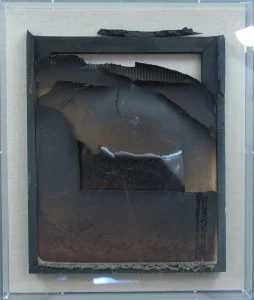
This portrait was one of a series of artworks brought to The Center after a destructive home fire. The painting showed signs of severe fire-related damage: the
ordeal left a heavy, dark layer of oily and acidic soot on the surface, obscuring the painted surface completely. Additionally, the stretcher had been charred, and undulations were present throughout the canvas.
Veterans Memorial Museum
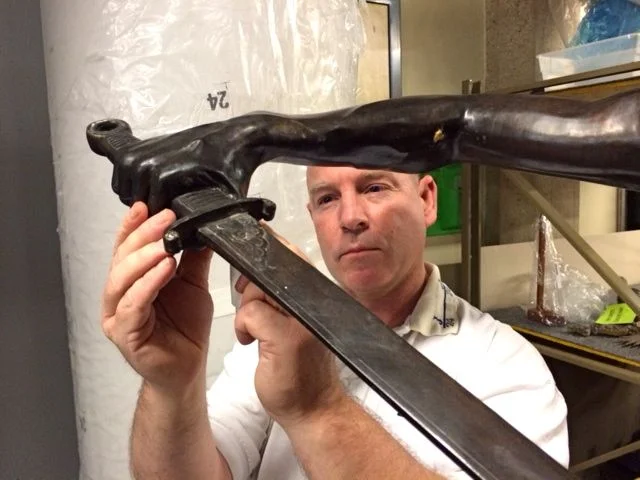
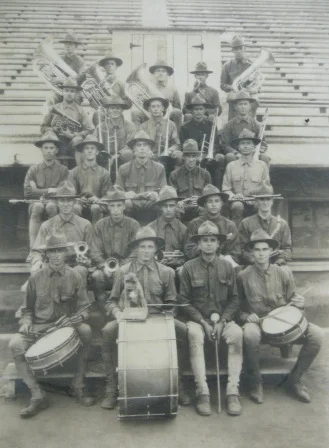
Each time The Chicago Conservation Center is involved in a disaster relief situation, be it small or large, we are presented with new challenges in art handling and conservation. The Veterans Memorial Museum in Cedar Rapids, Iowa proved to be one of those situations in which ingenuity and quick-thinking was required to save their collection from the recent flooding of the Cedar River. In less than two days, and with crucial help of local volunteers lead by Michael Jager of Cedar Rapids, The Center’s Disaster Response Team was able to inventory and pack the entire collection of 425 military artifacts housed in the now toxic environment.
The National Czech and Slovak Museum and Library
As a consequence of the massive flooding of the Cedar and Iowa rivers that occurred in Iowa last June, The National Czech and Slovak Museum and Library in Cedar Rapids was surrounded by 15 feet of water, well above any historical level. As soon as the water started to recede and the building was safe to enter, The Conservation Center sent a five person disaster response team to assess and recover the textile collection that was located on the first floor of the museum and thus totally immersed during the flood. This portion of the textile collection encompassed approximately 1,000 traditional Czech and Slovak costumes and garments, many with detailed colored embroidery, glass beading and metallic thread decorations.