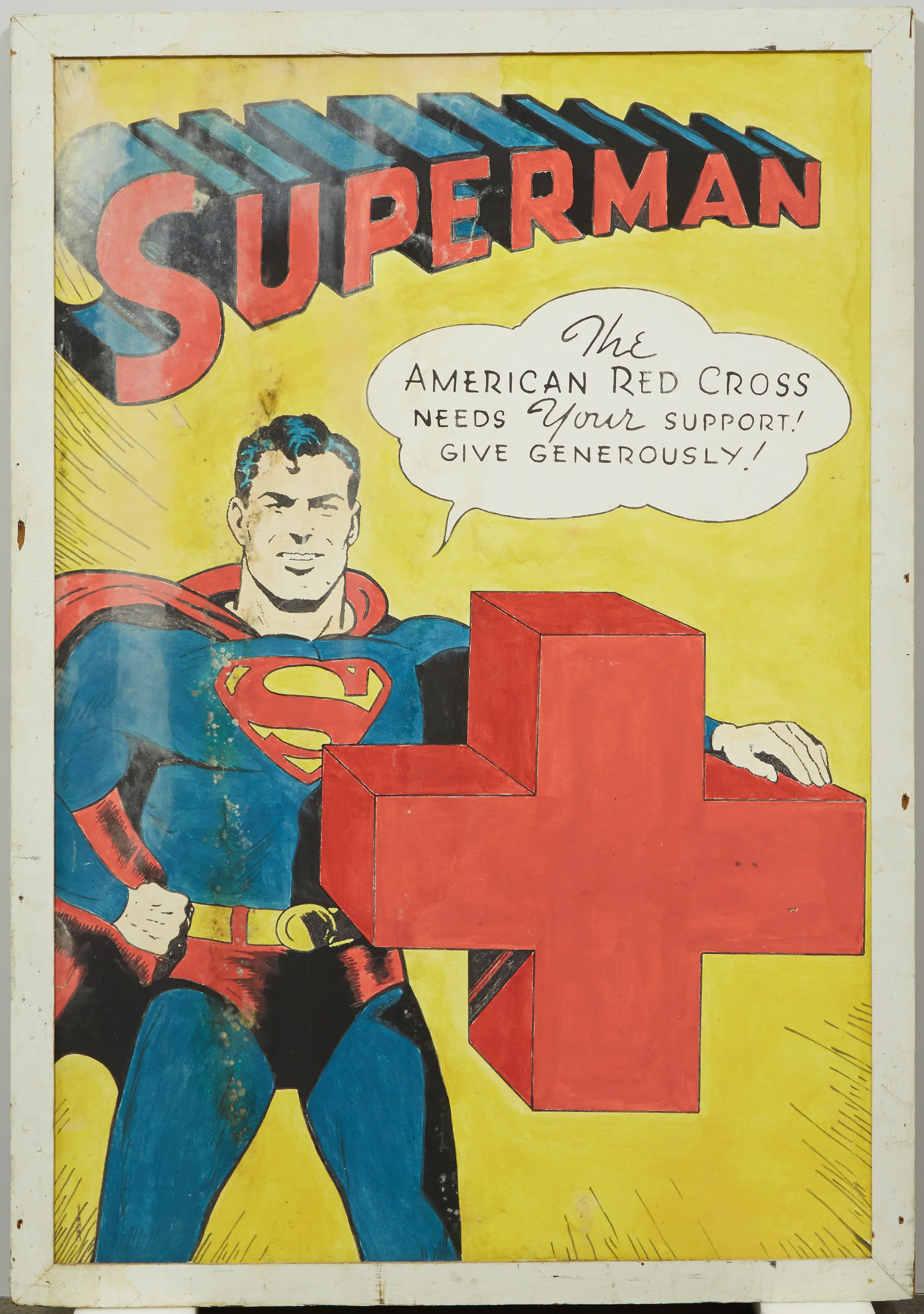
When Joe went down into the basement of his girlfriend’s house to repair a leaking pipe, he would have never guessed that within hours he would be at The Conservation Center’s doors with a striking, but severely deteriorated, painting of Superman in hand. It was wet, stained, moldy, and even had insects living behind the frame. Fortunately, The Center’s team was at the ready to stop this kryptonite before it could do its worst.
Preserving "Regulations for the Army of the United States, 1913"
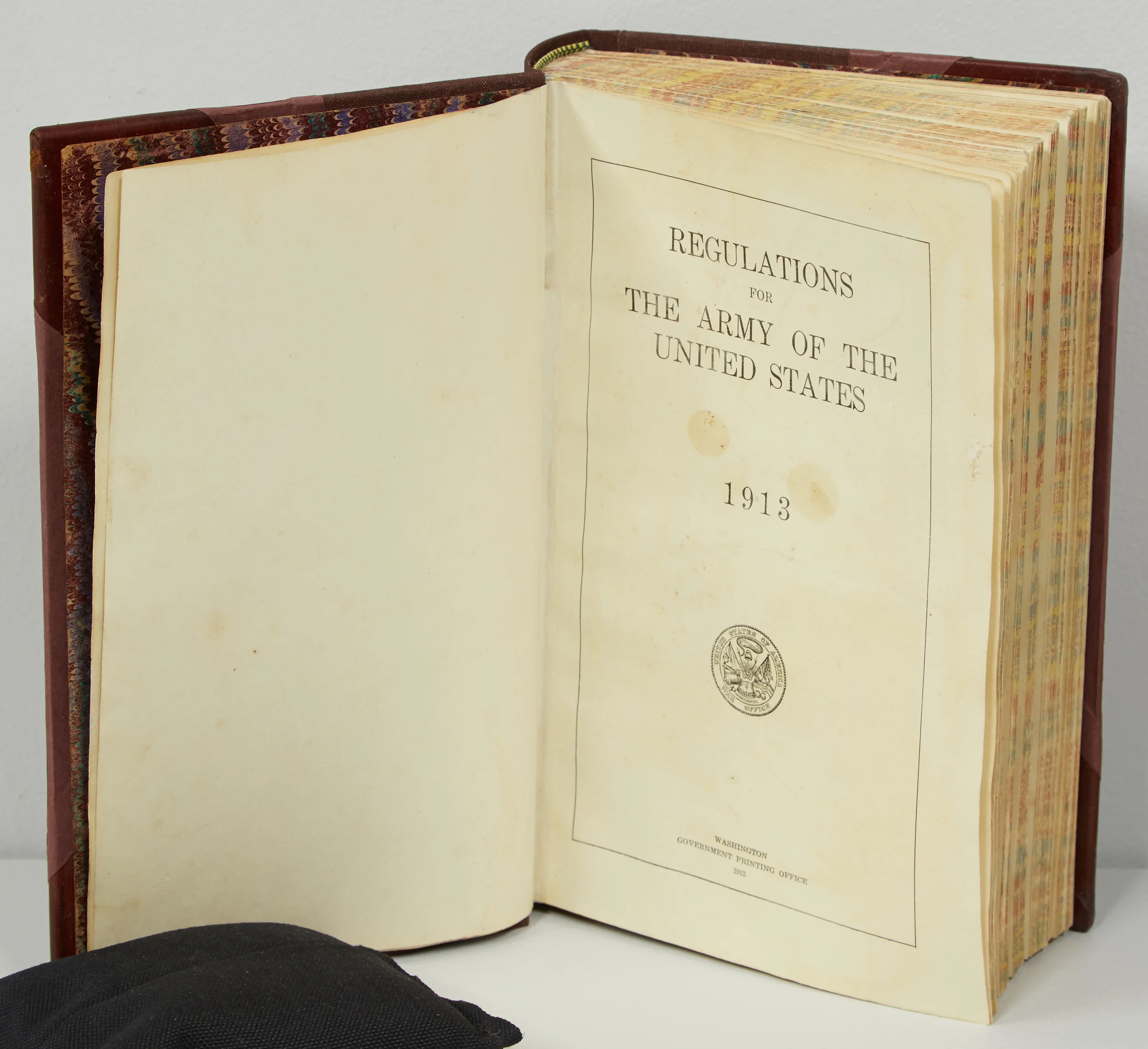
The Conservation Center recently had the pleasure of working with Bill Hartel to treat “Regulations for the Army of the United States,” a 1913 U.S. Army military handbook.
Bill is an avid collector of rare books and acquires those that, in his opinion, “changed the world.” Highlights of his collection include a 1776 British first edition of Thomas Paine’s “Common Sense,” complete with handwritten defamatory comments about King George, and “Round the Moon” by Jules Verne, circa 1895, signed by the commander of the first actual voyage around the moon, Frank Borman. Bill is also an author and published the Chicago Tribune Best Seller “A Day at the Park” about Wrigley Field. Given the depth of his collection, a well-worn copy of an army handbook with a missing leather spine, fragile textblock, and water damage may seem like an anomaly. However, the book’s value lies in the role it played during a difficult time in Bill’s life.
Conserving an 1100-Year Old Codex: Part Two
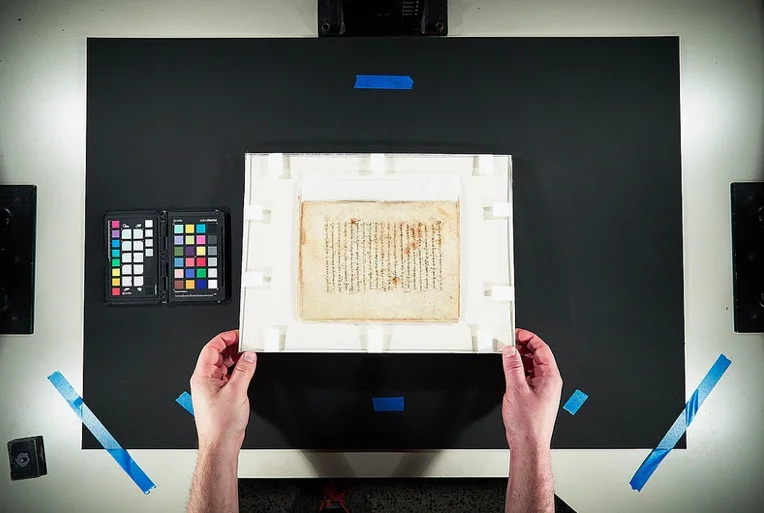
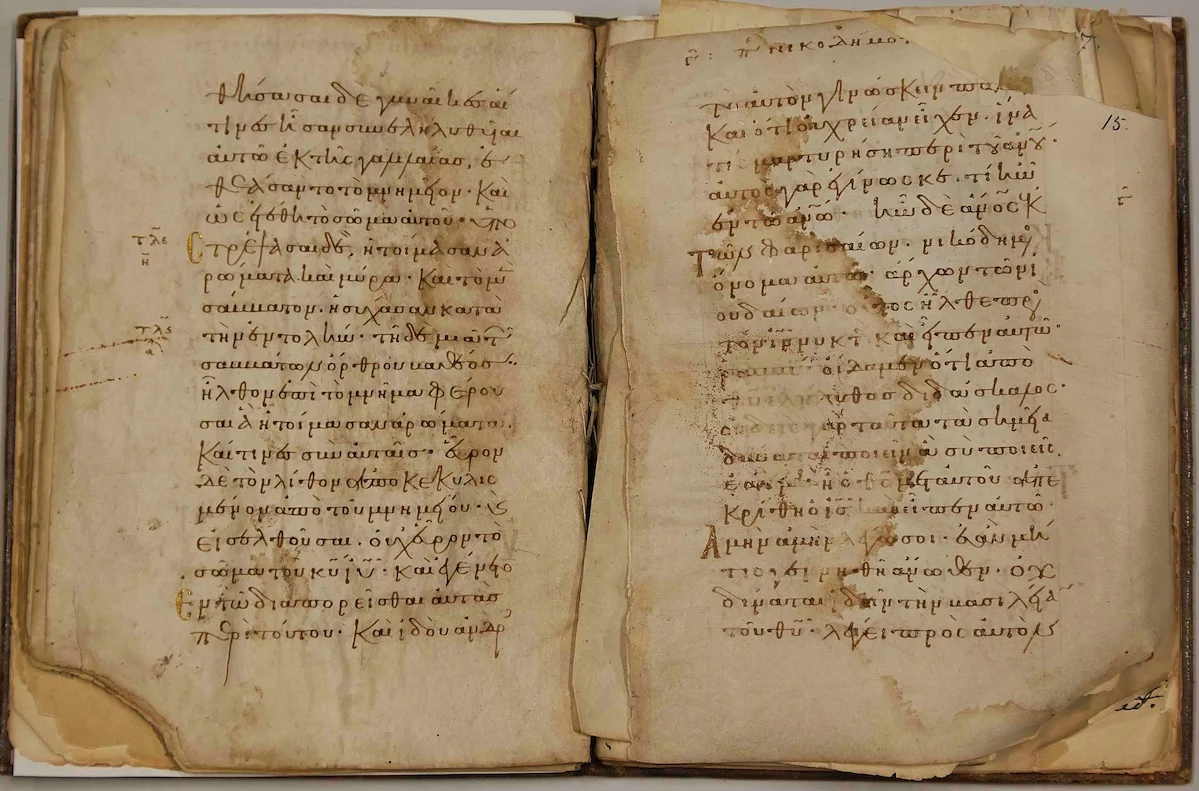
Readers of our newsletter may remember a story that was published in December 2014 about a 10th century Greek Codex we had received from The Center for Adventist Research at Andrews University in Michigan. The Conservation Center was proud to be given the assignment of conserving this precious work. The codex—a rare book containing portions of the Gospels According to Luke and John—was crafted on pages of parchment, written in iron gall ink, containing decoration in gold leaf and bound in leather. Our paper and rare books conservators joined forces and poured many hours of hard work into assessing the damage and researching the appropriate treatment solutions. Additionally, a treatment plan was designed and implemented, to protect this rare volume from further damage in the future.
Conserving a Modern Mural for a Jewish Temple
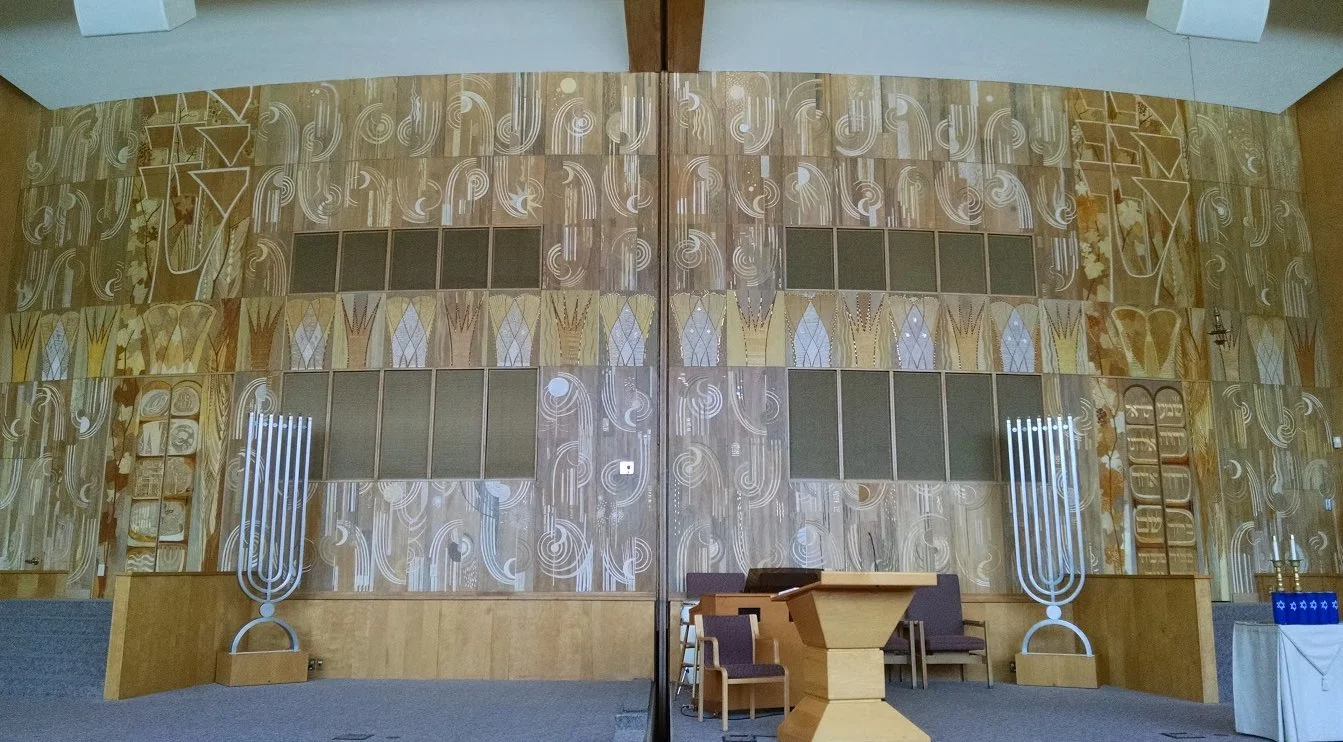
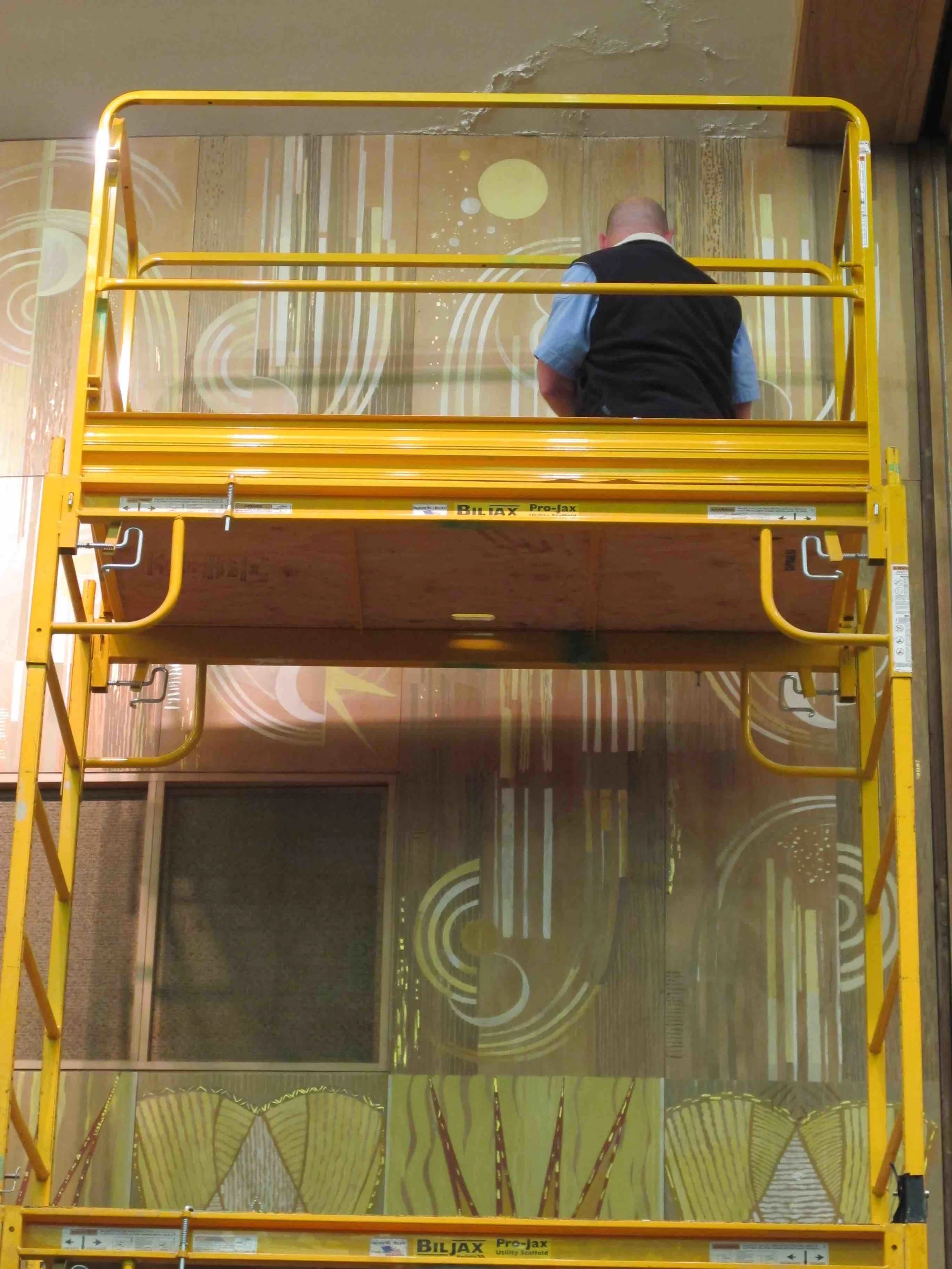
In honor of Pesach (Passover) earlier this month, we’re highlighting a major conservation treatment for Temple Emanuel, located in Grand Rapids, Michigan. The Conservation Center’s team worked tirelessly on-site and in our laboratories to help restore a massive 1,000 square-foot mural that covered the entire expanse of the rear wall of the synagogue. Painted on multiple lightweight wood panels by the Swiss-born American artist Lucienne Bloch (1909–1999), this modern mural stands as a testament to a dynamic time in religious architecture that aimed to keep up with societal trends in art and construction.
Slide Show: Deinstalling and Examining Lucienne Bloch's Epic Mural
In 2012, significant leaking from the roof caused severe water damage of the plywood panels, causing extreme warping, staining, and delamination of the veneers from the panels. The mural itself, which was painted using water-soluble paints (something similar to gouache), started to drip down across the panels as soon as water entered the space. Devastated, Temple Emanuel contacted The Conservation Center to perform an on-site assessment to best determine how to conserve Bloch’s work. Years of constant use and handling of the doors and tracks around the mural had also caused issues beyond the water damage—fingerprints had darkened and smudged areas of the paint, to the extent that there were significant losses that needed to be addressed. There was also a thin layer of grime that needed to be removed from the panels. However, because of the nature of the paint used, most methods of cleaning would strip away the design. Eventually, six panels came back to The Center’s lab in Chicago to undergo treatment.
Saving A 10th Century Greek Codex From Water Damage
After more than three decades of preserving fine art and heirlooms at The Conservation Center, we now have an impressive answer to one of the most the frequently asked questions by our clients and visitors: “What is the oldest piece that The Center has ever conserved?” Recently, a 10th century Greek Codex—which contains portions of the New Testament Gospels of Luke and John—arrived at our conservation lab, and we, admittedly, are truly impressed. This rare book belongs to Andrews University in Berrien Springs, Michigan, a Bible-based university supported by Seventh-day Adventist Church.
Conservation and Restoration of the Chevy Chase Sideboard
At the time of Hurricane Katrina, the Chevy Chase Sideboard lay in a warehouse, broken down for shipment and secured on pallets, awaiting transportation north. This journey was scheduled to occur in mere days when the contents of the entire building were inundated by a flood that swamped the entire Ninth Ward, as well as most of the city of New Orleans.