
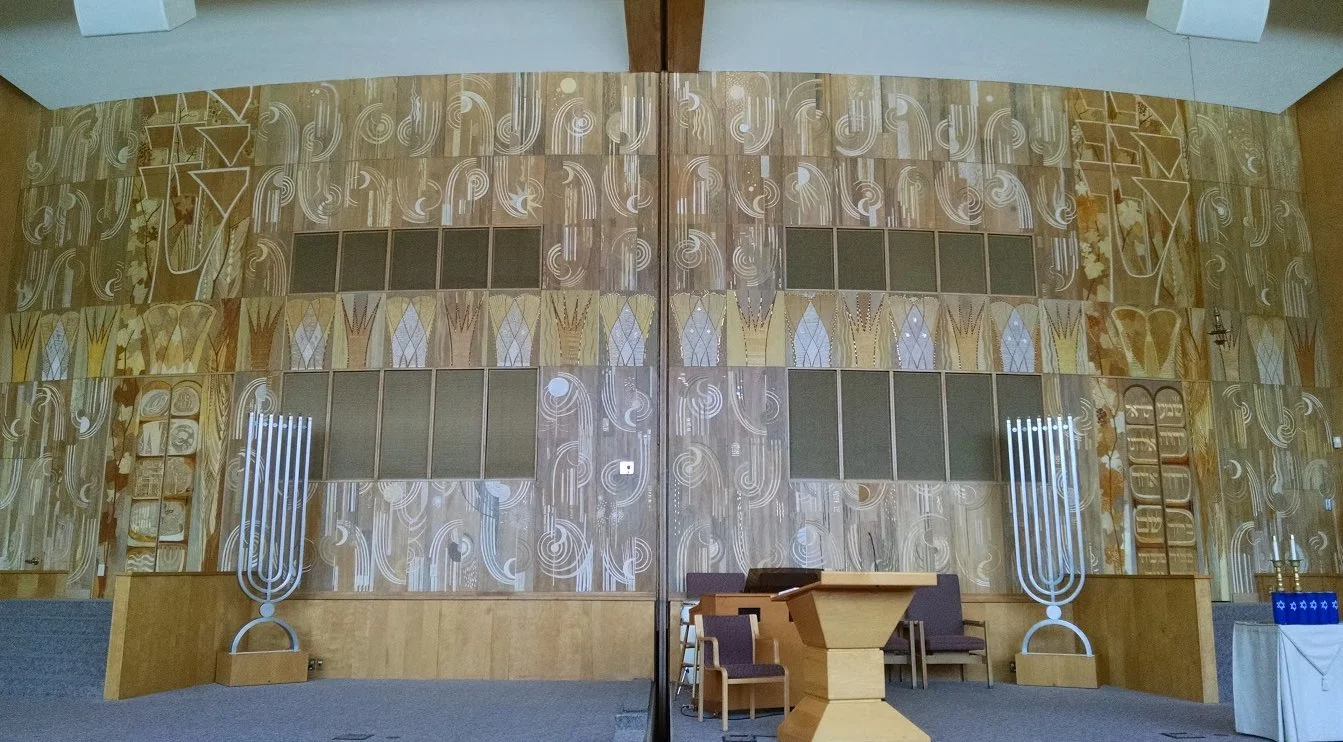
In honor of Pesach (Passover) earlier this month, we’re highlighting a major conservation treatment for Temple Emanuel, located in Grand Rapids, Michigan. The Conservation Center’s team worked tirelessly on-site and in our laboratories to help restore a massive 1,000 square-foot mural that covered the entire expanse of the rear wall of the synagogue. Painted on multiple lightweight wood panels by the Swiss-born American artist Lucienne Bloch (1909–1999), this modern mural stands as a testament to a dynamic time in religious architecture that aimed to keep up with societal trends in art and construction.
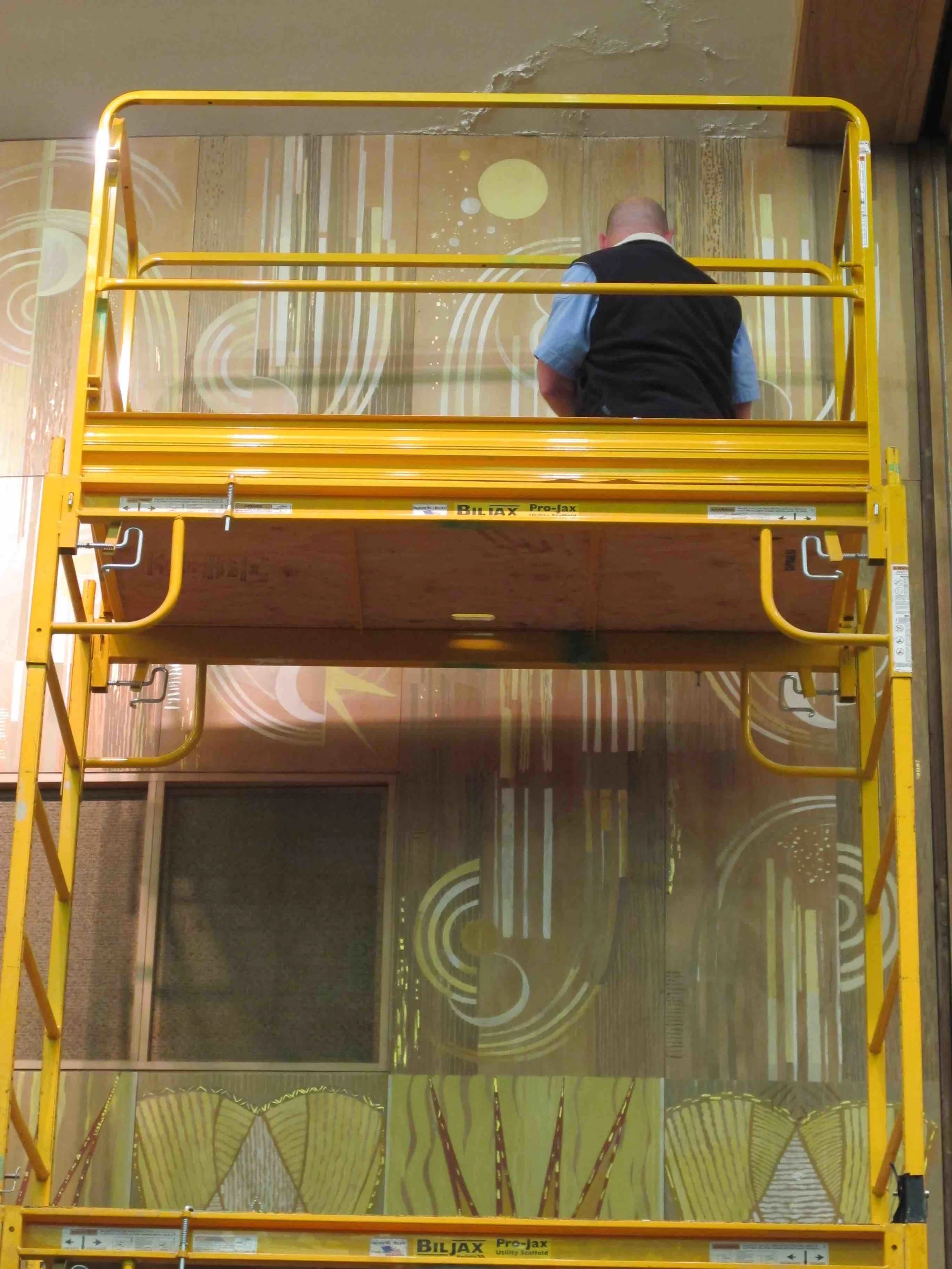
Slide Show: Deinstalling and Examining Lucienne Bloch's Epic Mural
In 2012, significant leaking from the roof caused severe water damage of the plywood panels, causing extreme warping, staining, and delamination of the veneers from the panels. The mural itself, which was painted using water-soluble paints (something similar to gouache), started to drip down across the panels as soon as water entered the space. Devastated, Temple Emanuel contacted The Conservation Center to perform an on-site assessment to best determine how to conserve Bloch’s work. Years of constant use and handling of the doors and tracks around the mural had also caused issues beyond the water damage—fingerprints had darkened and smudged areas of the paint, to the extent that there were significant losses that needed to be addressed. There was also a thin layer of grime that needed to be removed from the panels. However, because of the nature of the paint used, most methods of cleaning would strip away the design. Eventually, six panels came back to The Center’s lab in Chicago to undergo treatment.


