Veterans

Yosegaki Hinomaru: The Good Luck Flag

Yosegaki Hinomaru: The Good Luck Flag

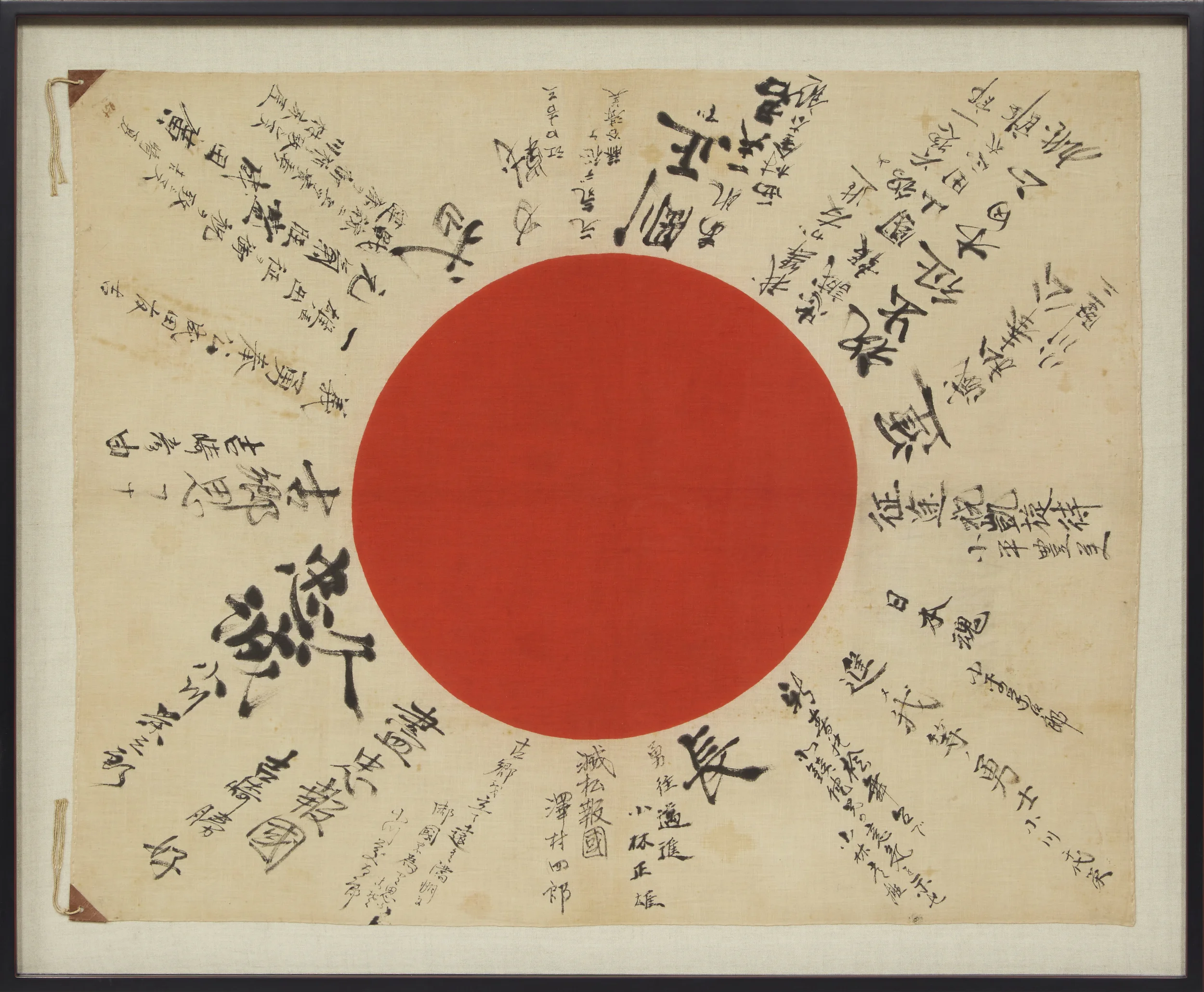
Made of delicate fibers, folded, and carried in the pockets of soldiers, Japanese “good luck flags”, commonly known in Japan as yosegaki hinomaru, were parting gifts for soldiers deployed into battle. These flags are evidence of a long standing tradition among Japanese servicemen. The Japanese National Flag, commonly known in Japan as hinomaru, was used to facilitate these messages of prayers and well-wishes from loved ones, so that the soldier could endure the difficult times ahead; yosegaki, refers to the gathered writing, often inscribed in a pattern radiating from the center of the flag.  A yosegaki hinomaru experienced only a fraction of the harrowing perils of war experienced by the soldiers who carried them to the front lines. It is remarkable that these flags have survived to continue the story of the soldiers who brought them into battle. 
Preserving "Regulations for the Army of the United States, 1913"

Preserving "Regulations for the Army of the United States, 1913"

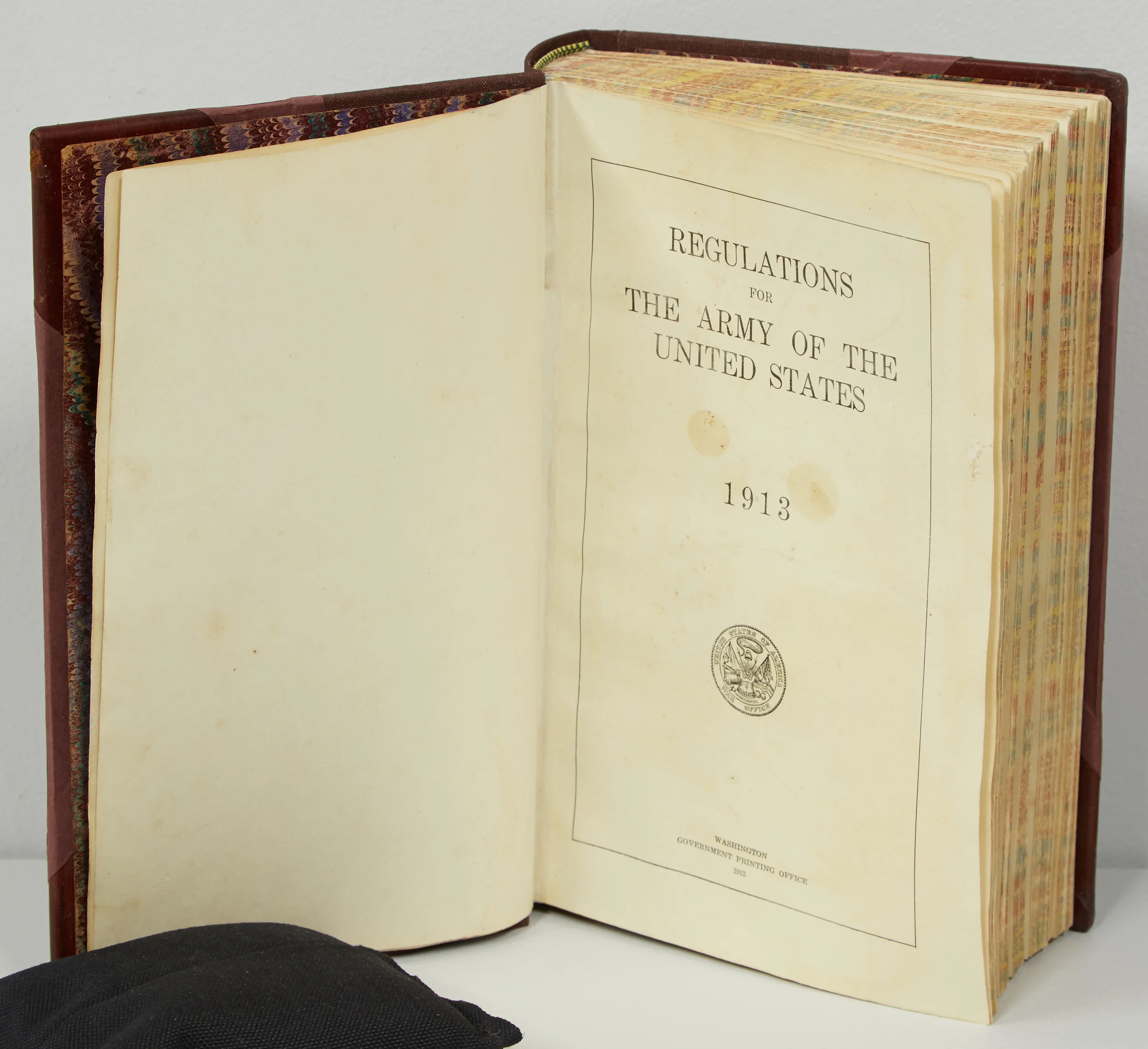
The Conservation Center recently had the pleasure of working with Bill Hartel to treat “Regulations for the Army of the United States,” a 1913 U.S. Army military handbook.


Bill is an avid collector of rare books and acquires those that, in his opinion, “changed the world.” Highlights of his collection include a 1776 British first edition of Thomas Paine’s “Common Sense,” complete with handwritten defamatory comments about King George, and “Round the Moon” by Jules Verne, circa 1895, signed by the commander of the first actual voyage around the moon, Frank Borman. Bill is also an author and published the Chicago Tribune Best Seller “A Day at the Park” about Wrigley Field. Given the depth of his collection, a well-worn copy of an army handbook with a missing leather spine, fragile textblock, and water damage may seem like an anomaly. However, the book’s value lies in the role it played during a difficult time in Bill’s life.

How Photo Conservation and Digital Restoration Reawakened a Family's History

How Photo Conservation and Digital Restoration Reawakened a Family's History

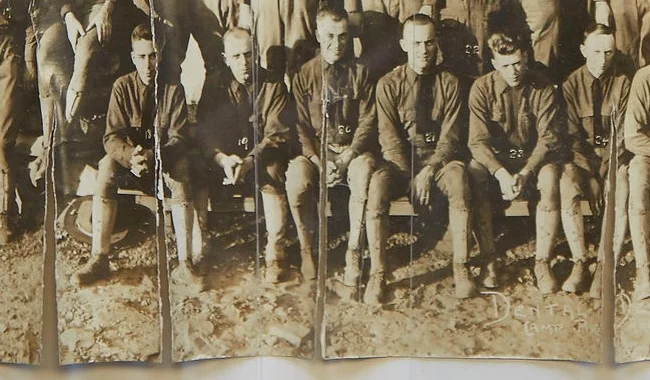
For most people, the top drawers of their bedroom dressers are reserved for mismatched socks, so it was a delightful surprise for Rick Eisenstein to find a 97-year-old photograph rolled up in his father's old dresser drawer. "When he was in the hospital, I was looking for some clothes to take to him and came across this rolled up picture," Rick explained. "His parents were very important to him--with that being said, he was not a very sentimental person and kept very few things from his younger days." This photograph, however was special: his father kept it for nearly 60 years. Rick made a decision to bring the picture to The Conservation Center for examination and conservation.

From Russia With Love: Portrait of a Military Officer

From Russia With Love: Portrait of a Military Officer

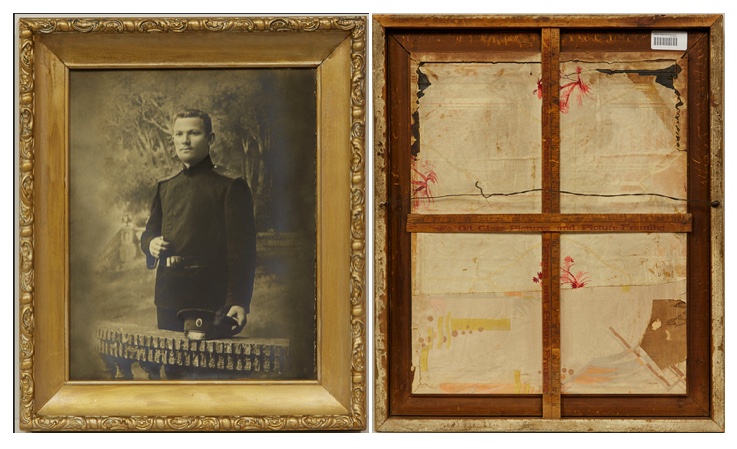
“This is an important piece of our family history,” commented Cindy Egoroff Alexander while discussing a portrait of her grandfather, Emil Egoroff. Cindy and her family recently entrusted The Conservation Center to treat and reframe a black and white photograph of Emil. “We know very little of our grandfather’s life in Russia,” she explained, emphasizing how precious the few details they uncovered were to understanding and remembering her family’s past. Cindy graciously shared the history passed down through the family with our team, shedding light on the story behind this handsome portrait.

Veterans Memorial Museum

Veterans Memorial Museum

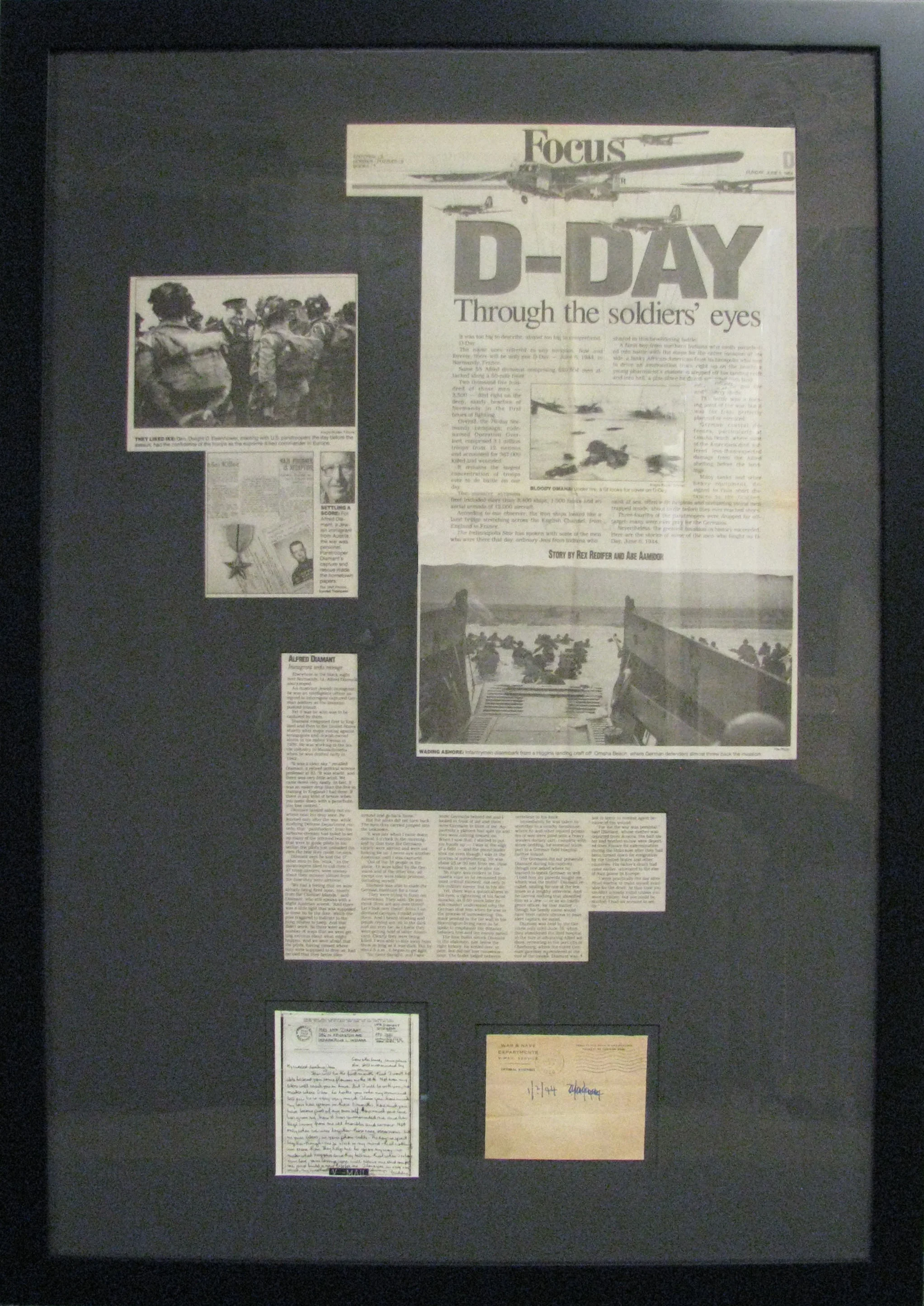
Each time The Chicago Conservation Center is involved in a disaster relief situation, be it small or large, we are presented with new challenges in art handling and conservation. The Veterans Memorial Museum in Cedar Rapids, Iowa proved to be one of those situations in which ingenuity and quick-thinking was required to save their collection from the recent flooding of the Cedar River. In less than two days, and with crucial help of local volunteers lead by Michael Jager of Cedar Rapids, The Center’s Disaster Response Team was able to inventory and pack the entire collection of 425 military artifacts housed in the now toxic environment.

CONTACT US
312.944.5401