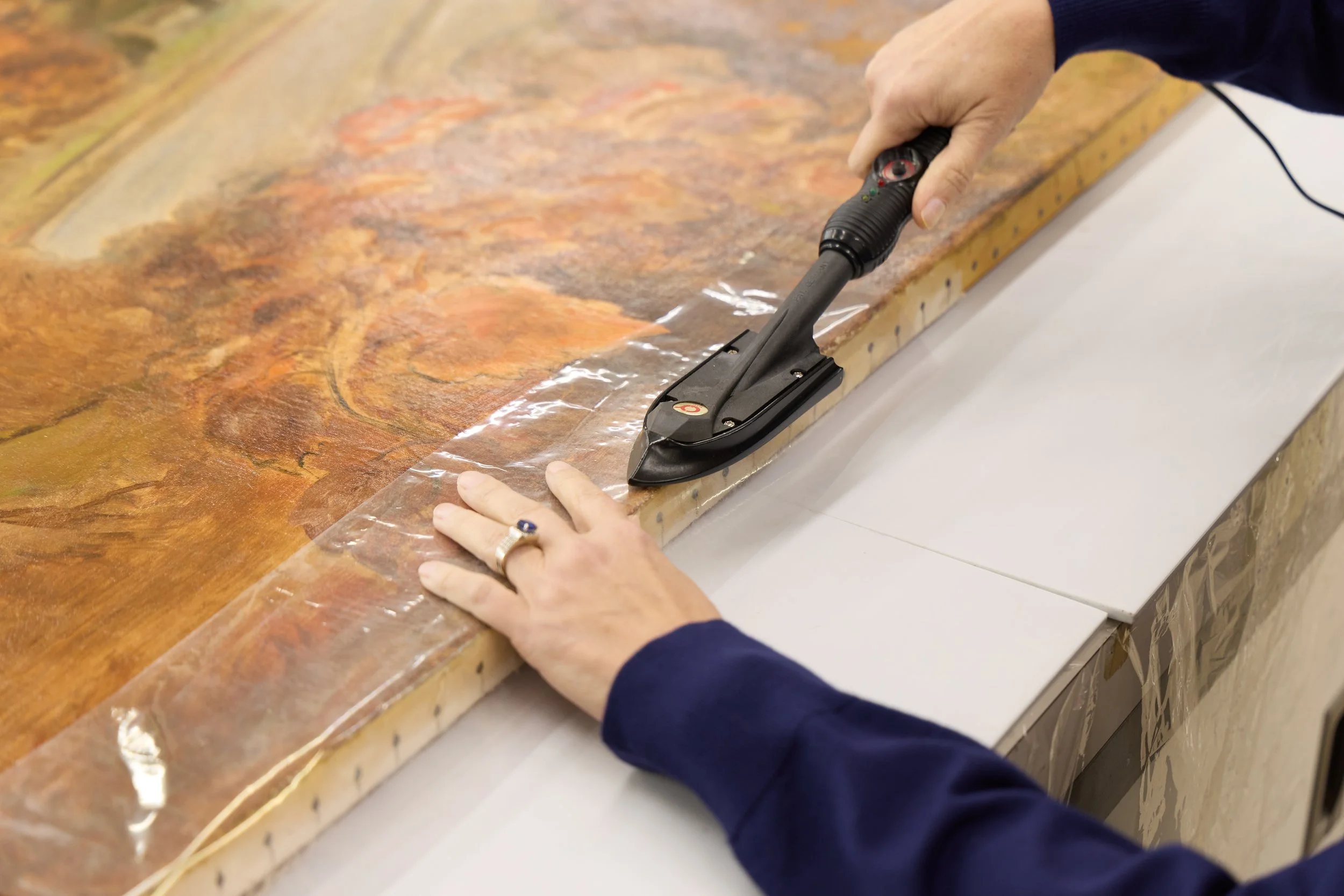
We recently had the honor of treating a painting titled Madison Landscape by John Steuart Curry from the Madison Museum of Contemporary Art ; the painting is part of MMoCA’s permanent collection and will be featured in their upcoming exhibition A Broad Sweep of Sky, which explores how Regionalist artists of the 1930s and 1940s helped define a distinctly American, place-based visual identity.
Talking about Revolution: Treating a 1740 War Drum
The power of the drum is rooted in its ability to send messages. With the constant tempo of warriors' feet beating on the ground, it summons allies and beats back enemies with the same force. It can be used as an instrument of war or peace, a companion to dance and celebration. During the Revolutionary War, the drum played a vital role in conveying messages, persuading troops to fight, and boosting morale.
The Glessner House Piece
Last month we had the pleasure of hosting a private tour of our conservation laboratory and warehouse in collaboration with the Glessner House Museum. The museum previously brought us a ceramic piece from their collection that had shattered. When the tour came through in the first week of the month, the group was fortunately able to see the piece mid-treatment.
Preserving a Vintage Barber Pole
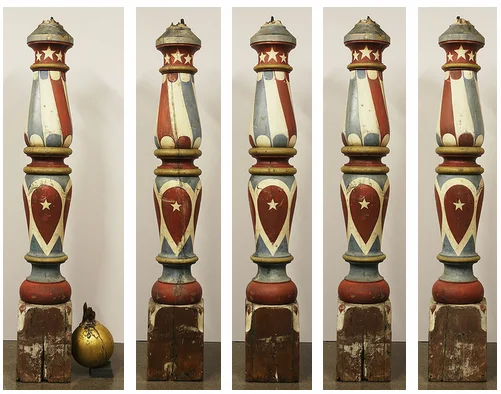
In preparation for a new exhibition entitled By All Accounts: The Story of Elmhurst, The Conservation Center recently joined forces with the Elmhurst Historical Museum to help get a few artifacts in its archives in tip-top shape. This innovative exhibit contains numerous photographs, artifacts, art objects, and informational materials from the last 165 years showcasing the growth and development of Elmhurst, a Chicago suburb. After an on-site assessment at the museum, The Center identified a few objects that needed our conservation team's attention--notably a vintage barber pole, dated from the turn of the 19th century. Presumed to be from a local barbershop, the all-wood, painted barber pole was found in a local resident's barn, and came to the museum by way of a donation in 1983.

Holy Kreuzer Konigsberg! Conserving a Lilliputian Battleship Model
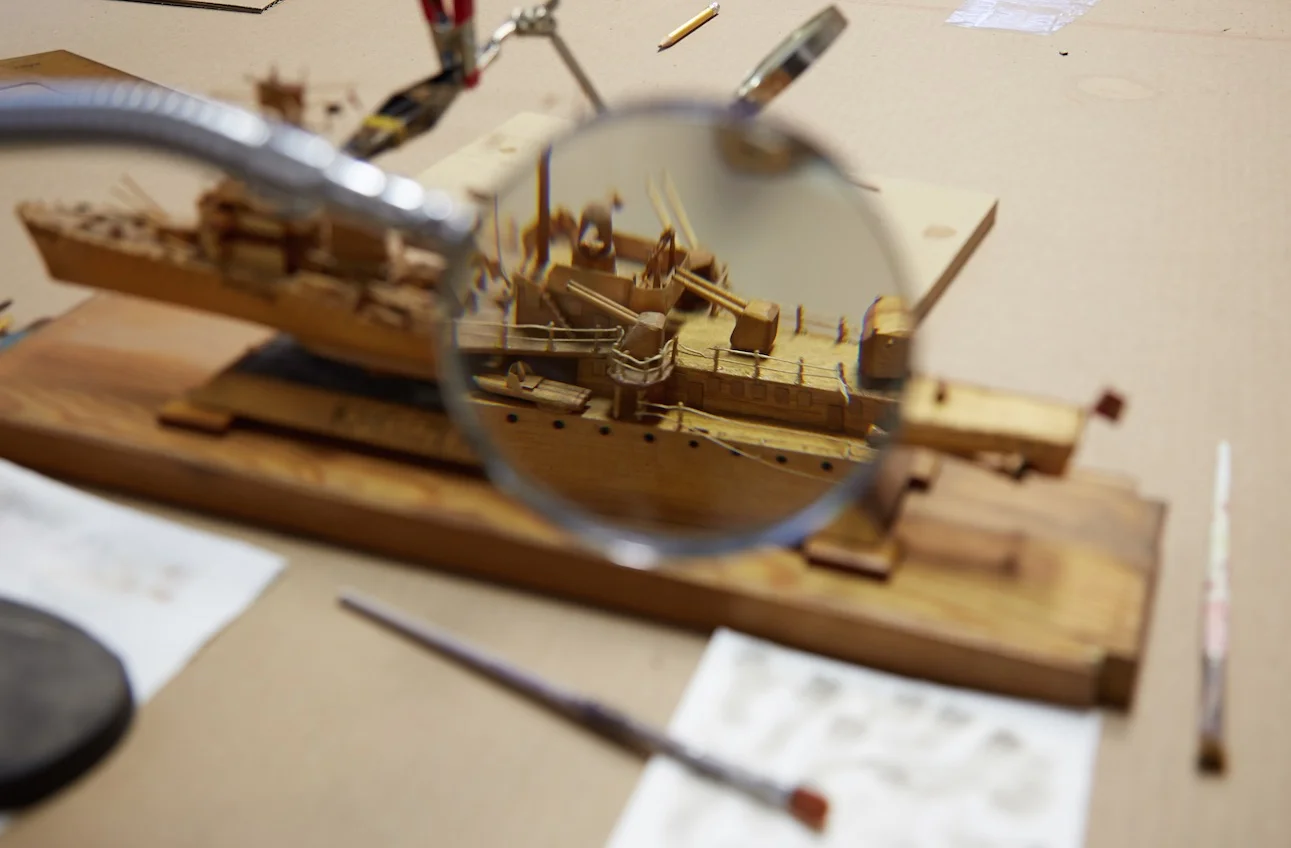
Whether massive in size or delicate in material, many projects taken on by The Conservation Center pose unique challenges for our team of expert conservators. Recently, the Robert R. McCormick Museum located in Wheaton, Illinois, brought us a curious object from its collection: a wooden model replica of a naval cruiser named the Kreuzer Konigsberg, commissioned during the WWII era. The amount of detail and veracity in the ship’s execution is staggering. However, upon closer examination, the model—which measures a miniscule 15” wide, 3” depth, 6” high—was found to be in poor condition, with broken segments throughout and worthy of a thorough cleaning and treatment effort.
EXPO CHICAGO/2014 Highlight: Charles Cressent Boulle Clock
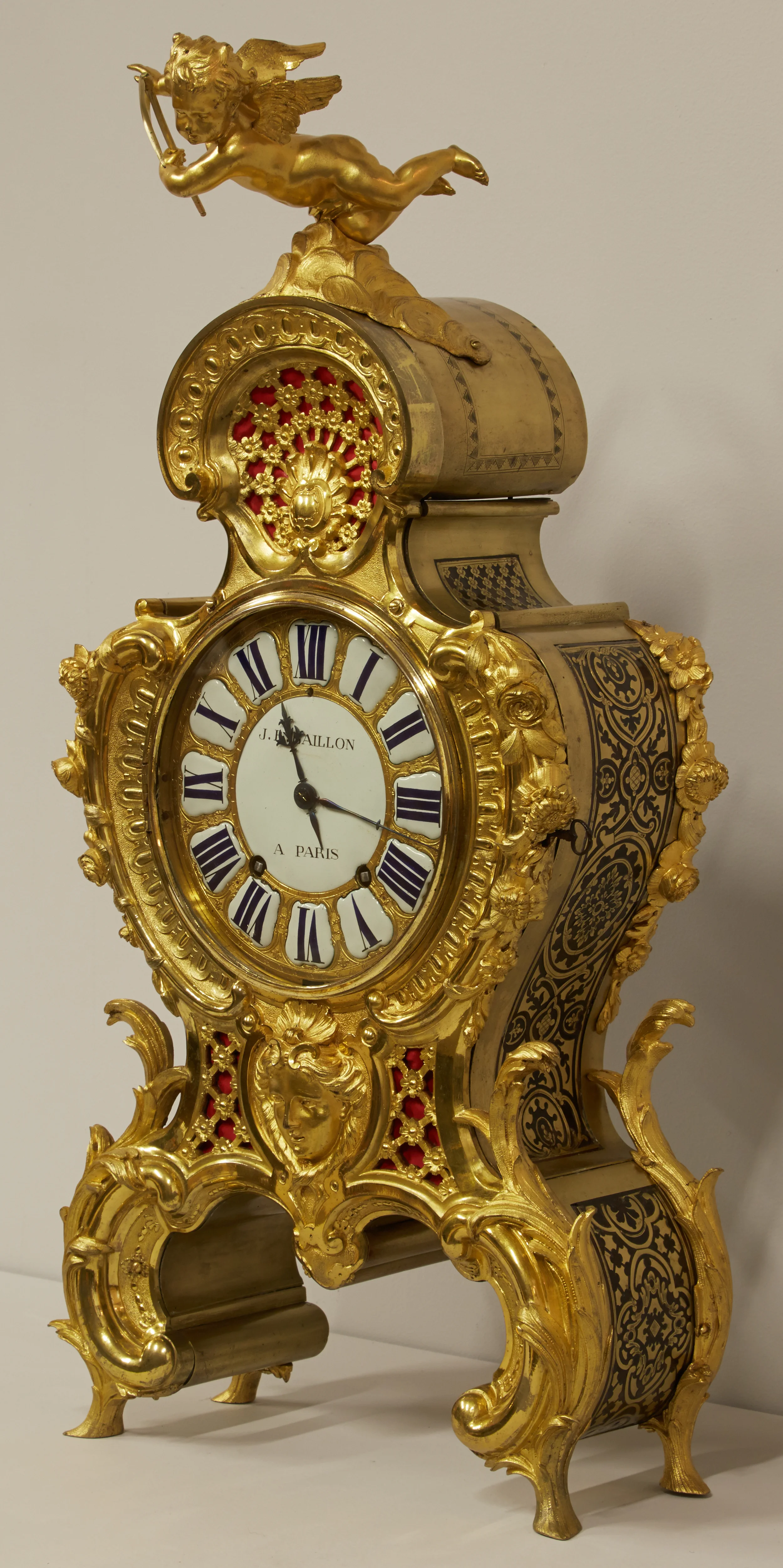
The Cressent Boulle Clock is on view at The Conservation Center's Pop-Up Lab @ EXPO CHICAGO/2014 (Booth 113) from September 18–21.
Charles Cressent (1685-1768) was a descendant of a family of furniture makers and talented sculptors. As a pupil of André Charles Boulle (1642–1732)—the French cabinetmaker who is generally considered to be the preeminent artist in the field of marquetry—Cressent's work is characteristic of the Rococo period with adornments of feminine figures and motifs, floral Arabesques, and exotic animals. To combine the gilt-bronze elements of his unique style and to ensure the quality of his mounts, Cressent broke the rules of the French guild system and was prosecuted for practicing two professions in the same workshop—cabinetmaking and gilding.
Veterans Memorial Museum
Each time The Chicago Conservation Center is involved in a disaster relief situation, be it small or large, we are presented with new challenges in art handling and conservation. The Veterans Memorial Museum in Cedar Rapids, Iowa proved to be one of those situations in which ingenuity and quick-thinking was required to save their collection from the recent flooding of the Cedar River. In less than two days, and with crucial help of local volunteers lead by Michael Jager of Cedar Rapids, The Center’s Disaster Response Team was able to inventory and pack the entire collection of 425 military artifacts housed in the now toxic environment.
The National Czech and Slovak Museum and Library
As a consequence of the massive flooding of the Cedar and Iowa rivers that occurred in Iowa last June, The National Czech and Slovak Museum and Library in Cedar Rapids was surrounded by 15 feet of water, well above any historical level. As soon as the water started to recede and the building was safe to enter, The Conservation Center sent a five person disaster response team to assess and recover the textile collection that was located on the first floor of the museum and thus totally immersed during the flood. This portion of the textile collection encompassed approximately 1,000 traditional Czech and Slovak costumes and garments, many with detailed colored embroidery, glass beading and metallic thread decorations.