
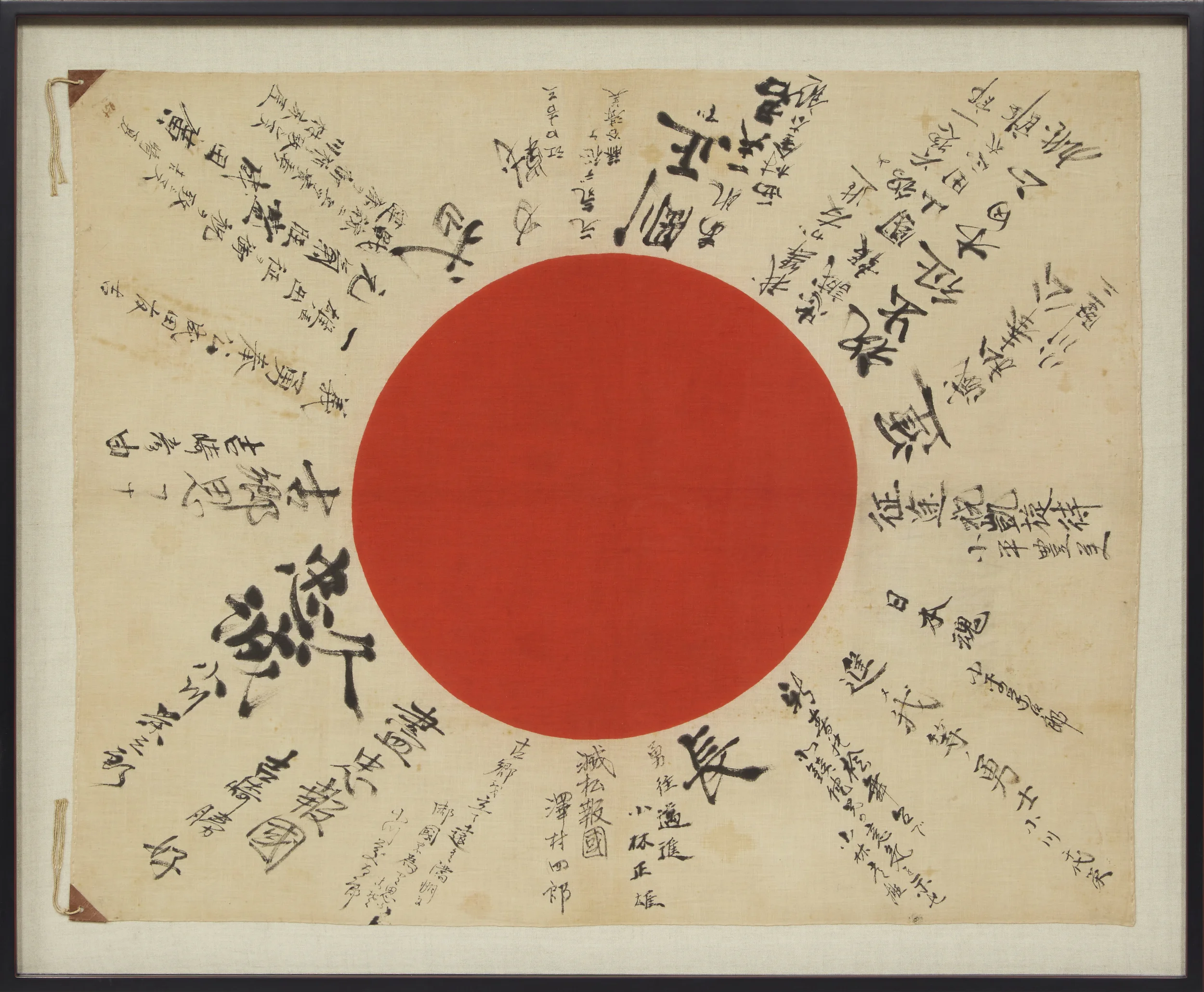
Made of delicate fibers, folded, and carried in the pockets of soldiers, Japanese “good luck flags”, commonly known in Japan as yosegaki hinomaru, were parting gifts for soldiers deployed into battle. These flags are evidence of a long standing tradition among Japanese servicemen. The Japanese National Flag, commonly known in Japan as hinomaru, was used to facilitate these messages of prayers and well-wishes from loved ones, so that the soldier could endure the difficult times ahead; yosegaki, refers to the gathered writing, often inscribed in a pattern radiating from the center of the flag. A yosegaki hinomaru experienced only a fraction of the harrowing perils of war experienced by the soldiers who carried them to the front lines. It is remarkable that these flags have survived to continue the story of the soldiers who brought them into battle.