
Last year, The Conservation Center had the privilege of conserving a pastel portrait of Helen Plum for the library that bears her name in Lombard, Illinois. Not long after that project was completed, another piece of the library’s history came to our laboratories for treatment: the original hand-painted sign that had once hung outside the Helen Plum Library.
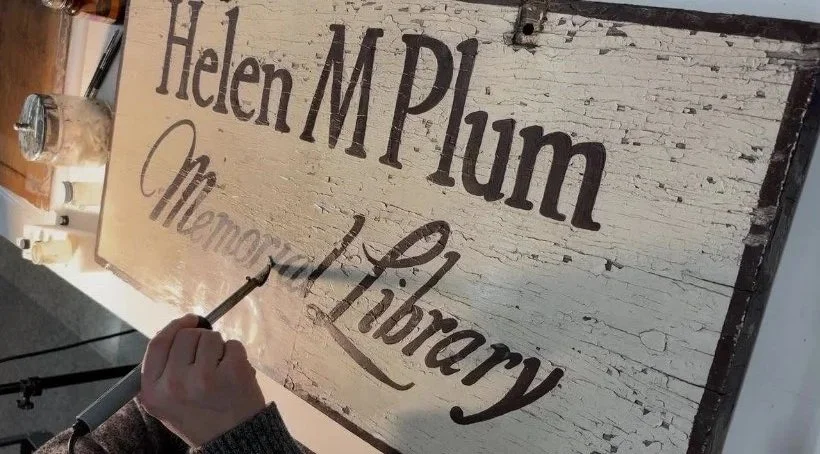
During treatment.
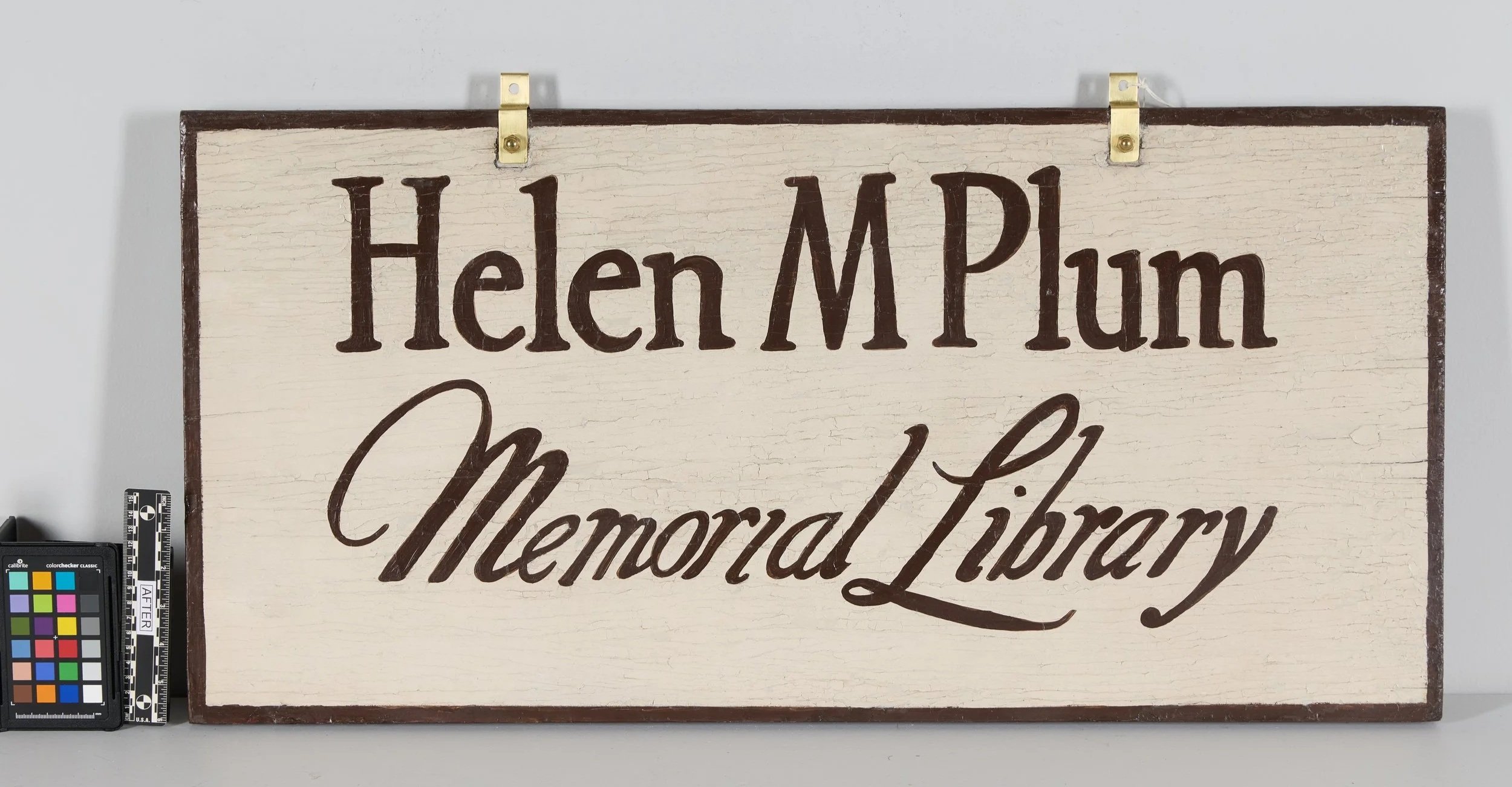
After treatment.
The library itself grew out of the legacy of Helen Williams Plum and her husband, William R. Plum. After Helen’s death in 1924, William arranged for their estate to benefit the community: when he died in 1927, the Plum property was left to the Village of Lombard with instructions that it be used to establish a public library in Helen’s memory. The Plum home became the Helen M. Plum Memorial Library, while the surrounding estate grounds later became what is now Lombard’s Lilacia Park.
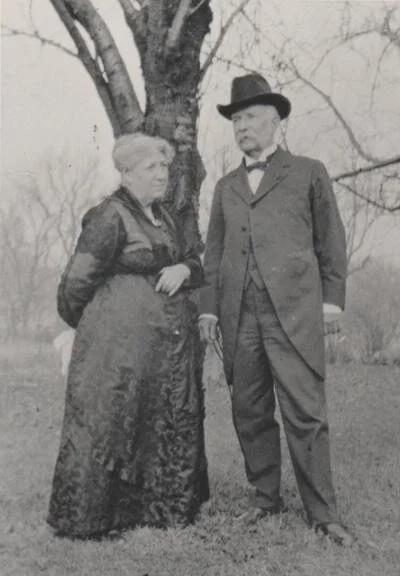
Helen and William Plum from the website of the Lombard Historical Society.
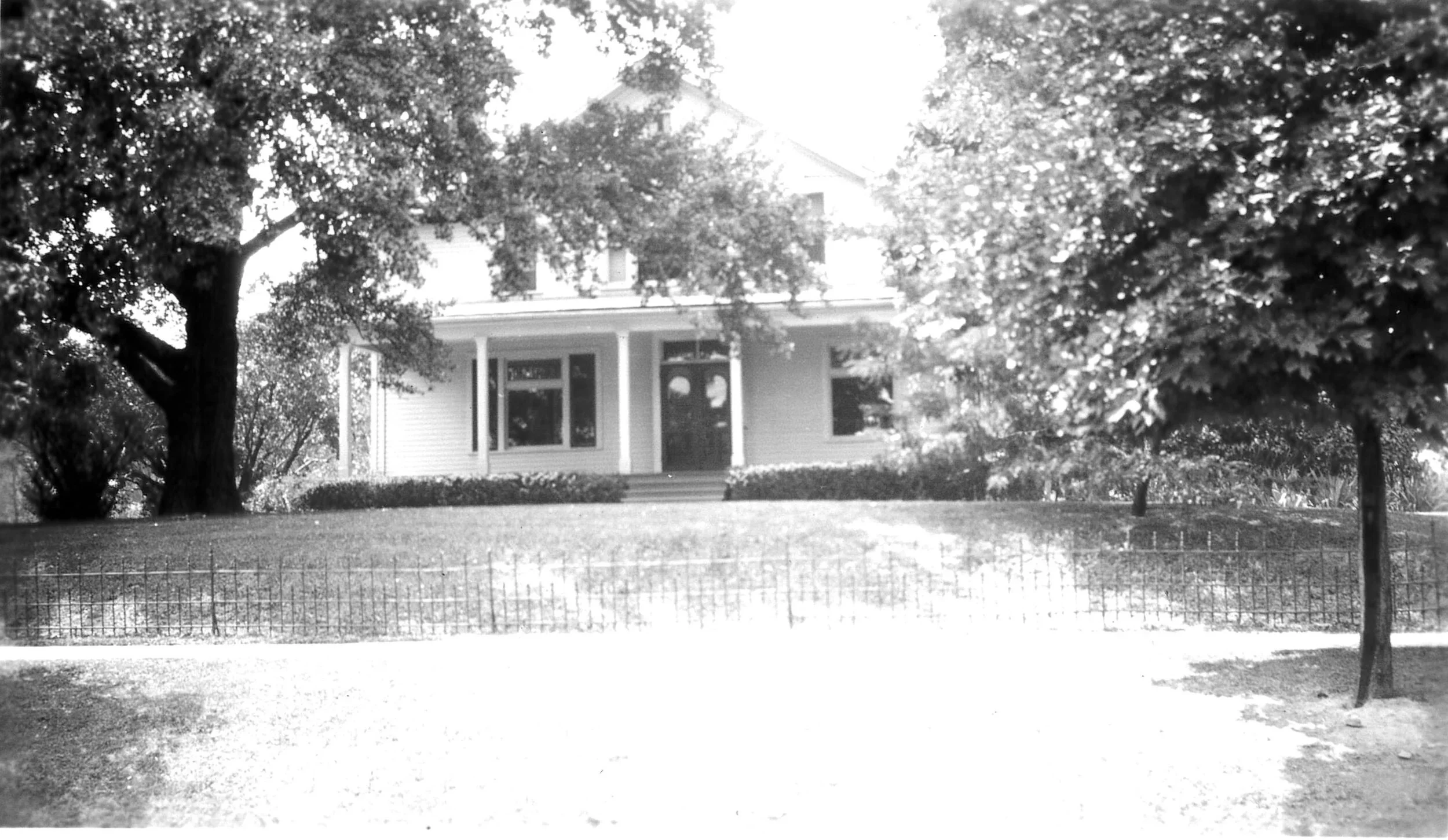
The Plum Estate, from the website of the Lombard Historical Society.
The sign was painted on both sides of a single wooden plank panel. Minor splits were visible along the grainline on both the right and left sides of the board. These splits appeared historic and were stable at the time of examination.
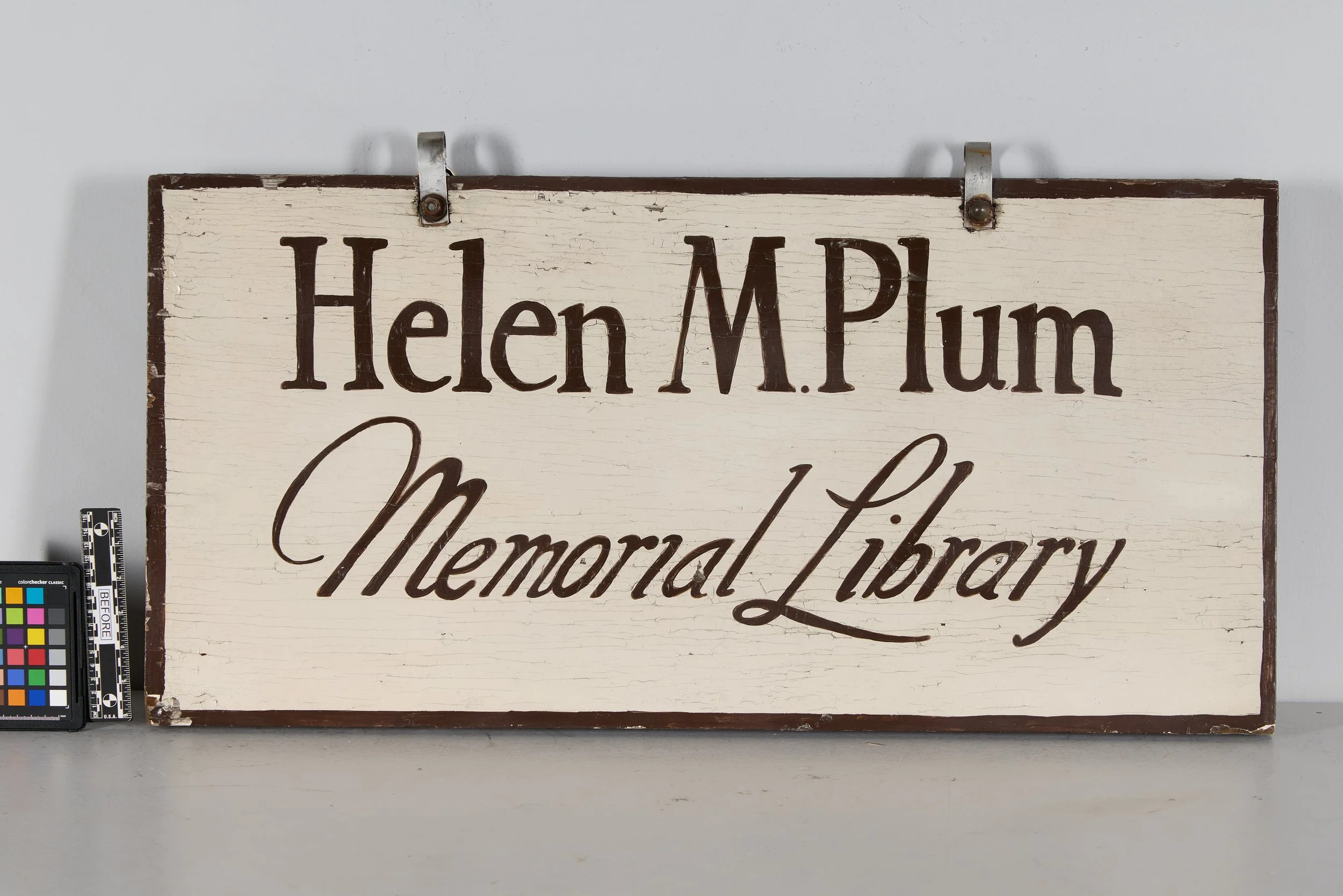
Before treatment.
A preparatory ground layer had been applied to the wood before painting. Over time, small areas of this ground had begun to lift away from the substrate. Given that the sign likely spent many years outdoors, this type of separation is consistent with long-term exposure to changing temperature and humidity.
The painted surface showed clear evidence of long use and repeated maintenance, including several repainting campaigns over the years. Different commercial paints were likely used during these campaigns, including oil paints and possibly later latex or enamel coatings.
Before treatment:
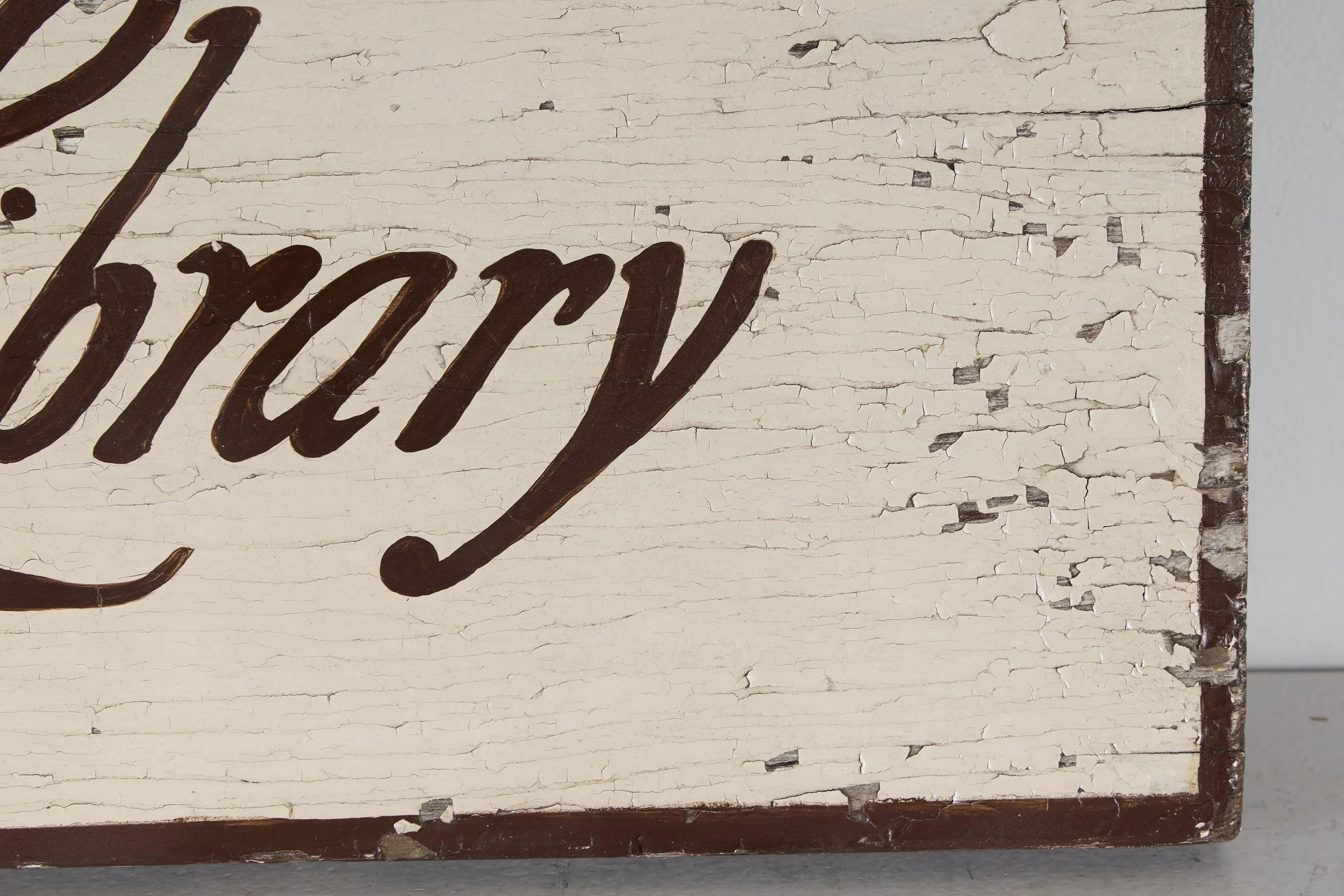
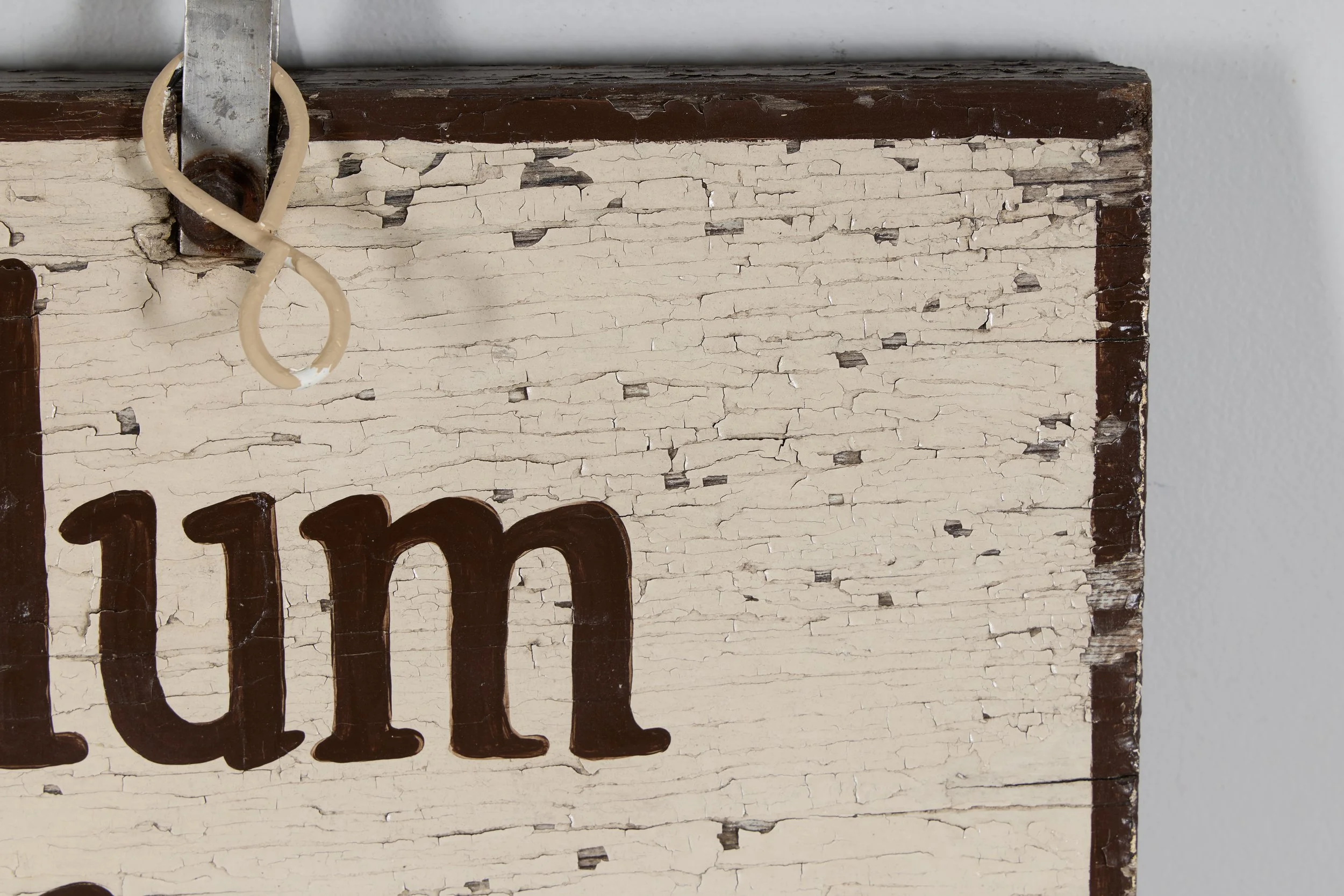
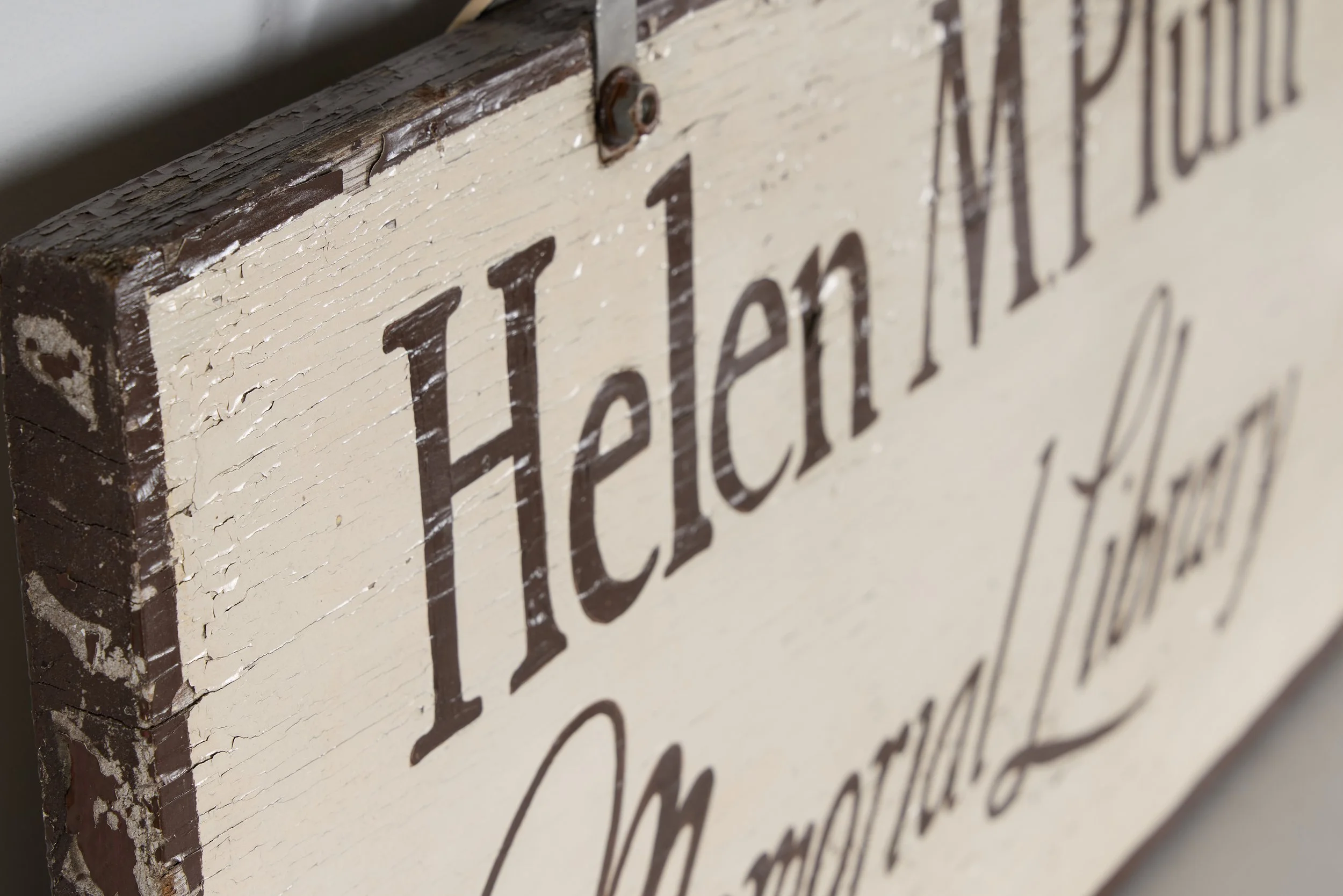
The two-sided sign showed clear evidence of long-term exposure to the elements and fluctuations in temperature and humidity, as it likely spent many years outdoors. The damage consisted of relatively minor splits in horizontal grainline of the solid wood plank. Despite being stable, the splits are indicative of shrinkage that ultimately caused more significant damage to the paint layer.
The painted surface showed numerous campaigns of restoration that incorporated a wide variety of commercial paint products ranging from oil-based paint, enamel and later latex or acrylic paints. Mechanical cracking and flaking were present across both sides of the panel, in some places quite pronounced. One side showed greater instability than the other. In many areas the paint had lifted, leaving raised edges and small losses where flakes had detached.
A varnish coating had also been applied at some point in the sign’s history. This layer, possibly a commercial finish such as polyurethane, appeared to cover primarily the white background and outer edges. The lettering may have been applied after this coating was in place. The surface also carried a light layer of accumulated grime.
Before treatment began, the sign was photographed for in-house documentation. Then, our senior paintings conservator Michael Young addressed the areas of lifting and flaking paint. These fragile sections were consolidated overall using appropriate conservation adhesives to secure the paint layers to the wooden support.
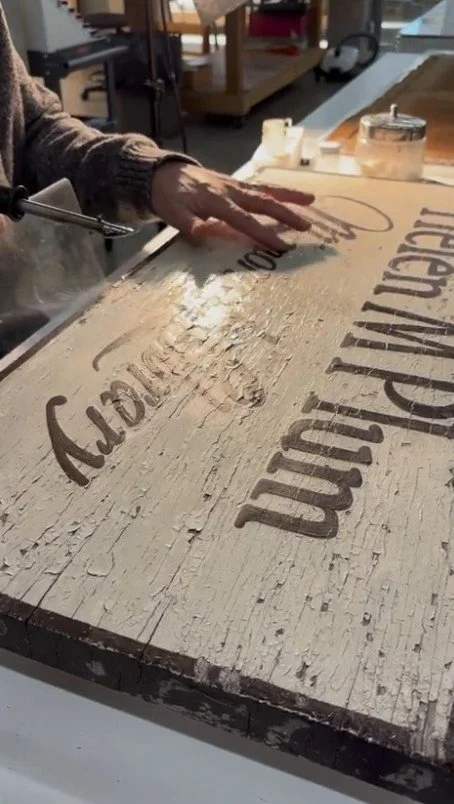
During treatment.
Surface cleaning followed -- grime was removed from both sides of the sign using carefully controlled methods suited to the solvent-sensitive paint.
Areas of paint loss and abrasion were then inpainted using reversible conservation paints. This work visually reduced the appearance of damage while remaining fully reversible under conservation standards. The uneven texture created by historic paint loss was left unchanged.
The existing hanging hardware was also replaced. The previous corroded hardware was removed and Michael handmade custom period-appropriate fittings. Once the damaged hardware was taken off, the areas beneath it were examined and stabilized where needed. Small losses uncovered during this process were inpainted.
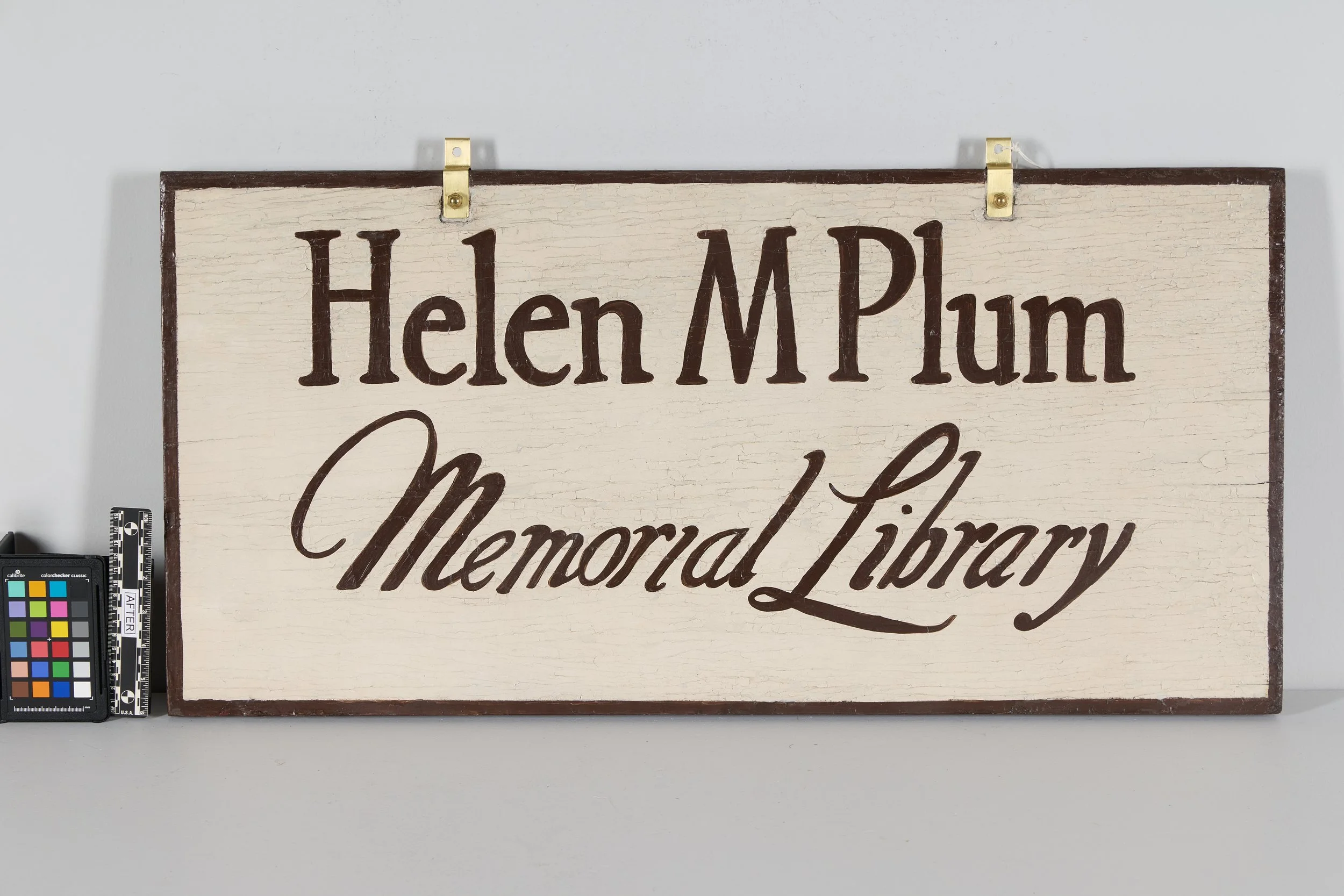
After treatment.
With the paint stabilized and appropriate hardware restored, the sign can once again be safely displayed. It remains a recognizable piece of the library’s history and a reminder of the institution that served Lombard for nearly a century.
