
Sometimes, we get the opportunity to work on heirlooms so precious they feel like portals back in time. That was the case with two scrapbooks from our client’s mother, found among her belongings, documenting her travels across Europe and filled with postcards, mementos, letters, ribbons, and dried flowers. These volumes are a testament to her younger life and vivaciousness, and we were honored to help preserve and document her adventurous spirit.
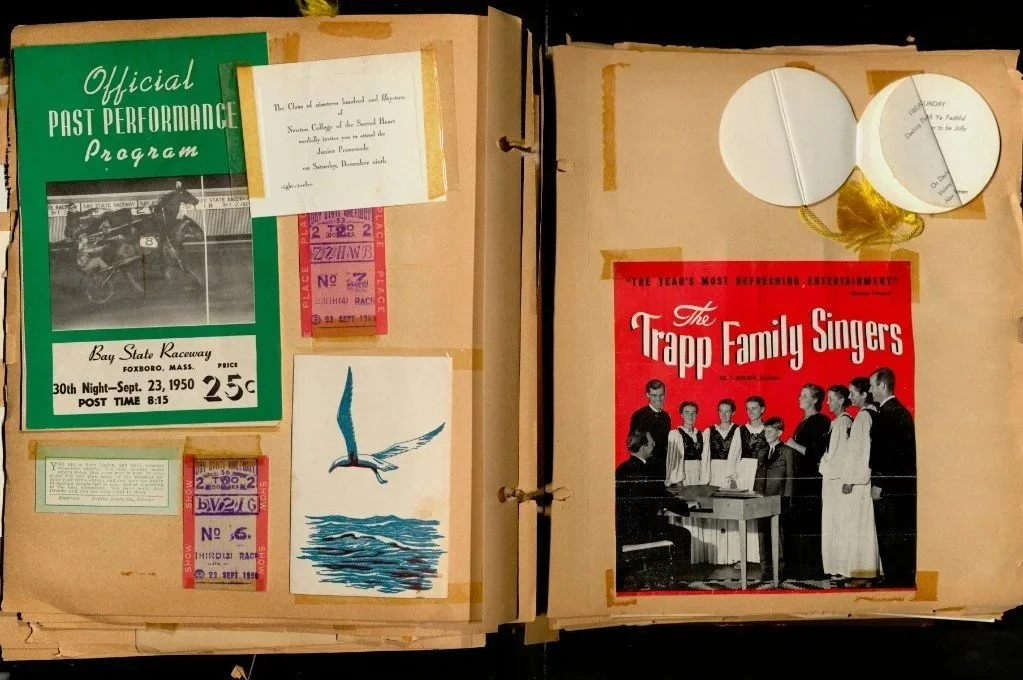
Before treatment.
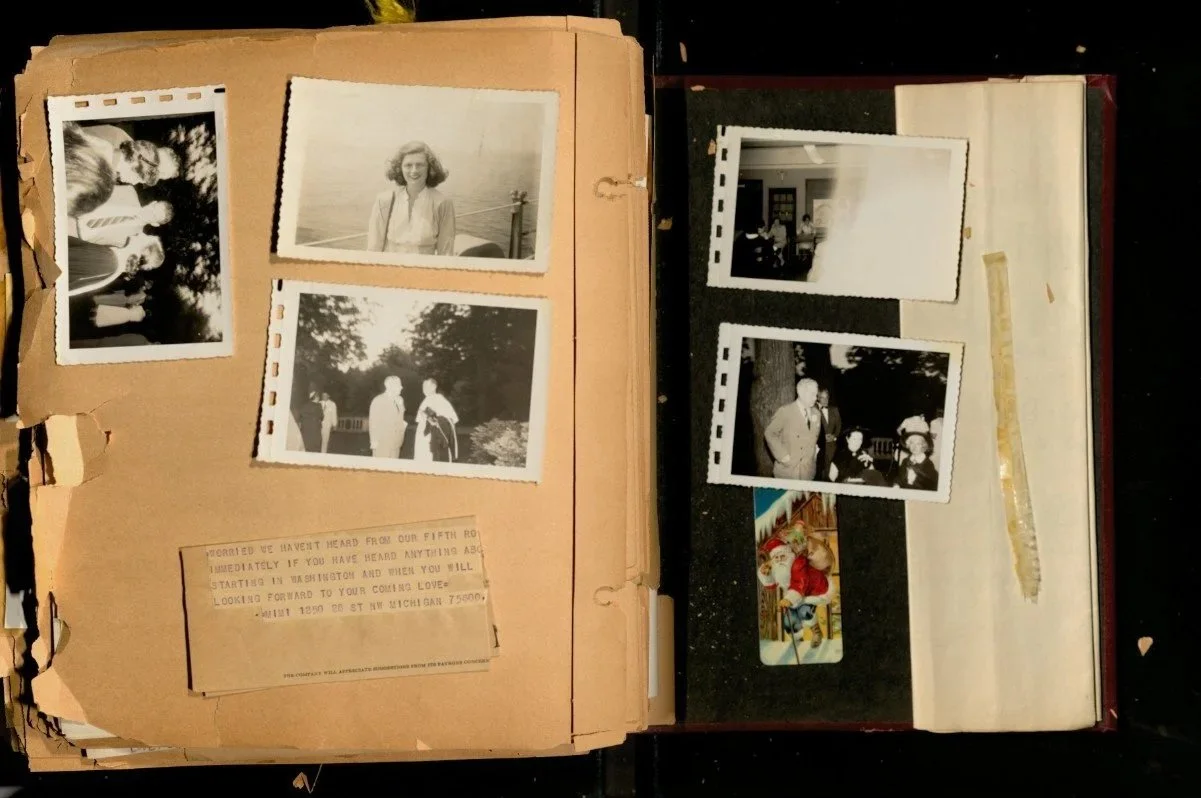
Before treatment.
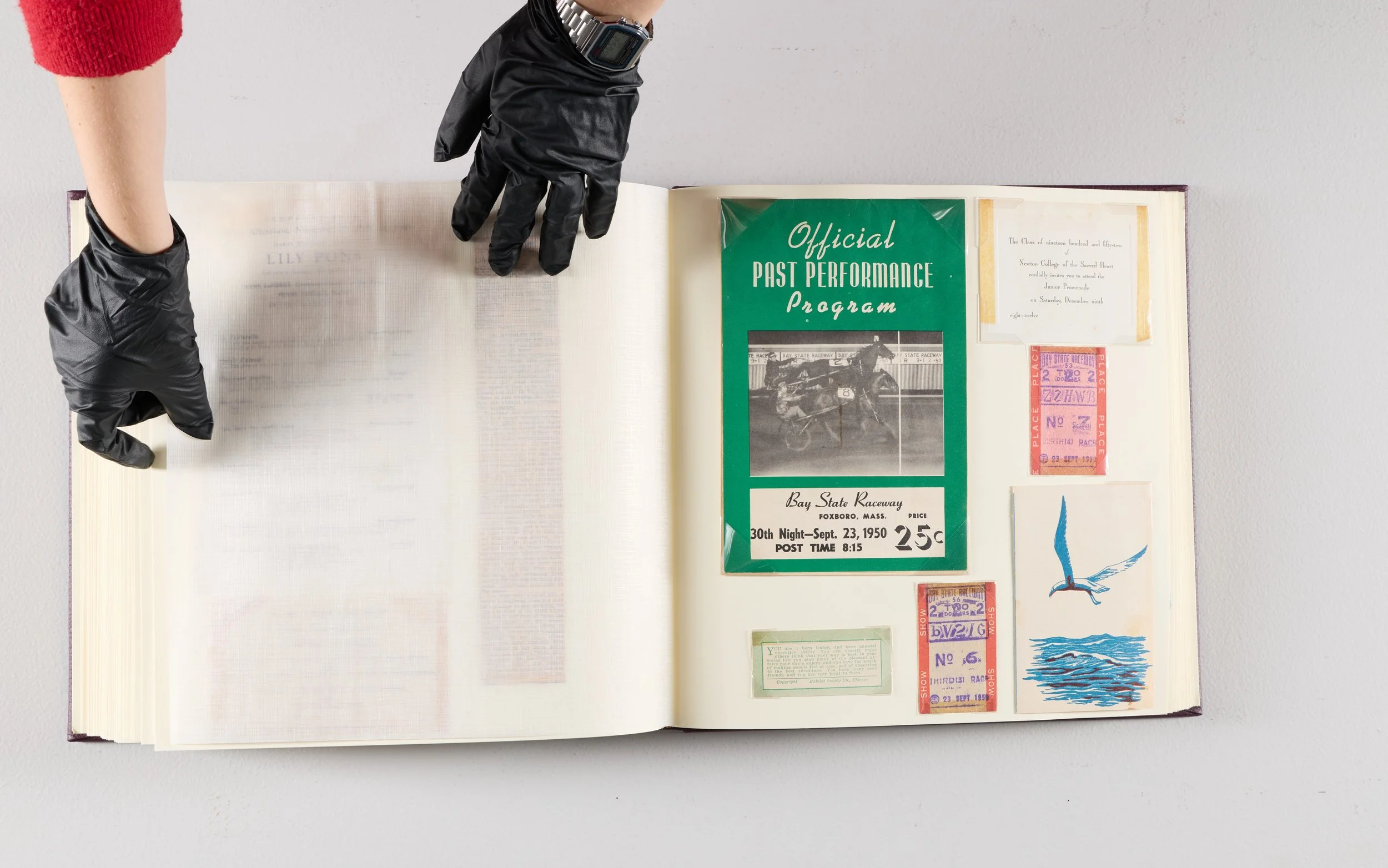
After treatment.
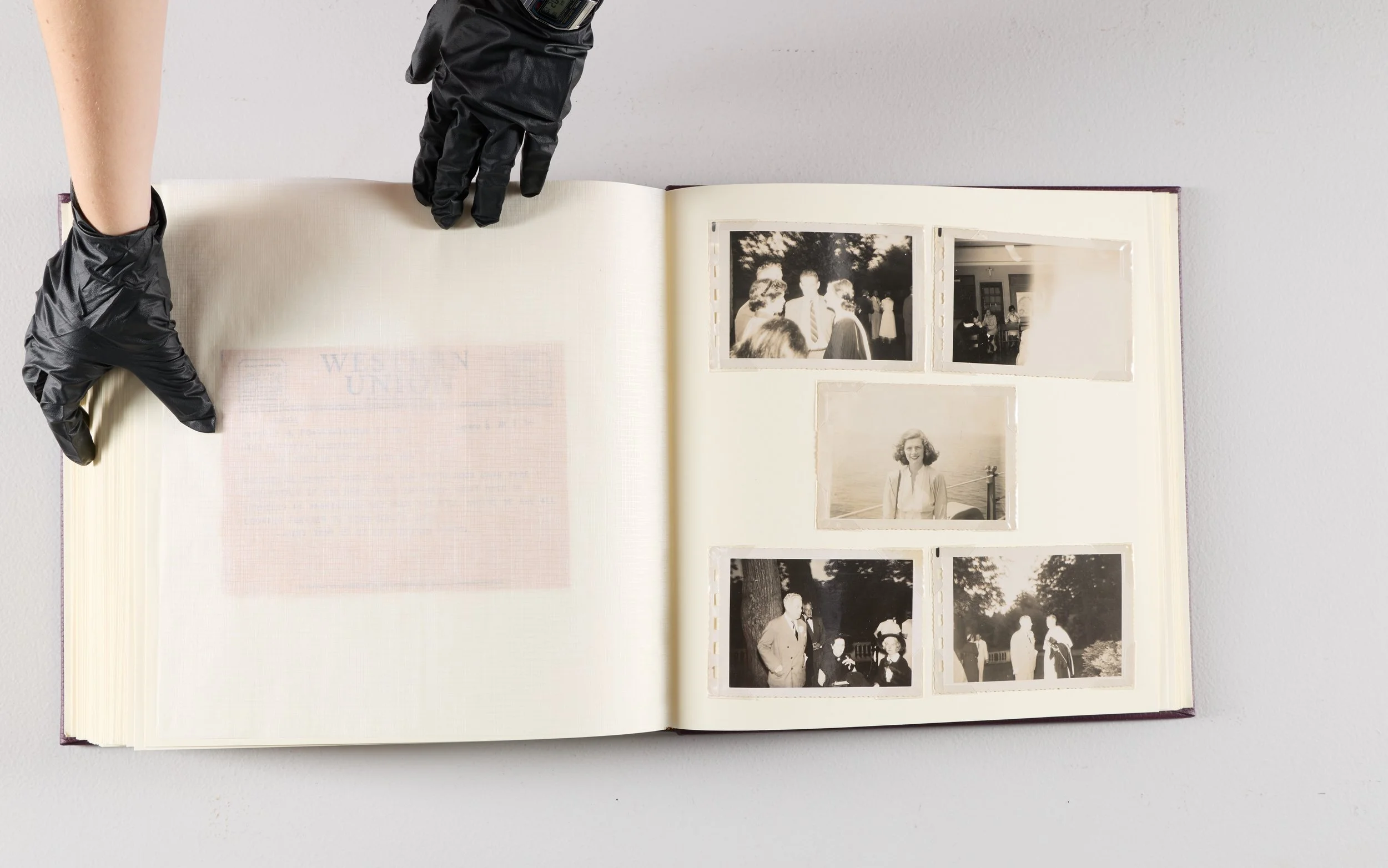
After treatment.
Flip through the pages in the video below, and then scroll down to learn more about treatment:
Throughout history, people have documented significant milestones and created personal archives. We first see this with the invention of the printing press in the 15th century, when family Bibles became one of the earliest places people recorded family histories. Blank pages at the beginning and end were used to note names, births, marriages, and deaths, and often held clippings of hair and small keepsakes tucked between the leaves.
During the Renaissance, commonplace books were used to compile recipes, quotations, and notes copied from other texts. As printed material became more widely available in the 18th and 19th centuries, people began adding it to these volumes, particularly calling cards left during visits, which recorded who had called and when.
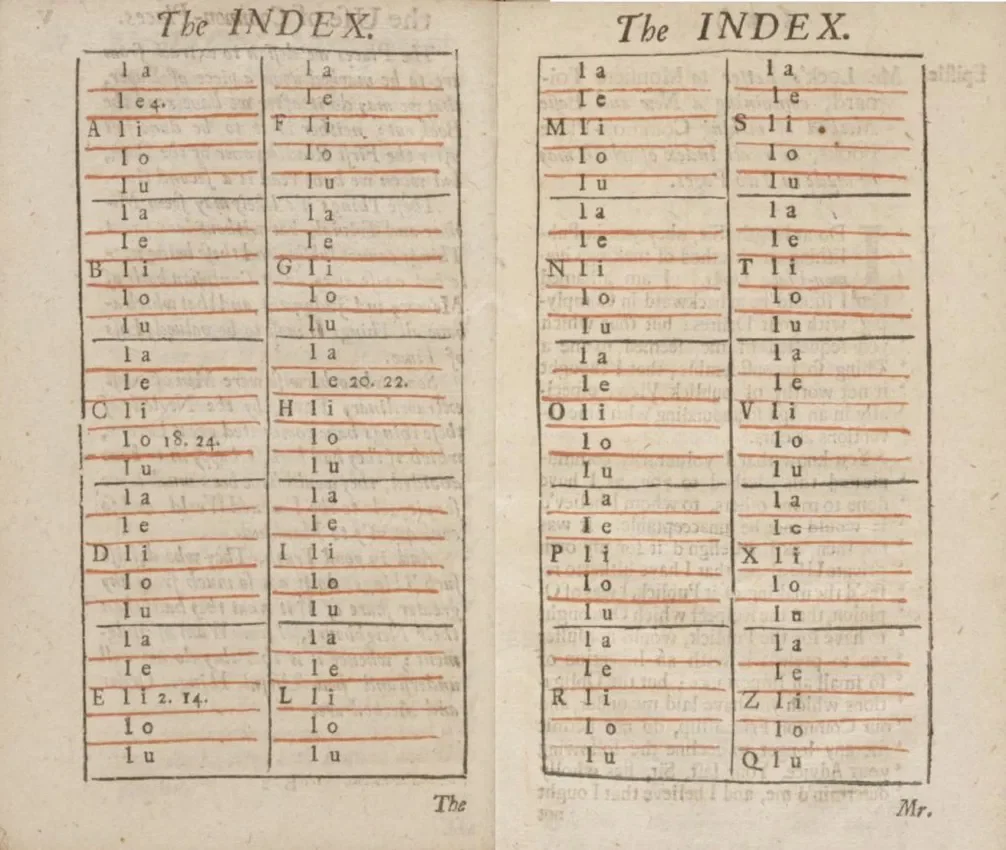
John Locke's double-page index, as printed in the English translation of New Method for Common-Place Books (1706)
By the late 19th century, photography and printed materials were easier to access. Albums began to include postcards, letters, clippings, and photographs, bringing together written records and physical mementos.
The scrapbooks before treatment:
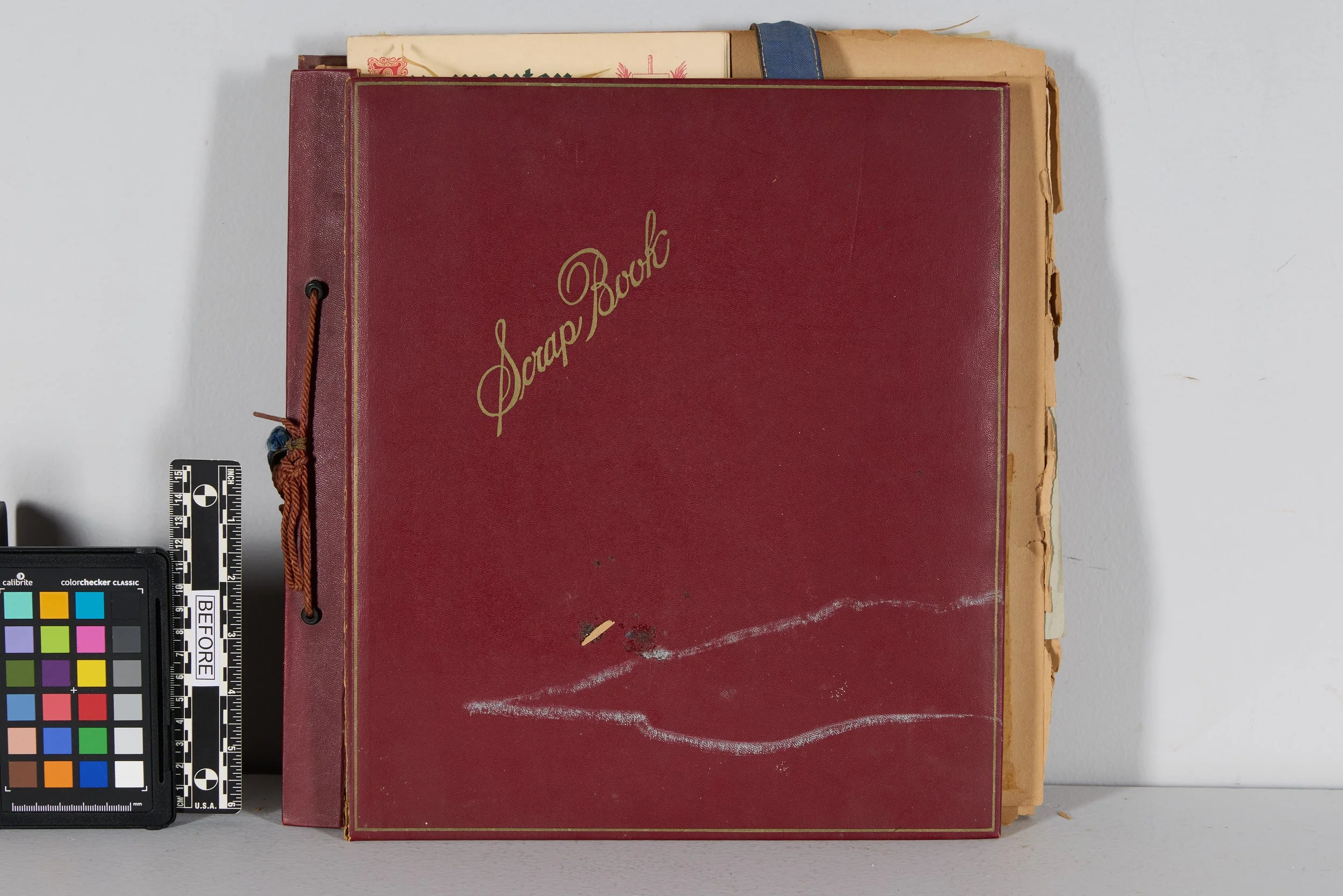
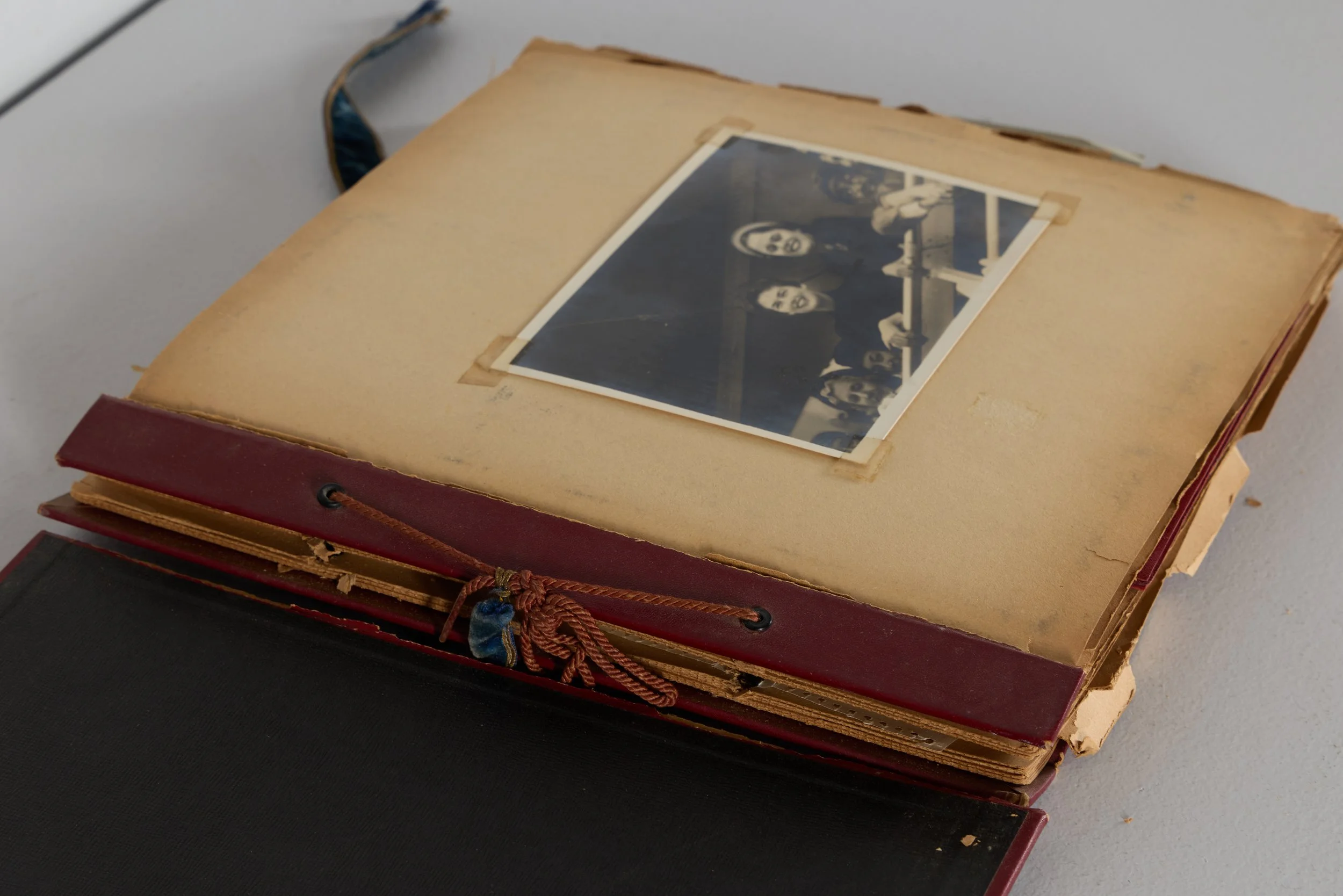
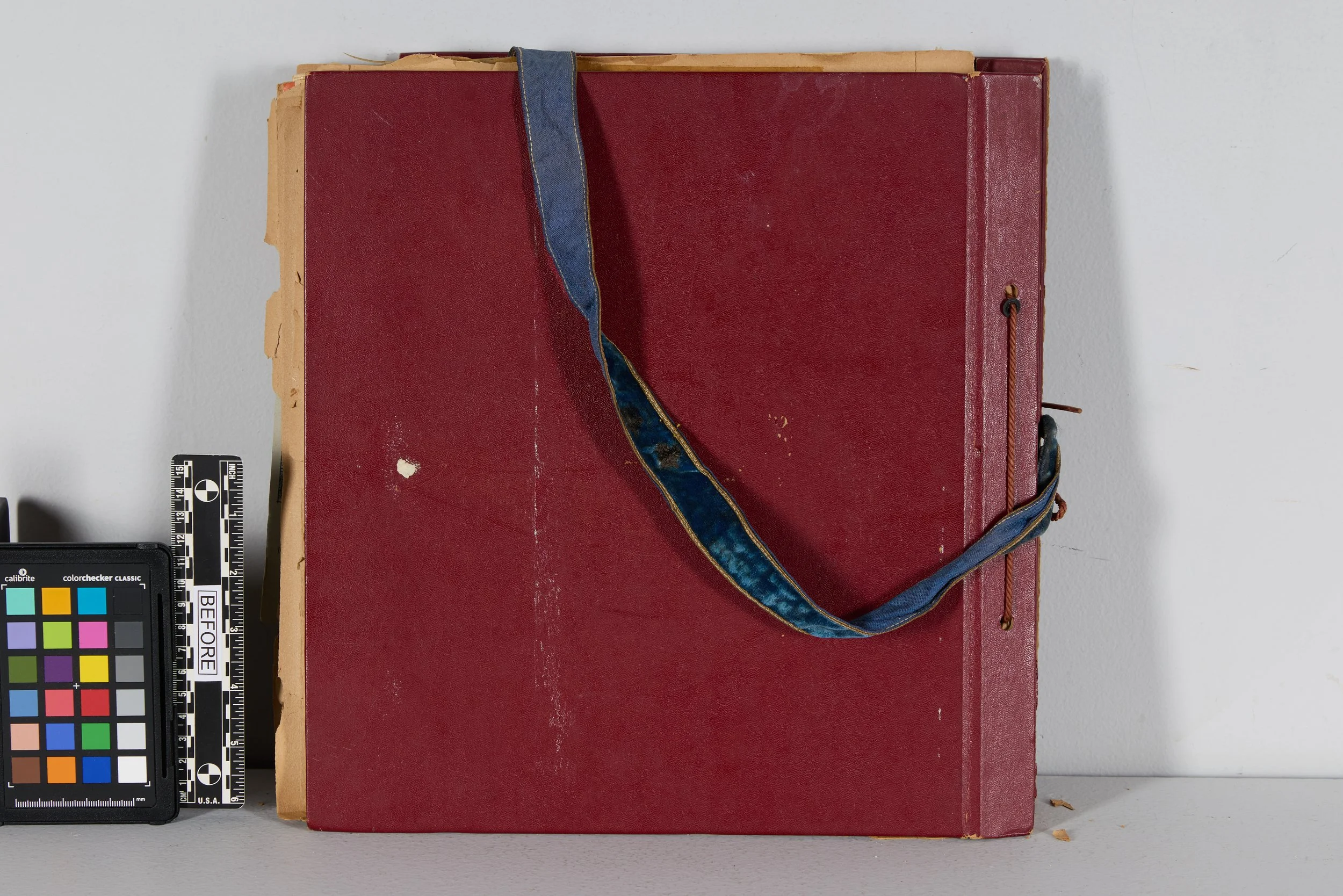
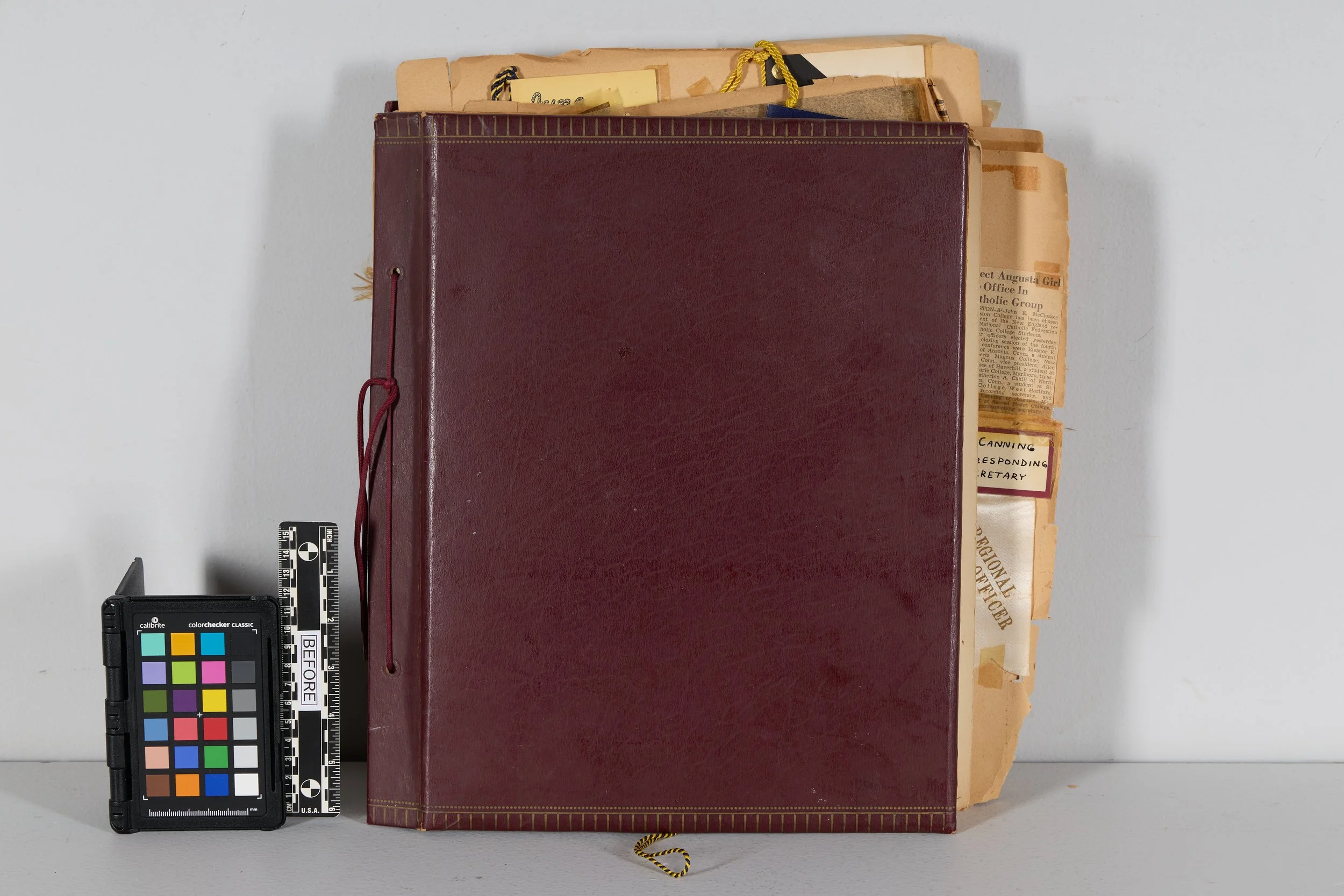
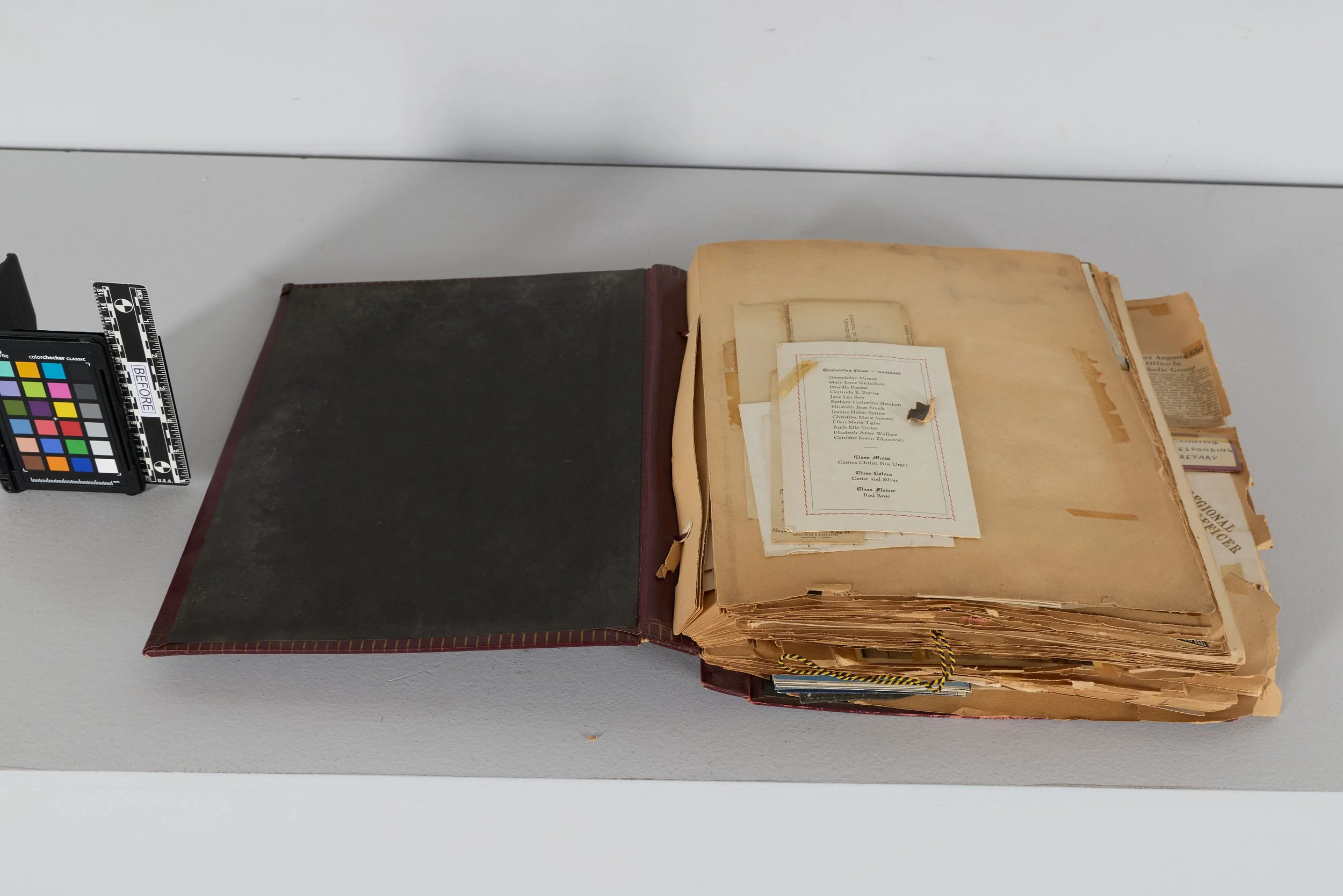
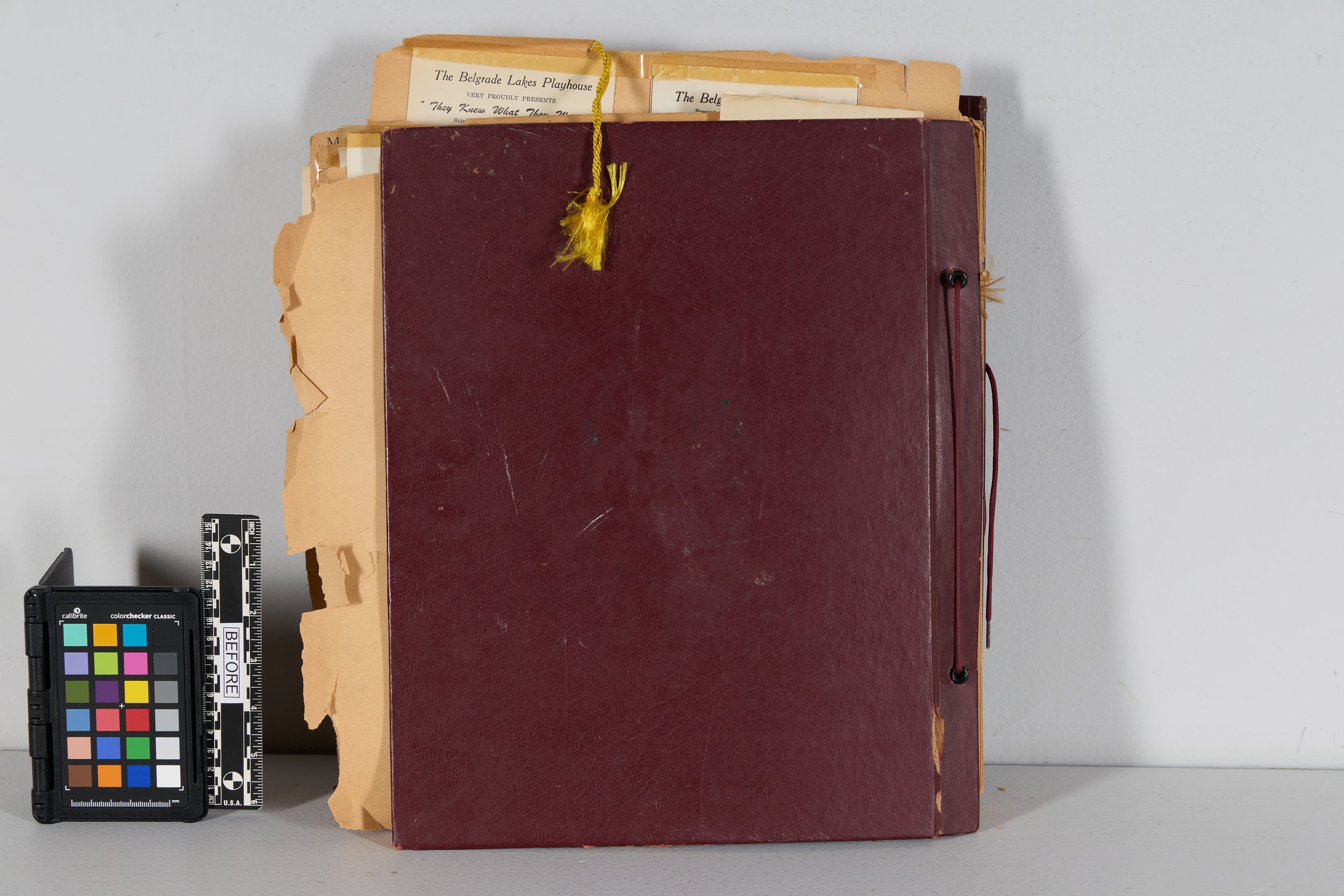
When they arrived at the lab, the pages of these scrapbooks had darkened and become brittle, with tears along the edges and at the spine. The original bindings had failed, leaving the pages loose. The covers were worn, with cracking at the spine and abrasions from handling.
Both scrapbooks had items added over the years so different pages had various condition issues. Nearly every page was filled. Items were attached with tape, often placed directly over the front of photographs and paper materials, and in some cases glued down. The adhesives had discolored over time, leaving staining and residue. There was also a layer of surface dirt across the albums and individual pages.
The contents were varied, including photographs, postcards, newspaper clippings, small pamphlets, envelopes, maps, magazines. ribbons, hair, and dried flowers, often layered together. Many items were creased or slightly distorted from the way they had been attached and stored.
Treatment by associate conservator of works on paper, Katrina Flores, focused on stabilizing the materials and making the scrapbooks functional again. Each scrapbook was documented before work began. The items were carefully mechanically removed from the pages. Tapes were removed and adhesive residue was reduced mechanically. Each item was gently surface cleaned using dry cleaning methods. Then, each item was flattened and repaired where necessary.
During treatment:
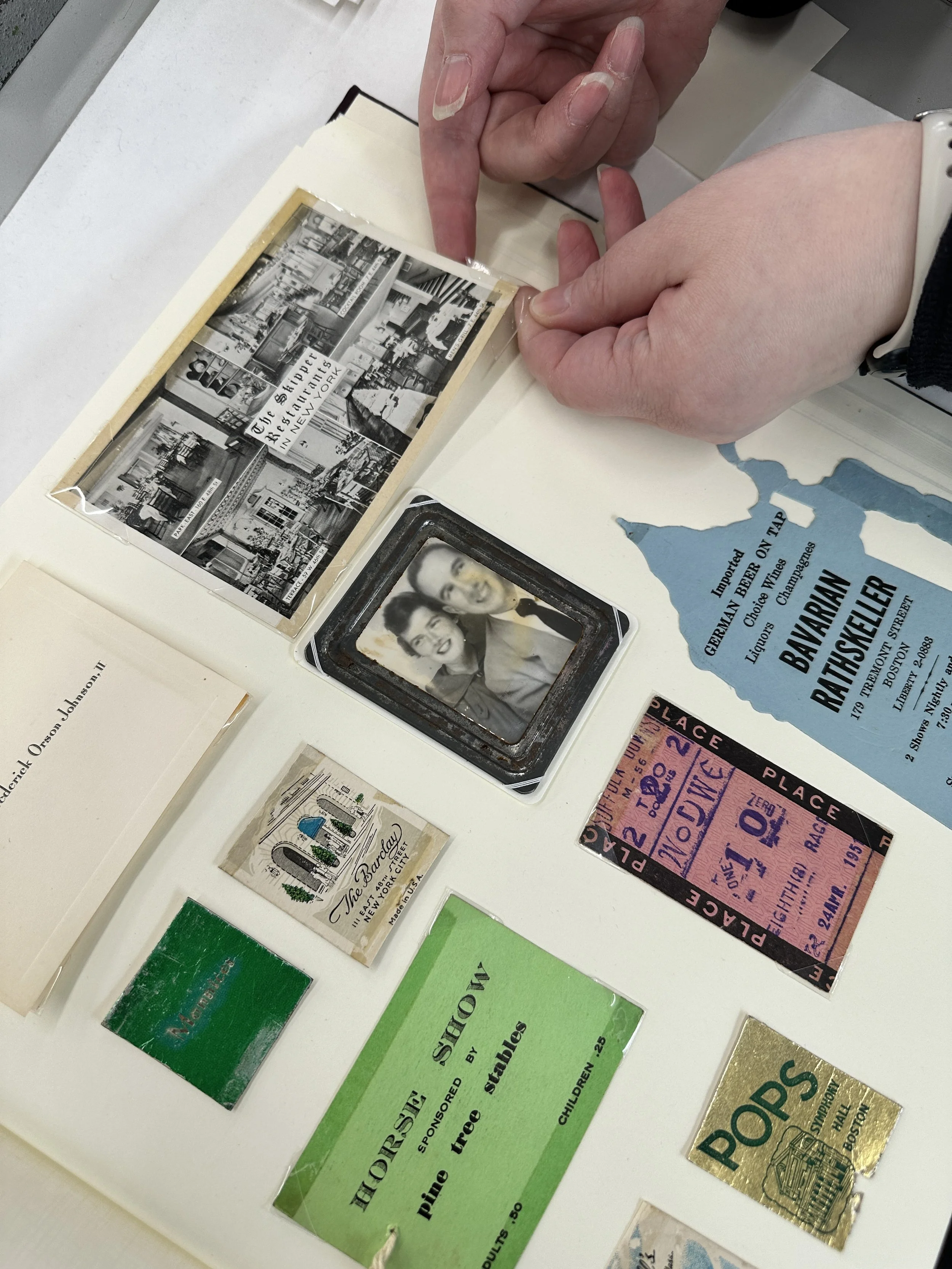
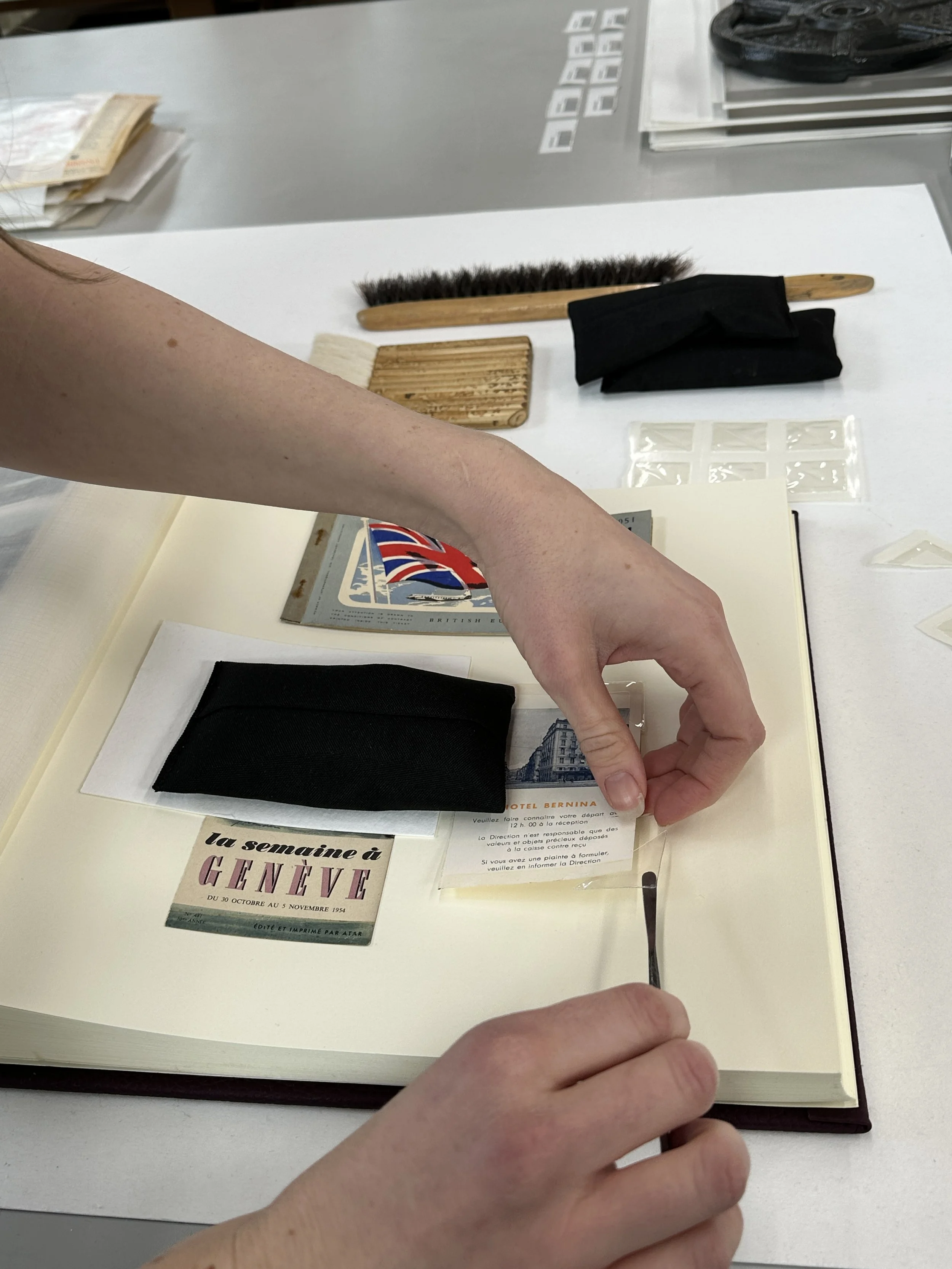
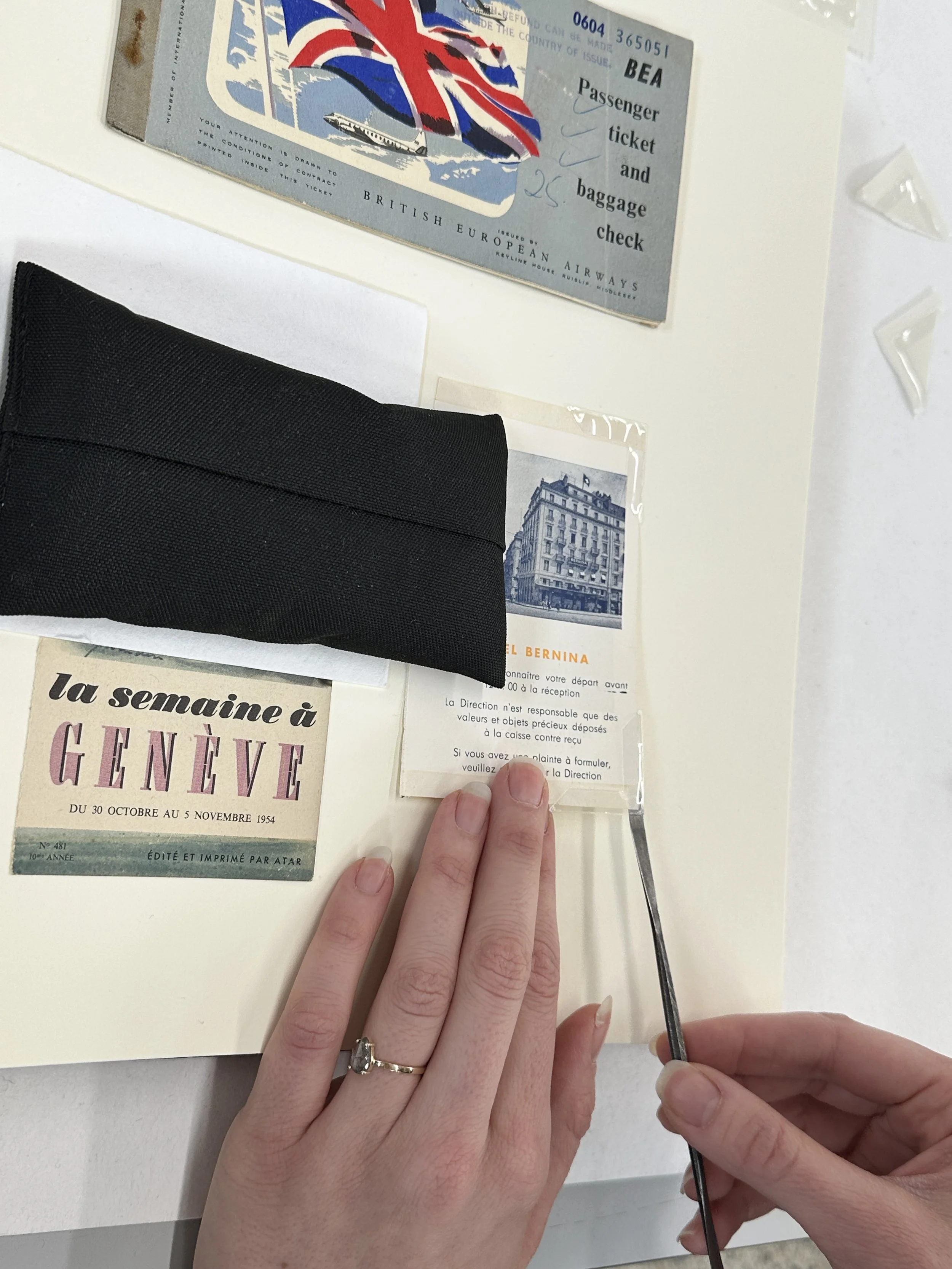
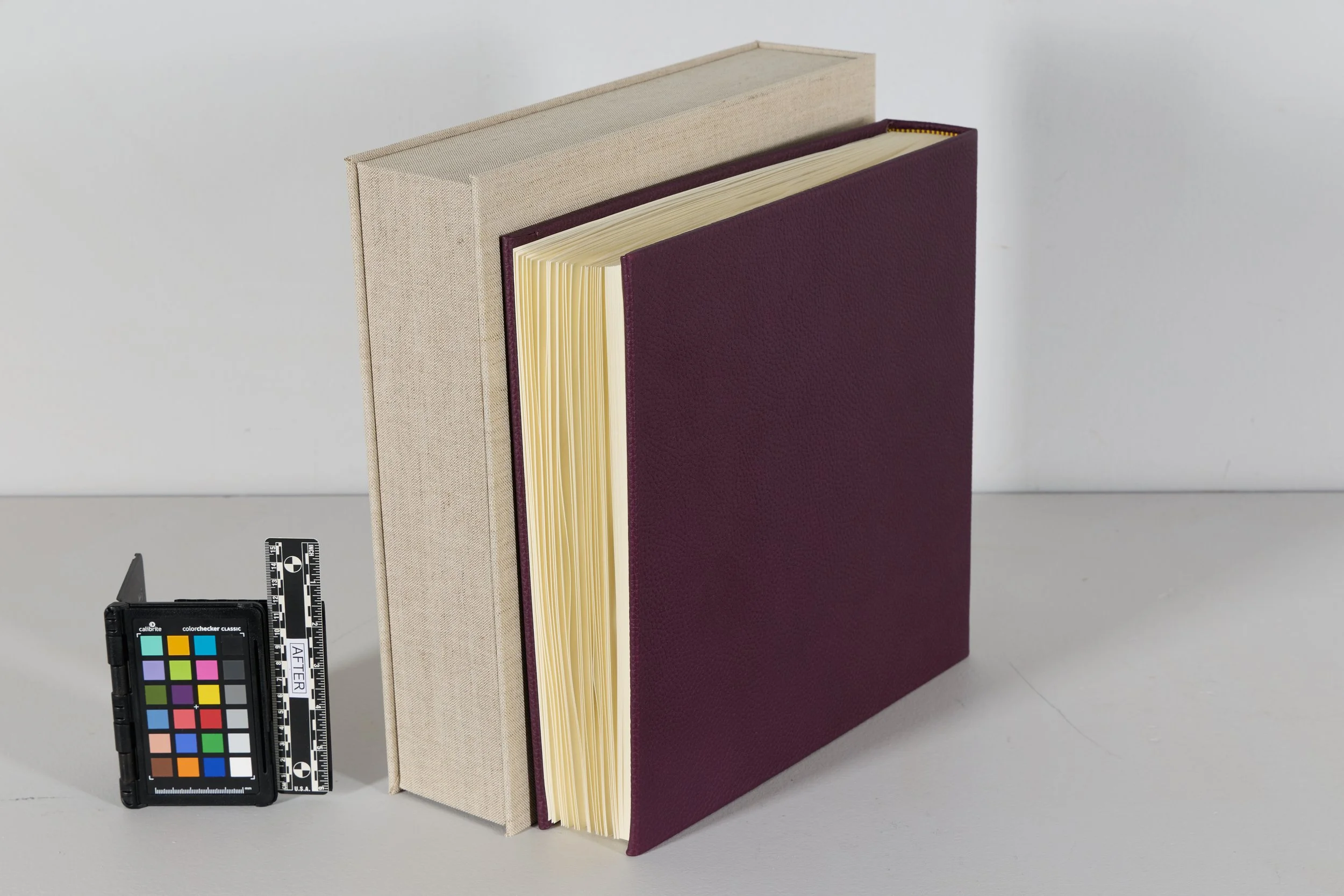
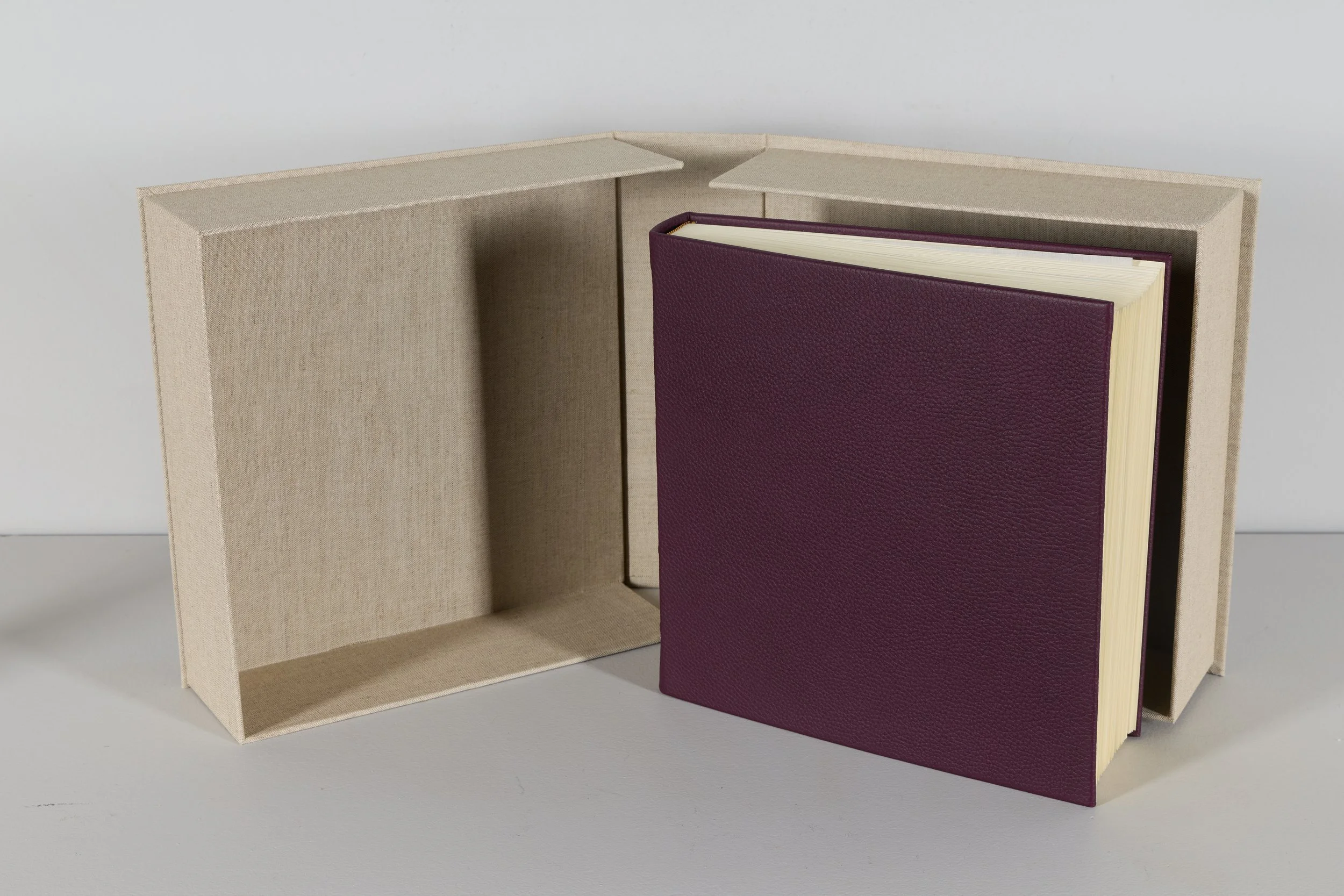
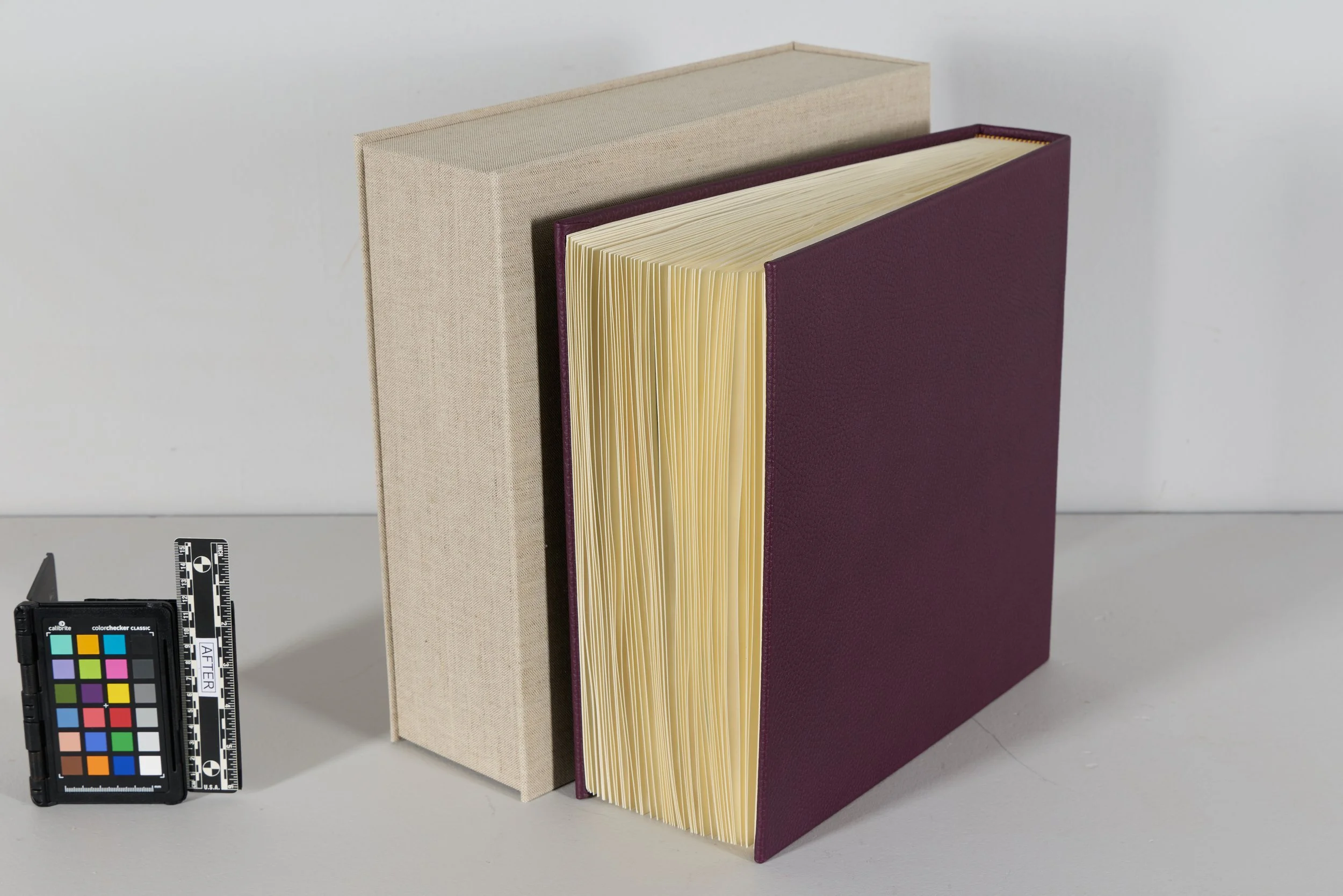
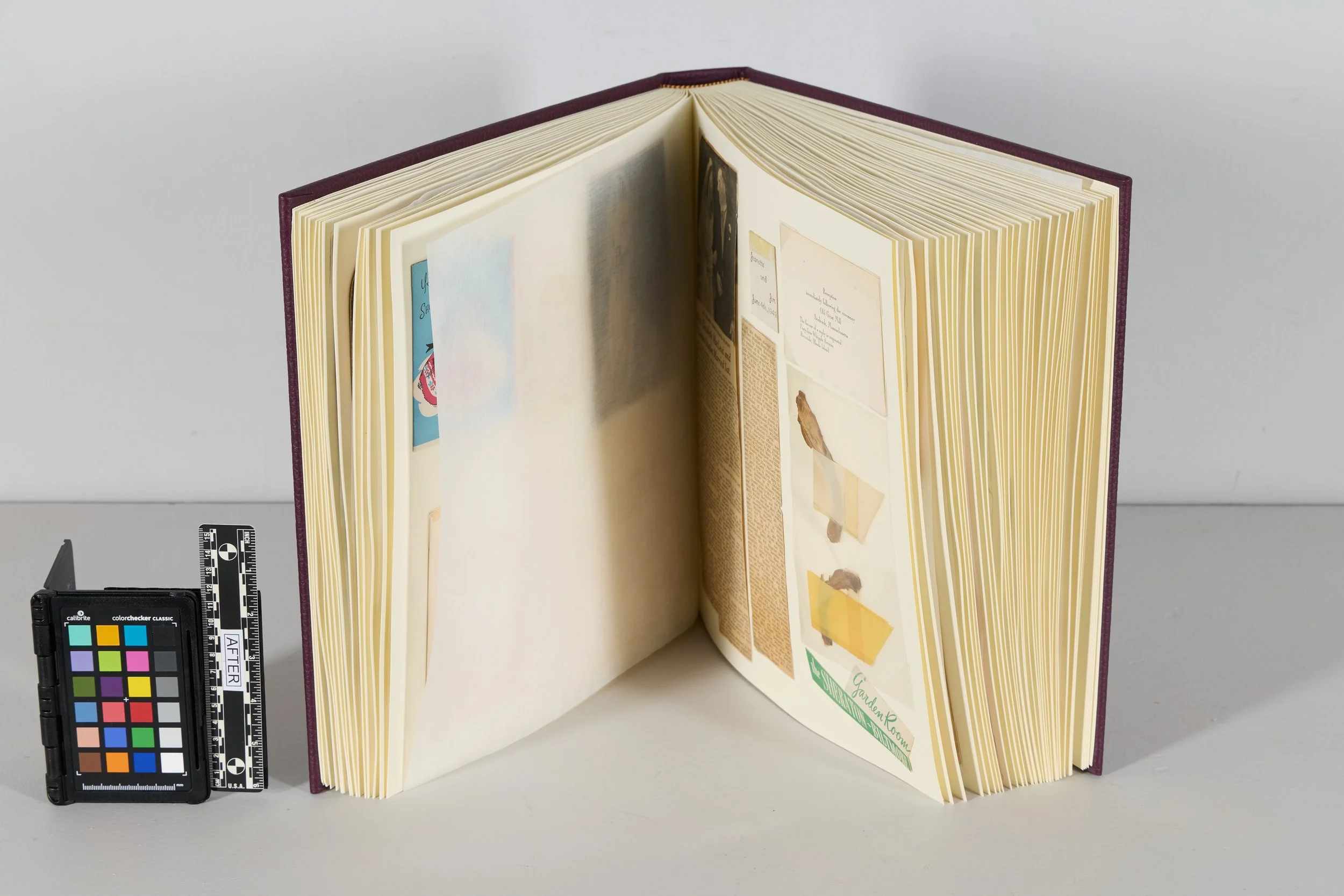
Though we offer the option to customize the placement of materials with scrapbook projects, our client preferred to keep everything in the same order as his mother had originally arranged it. Once stabilized, everything was reassembled into new leather-bound albums with archival pages in the same order, using photo corners and tissue hinges with wheat starch paste. Some very delicate items, such as the flowers, were encapsulated between mylar then hinged in. Finally, our conservators created custom archival cloth covered clamshell cases to safely house each of the books, complete with labels to identify the volumes.
Flip through the finished volume in the video below:
Once all the items were placed into their new albums, the books were ready to be safely handled and shared again. The new archival materials will help to protect the delicate items from further damage. What they hold remains unchanged, now better supported for the years ahead.
After treatment:
Read more about previous scrapbook projects here:
