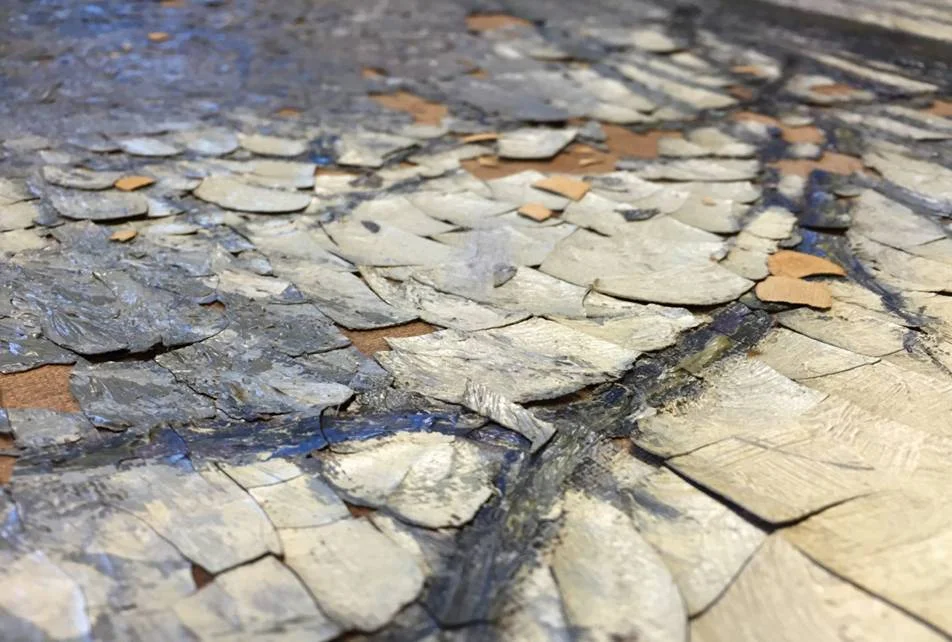
Robert Rauschenberg is frequently remembered for his series of work created in the 1950s and 1960s that combined aspects of both painting and sculpture. Rauschenberg himself called them "Combines", a term he invented to describe a work that is neither a sculpture nor a painting, but rather a hybrid of the two. The artist was always one to experiment and fuse, often creating something entirely new from two entirely different substances.
A Looking Glass to the Past: Preserving a Window from Oak Park Public Library
The Conservation Center is proud to be part of a vast community of individuals and institutions dedicated to conserving the past. We recently had the opportunity to work with such an institution, the Oak Park Public Library, to help conserve a part of their history.
A Story Unfolds: Palmer Hayden's "Bricktop"
Out of This World: The Tale of One Lucky Photograph
Here at The Center, we are used to seeing all sorts of artwork and family heirlooms come from worldwide locations, but we’ve never had an item come to us from out of this world! This particular story started off a little something like this…
The countdown began; ten, nine, eight, seven. The family watched as the space shuttle was about to lift from the launch pad; three, two, one, Blast Off!
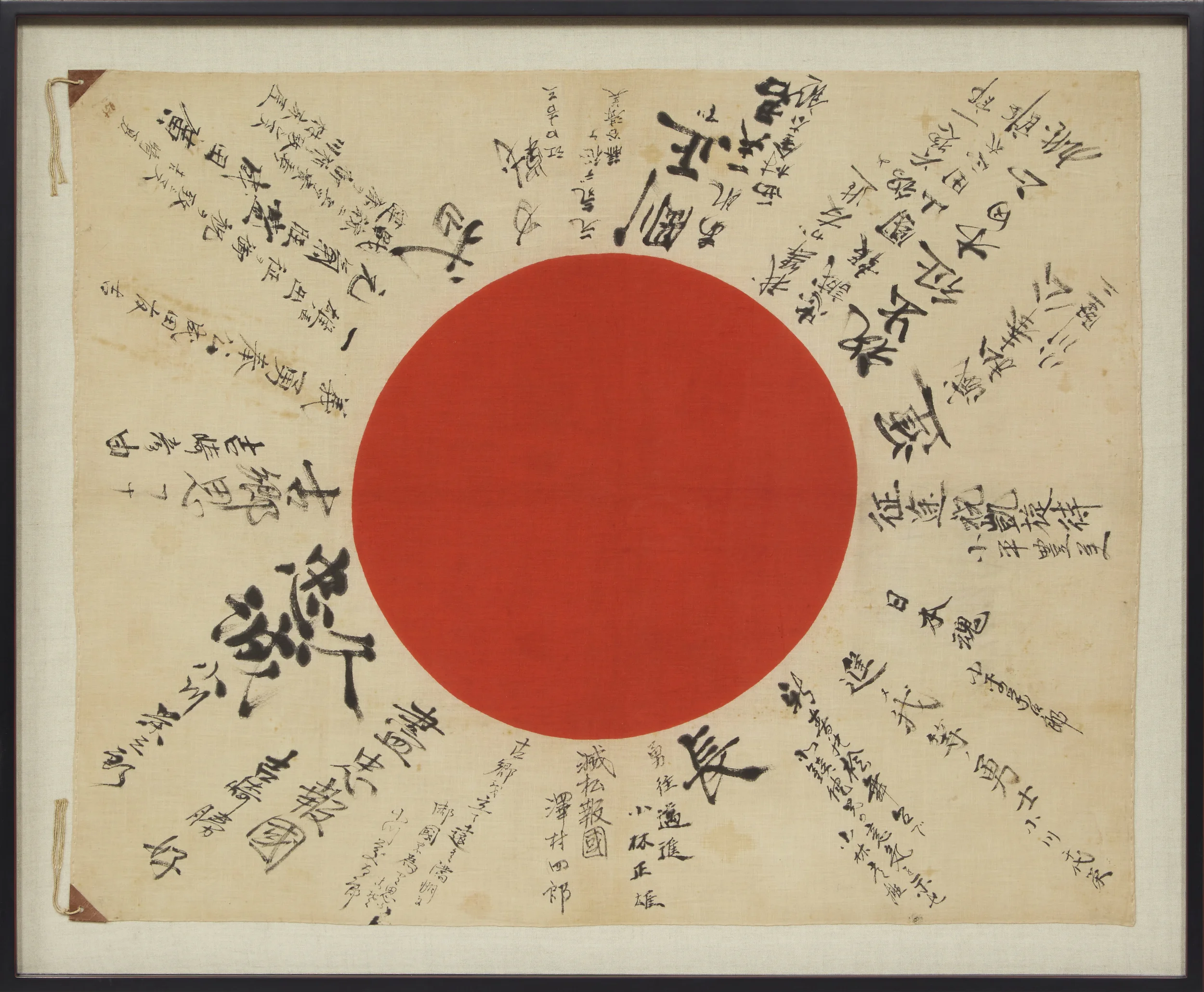
Yosegaki Hinomaru: The Good Luck Flag
Made of delicate fibers, folded, and carried in the pockets of soldiers, Japanese “good luck flags”, commonly known in Japan as yosegaki hinomaru, were parting gifts for soldiers deployed into battle. These flags are evidence of a long standing tradition among Japanese servicemen. The Japanese National Flag, commonly known in Japan as hinomaru, was used to facilitate these messages of prayers and well-wishes from loved ones, so that the soldier could endure the difficult times ahead; yosegaki, refers to the gathered writing, often inscribed in a pattern radiating from the center of the flag. A yosegaki hinomaru experienced only a fraction of the harrowing perils of war experienced by the soldiers who carried them to the front lines. It is remarkable that these flags have survived to continue the story of the soldiers who brought them into battle.
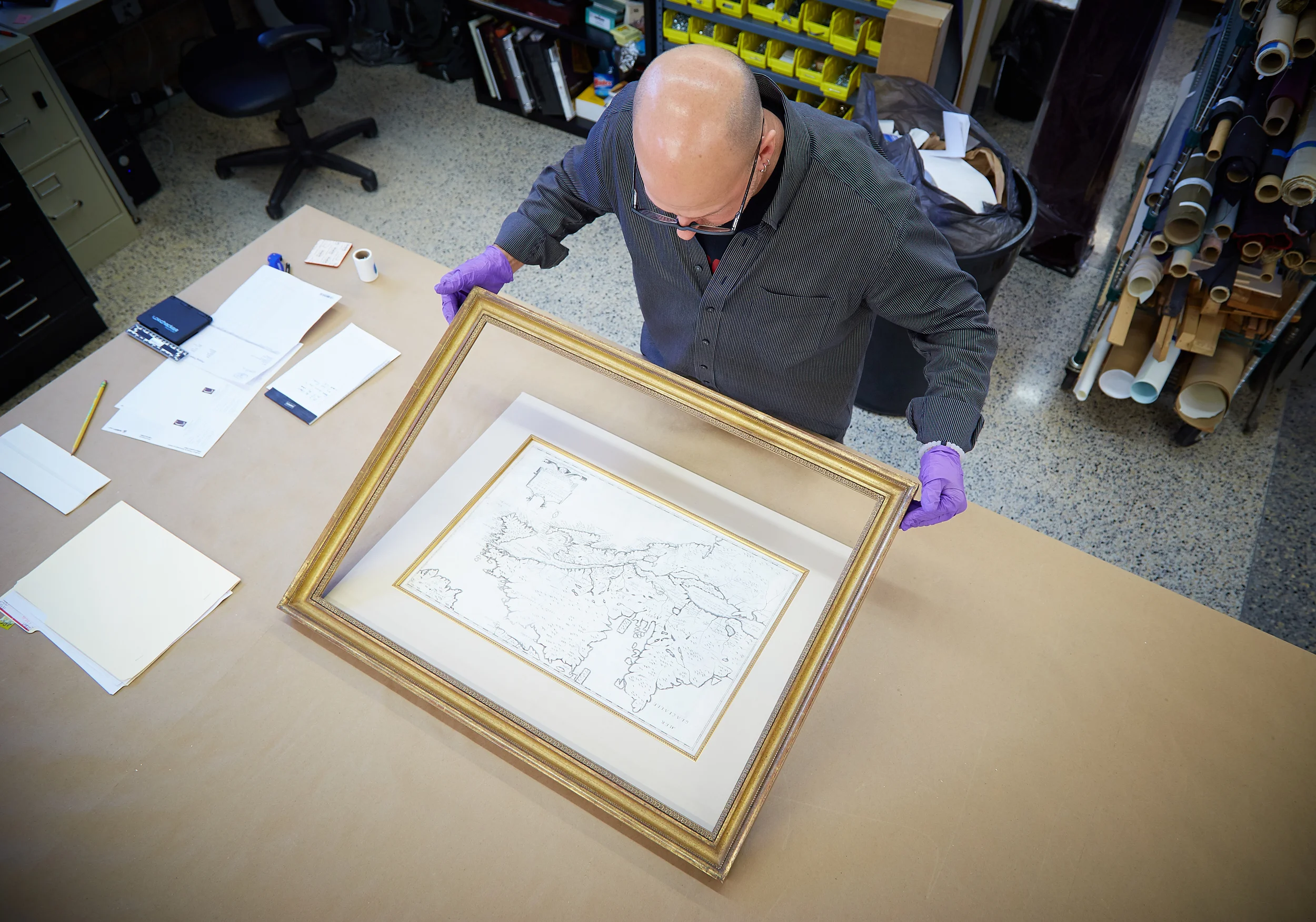
When Lake Michigan was Lac des Puans: The Cartographic Origins of the Great Lakes
When Greg brought his map into The Center, he wasn’t seeking conservation work - the map was already in great condition. What it needed was quality framing to properly display it in Greg’s home and keep it safe for another 373 years. That’s right - dating back to 1643, this map of the Great Lakes by Jean Boisseau may not be helpful for travel these days, but will take you on an interesting trip to the past.
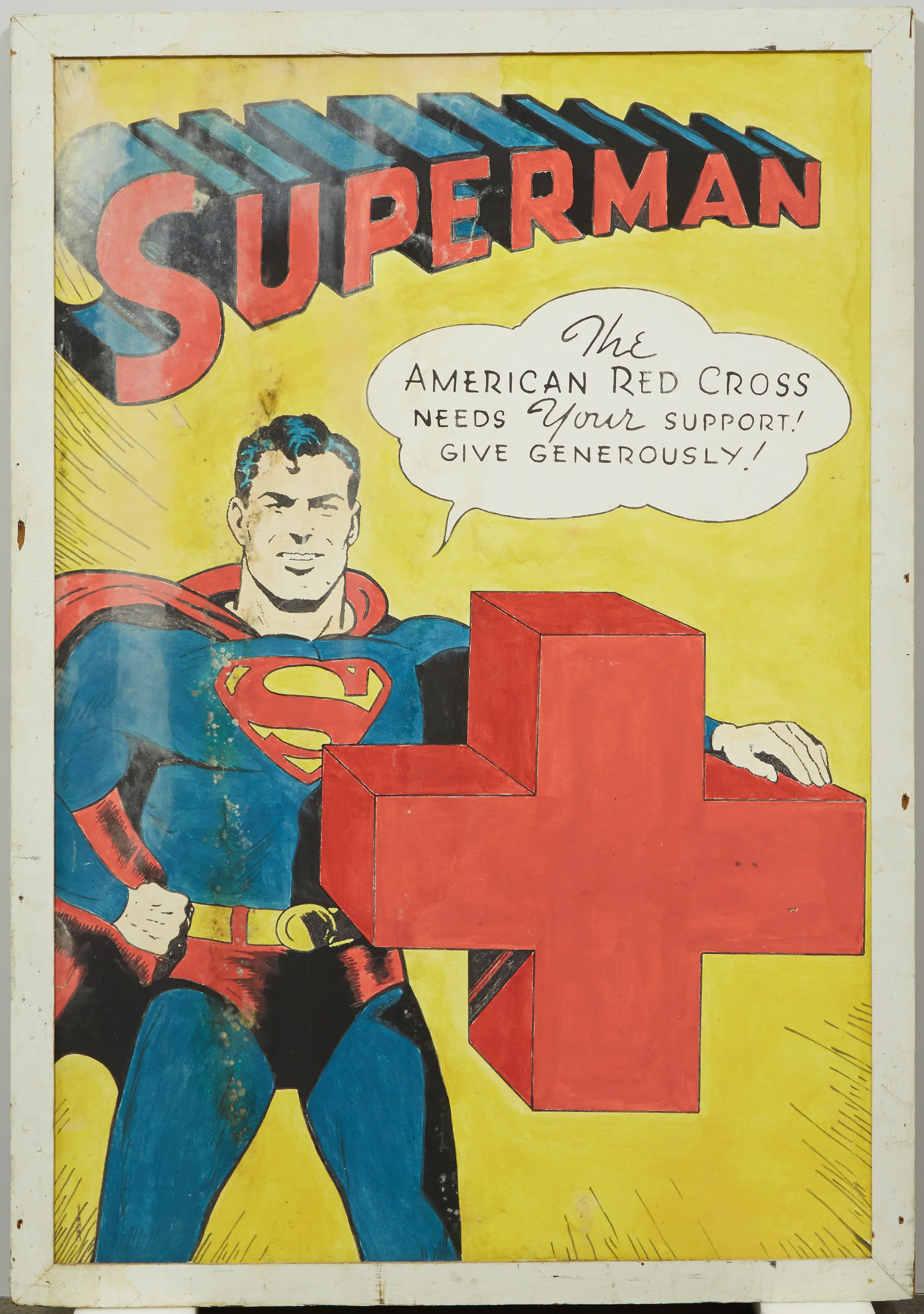
Saving Superman
When Joe went down into the basement of his girlfriend’s house to repair a leaking pipe, he would have never guessed that within hours he would be at The Conservation Center’s doors with a striking, but severely deteriorated, painting of Superman in hand. It was wet, stained, moldy, and even had insects living behind the frame. Fortunately, The Center’s team was at the ready to stop this kryptonite before it could do its worst.
Common Culprits of Damage: Causation and Prevention 101
Given The Conservation Center’s history of treating artworks that have succumbed to fire and flood damage, it may surprise you to know that a few of the most common culprits of damage are poor materials, framing, and storage techniques. Luckily, with proper foresight and preparation, most of this damage is preventable. In this article we will examine some of the common "red flags" to look for in consideration of your own framed art and heirlooms.
Painting With Wine: A Romantic French Work Conserved
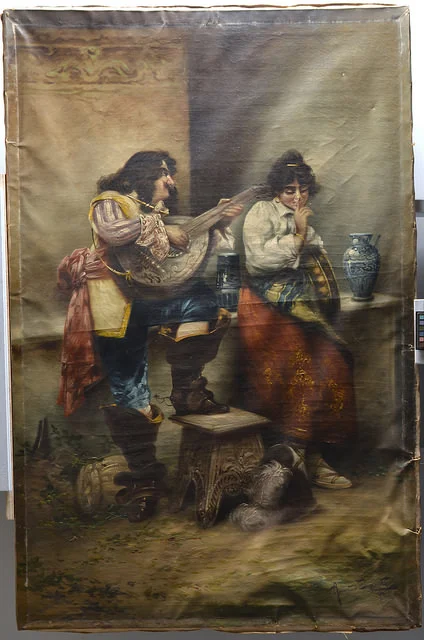
Recently, The Conservation Center was introduced to a little-known, yet charming, oil painting entitled The Musician by a French artist named Louis-Armand Dupont. "I believe Dupont started an art school. I don't know his other artworks; all I know is he loved to paint," shared Alice Morales, the painting's owner, as she discussed the background of the work she brought to us. "I discovered he was actually a wine producer." With a little research, we found the winery is still active and has a portrait of Louis-Armand proudly displayed on the wall. Located in the Pays d’Auge region of Normandy, the Louis Dupont Family Estate is run by the living descendants of Dupont, though their research found records of their family in the area as far back as 1703.
From Russia With Love: Portrait of a Military Officer
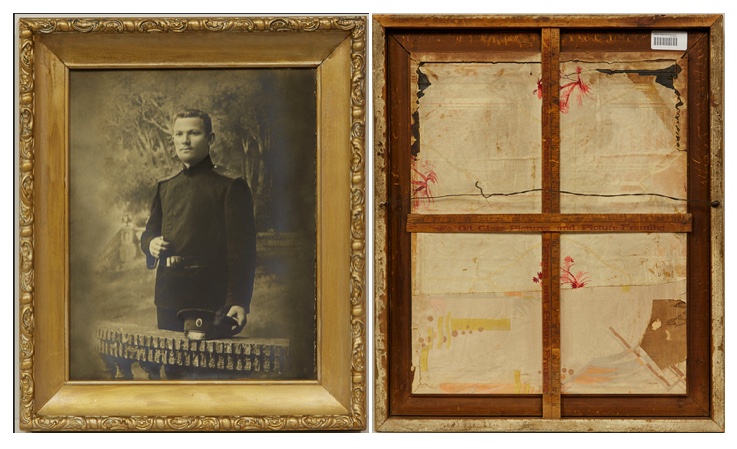
“This is an important piece of our family history,” commented Cindy Egoroff Alexander while discussing a portrait of her grandfather, Emil Egoroff. Cindy and her family recently entrusted The Conservation Center to treat and reframe a black and white photograph of Emil. “We know very little of our grandfather’s life in Russia,” she explained, emphasizing how precious the few details they uncovered were to understanding and remembering her family’s past. Cindy graciously shared the history passed down through the family with our team, shedding light on the story behind this handsome portrait.
The Importance of Heirloom Conservation
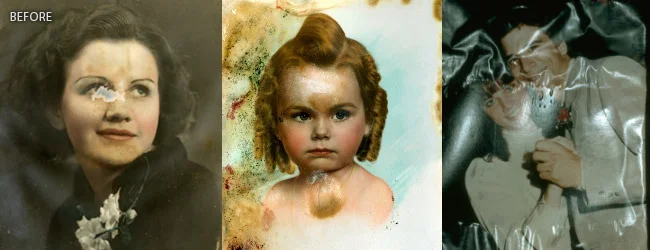
One of the misconceptions concerning work performed at an art treatment facility such as The Conservation Center is that an object or a piece of art must have significant value on the market to qualify for professional care. This is simply not the case. While many of our clients have high-end pieces that belong to large-scale collections and museums, our conservators also specialize in treating family antiques and heirlooms that have sentimental value.
Family heirlooms connect generations in a deep, personal way. From the handed down bible and grandmother’s knitted quilt, to a late 1800s baptismal gown and photos of a relative going off to war—anyone who has found or kept historic pieces in the family knows how moving they can be. These treasured items, passed down through the decades, provide insight into the lives of our ancestors and a richer understanding of our family's history.
Photo Essay: "A Day in the Life" at The Conservation Center, Summer 2015
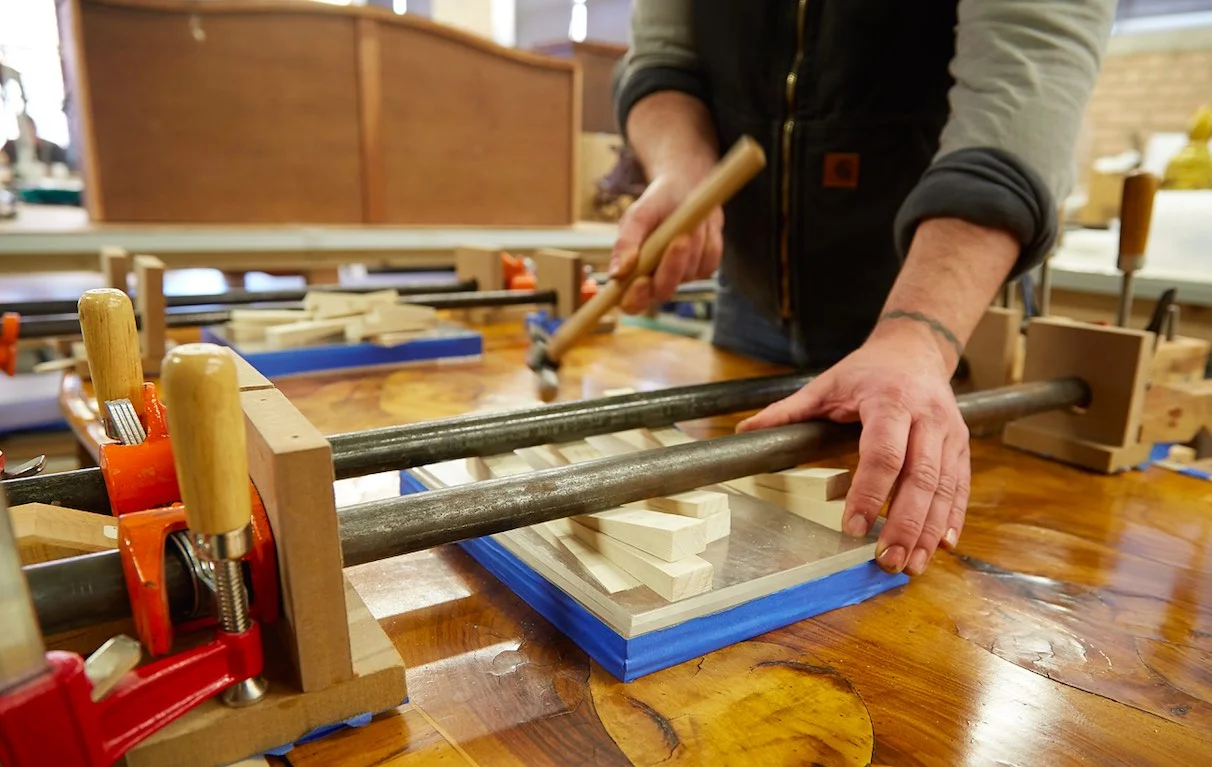
The weather's heating up, but there are no signs of slowing down at The Conservation Center. From intricate conservation projects to private tours, our staff is hard at work in West Town. To celebrate the new season, we are bringing back our popular "A Day in the Life" photo series. With our camera in hand, we wandered around the lab and captured some amazing images to share with you.
Piecing Back Together A Family Heirloom, and Learning About The Past
Here at The Conservation Center, we strive to protect and preserve objects that hold intrinsic value to individuals and families, not just monetary value. During treatment, we often uncover forgotten details about a piece, and it can mean so much more to our clients when this information relates to their own family members and heritage. In this way, we approach each and every object with the highest level of care and attention. Recently, Naomi Steinberg, an Associate Professor of Religious Studies at DePaul University in Chicago, brought us a badly torn ketubah that was believed to belong to her paternal grandparent’s. Our conservators were able to meticulously piece this document back together, and through this process, Naomi also uncovered a slice of family history.
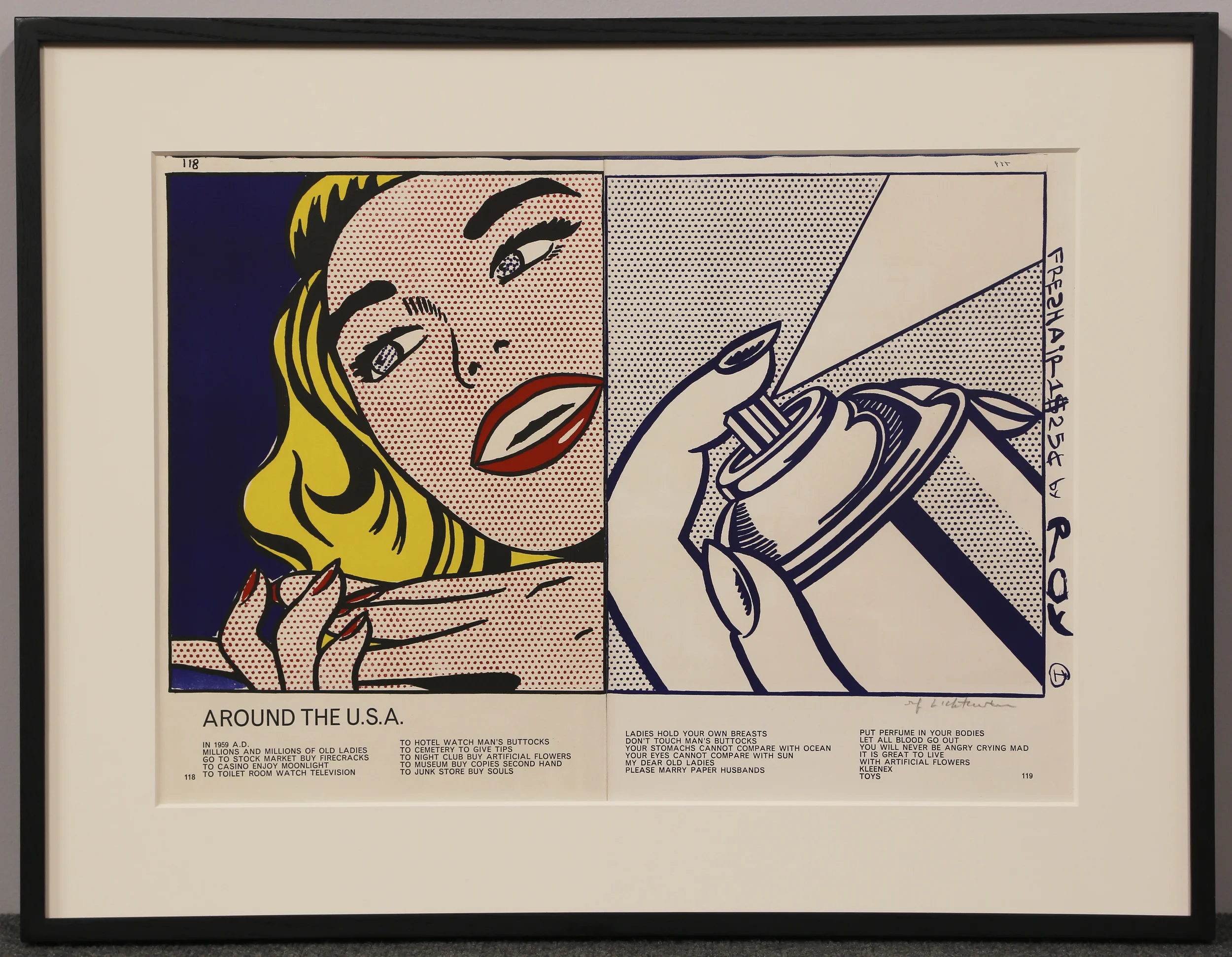
EXPO CHICAGO/2014 Highlight: "Girl with a Spray Can" by Roy Lichtenstein, 1963
Girl with a Spray Can was first printed in Wallace Ting’s book 1¢ Life, often viewed as a compact visual manifesto of the sixties. Pop artist Roy Lichtenstein’s color lithographs were printed on pages 118-119. This piece offers a unique juxtaposition. The right panel of the diptych consists of a reference to the simple printing process of using Ben-day dots (which dates back to 1879). The left side of the diptych consists of a small segment of a comic-strip imagery for which Lichtenstein became quite famous. This piece is the first instance of Lichtenstein featuring a blonde girl in his works, iconography which now is considered some of the most desirable in his oeuvre.