
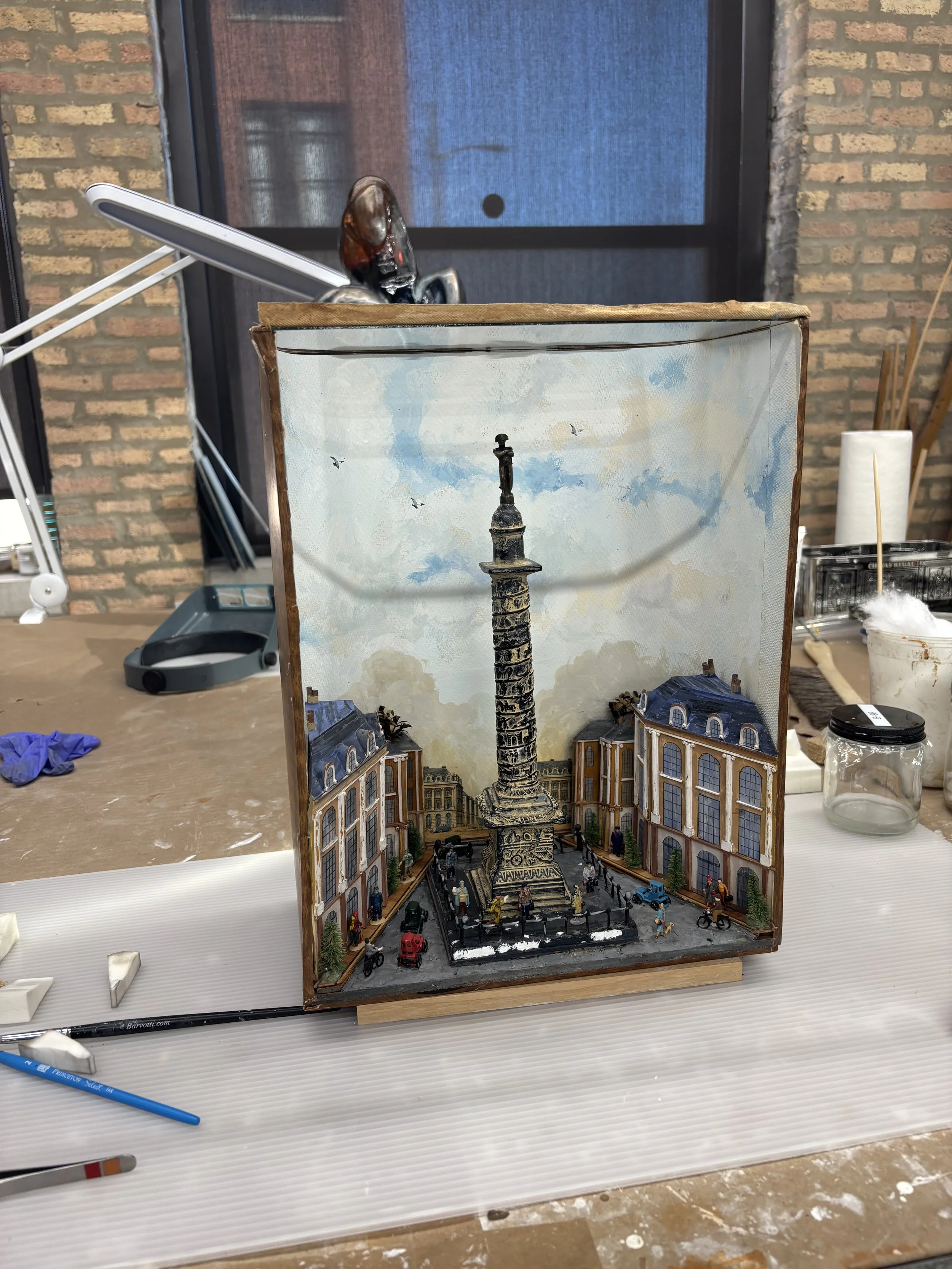
There is something inherently captivating about the world in miniature. Whether it evokes the childlike wonder of a dollhouse, a desire for order and control, or the way a reduced scale sharpens our attention to detail, miniatures invite close looking in a way few other objects can. It’s no secret that we have a particular fondness for them at The Conservation Center (our staff art contest theme offered recent proof), so when a client brought in a remarkable miniature Parisian street scene by Narcissa Niblack Thorne, we were instantly charmed.
Watch the video below of senior objects conservator Josh McCauley discussing treatment, then scroll down to learn more about the artist and process.
Thorne is best known for her exquisitely detailed miniature rooms, nearly 70 of which are housed at the Art Institute of Chicago, where they have captivated generations of visitors, children and adults alike.
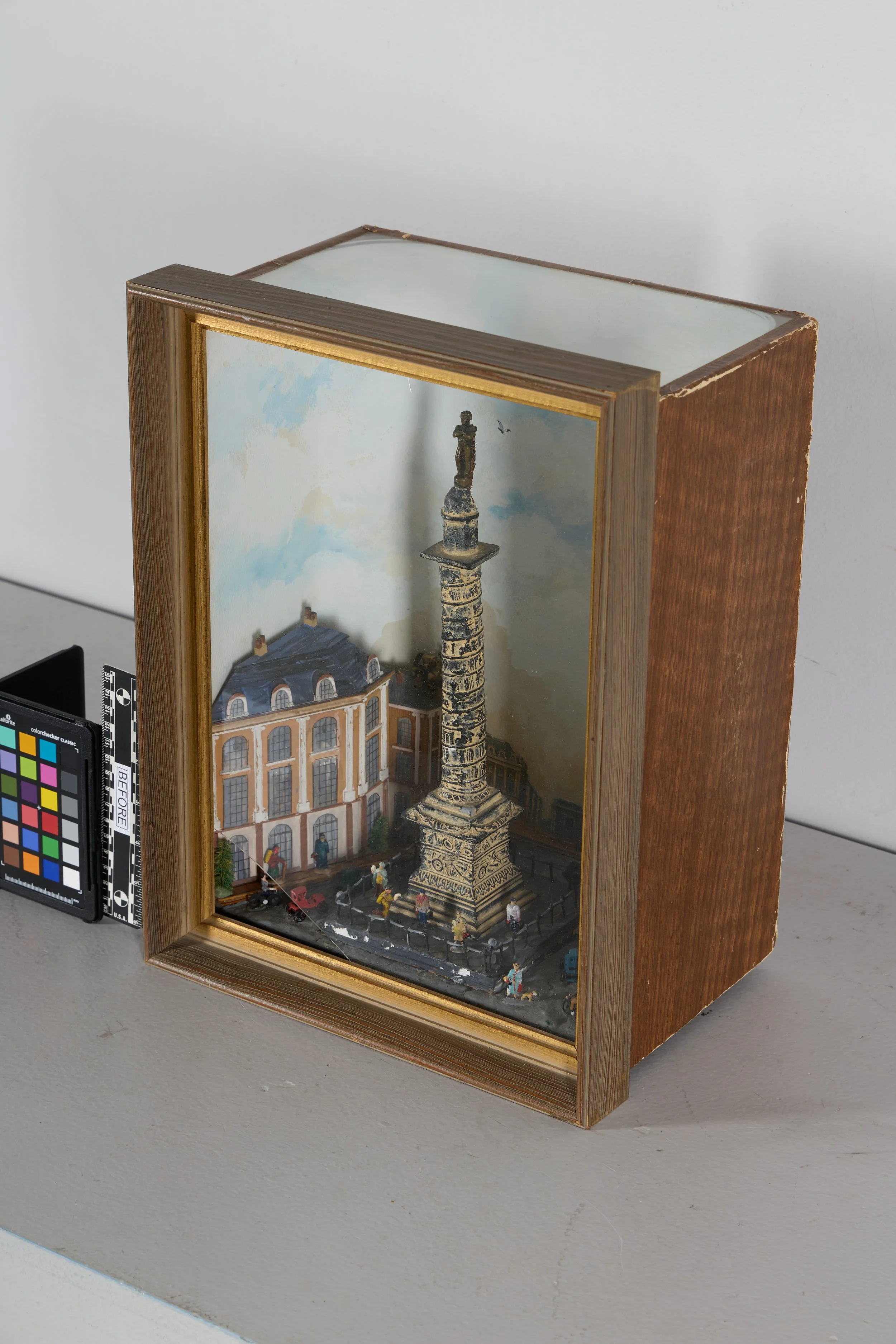
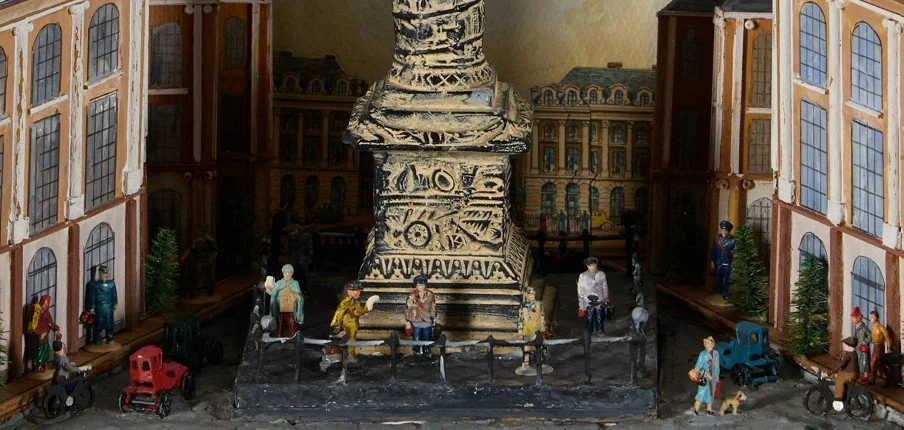
The work treated at The Conservation Center, Place Vendôme, Paris, depicts a bustling Parisian square complete with pedestrians, automobiles, and even birds suspended mid-flight, all rendered at a carefully controlled scale.
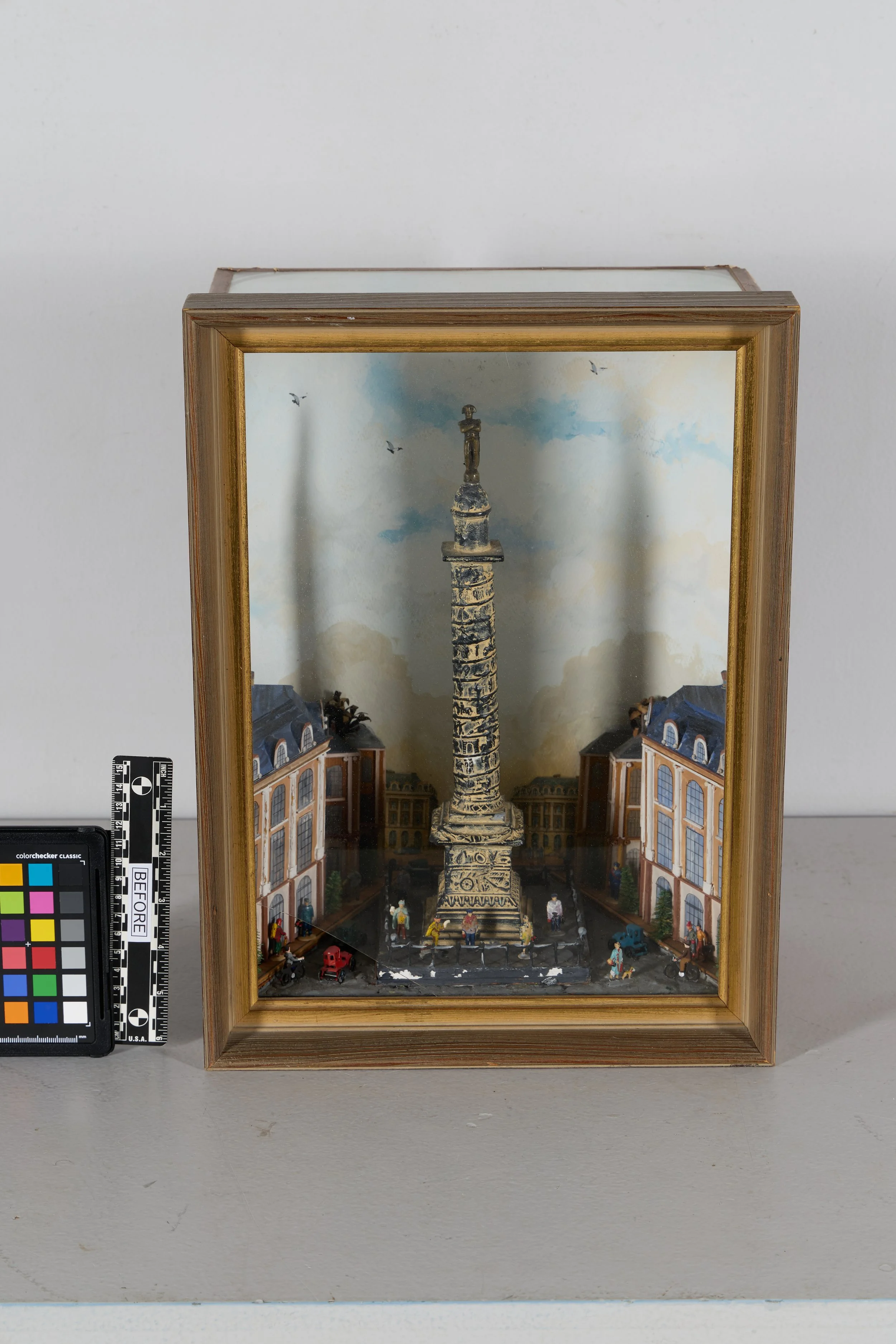
Before treatment.
Born in Vincennes, Indiana, in 1882, Thorne moved to Chicago as a child. She later married James Ward Thorne, heir to the Montgomery Ward fortune, and became a prominent yet private figure in Chicago society. Her fascination with miniature worlds began early, encouraged in part by small objects and curios sent by an uncle serving in the U.S. Navy, and would bloom into an artistic pursuit that occupied her for decades.
Beginning in the 1930s, Thorne commissioned highly skilled craftsmen to help realize her vision, many of whom were available due to widespread unemployment during the Great Depression. Working from her own detailed drawings, cabinetmakers produced rooms at a scale of one inch to one foot. Woodwork was painted and stained, walls were papered, and textiles were fabricated, including period-style rugs woven specifically for individual interiors.
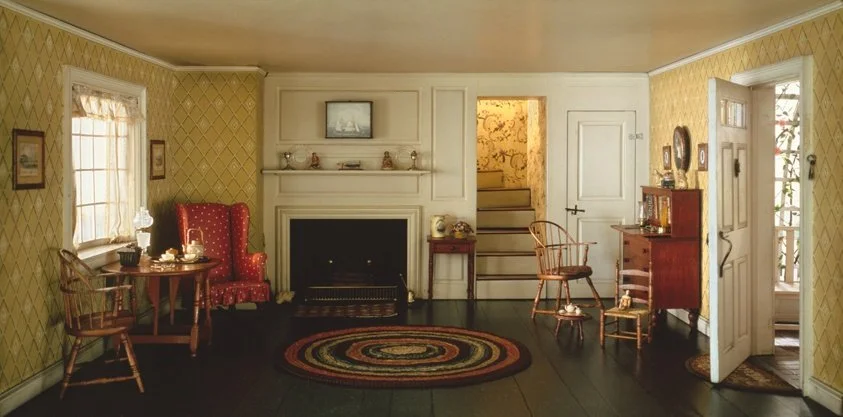
Narcissa Niblack Thorne, Cape Cod Living Room, 1750-1850, The Art Institute of Chicago
The miniature we treated depicts the Vendôme Column in Paris and was constructed from a combination of materials: plaster for the column, paper and cardstock for the surrounding buildings, metal for the figures and vehicles, and a polymer material for the trees. The painted surfaces appear to have been executed in a water-soluble medium, with the sky rendered in gouache on paper.
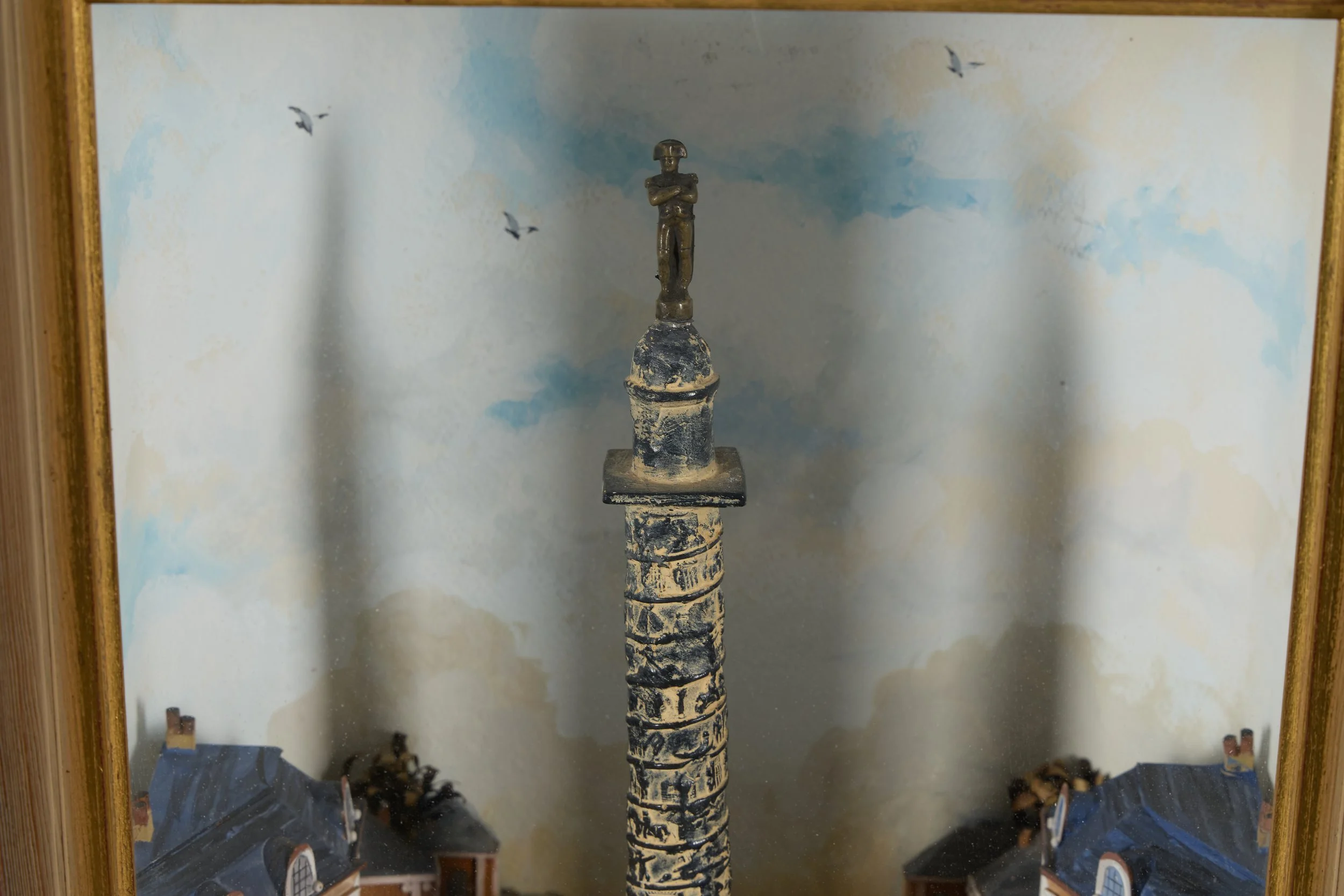
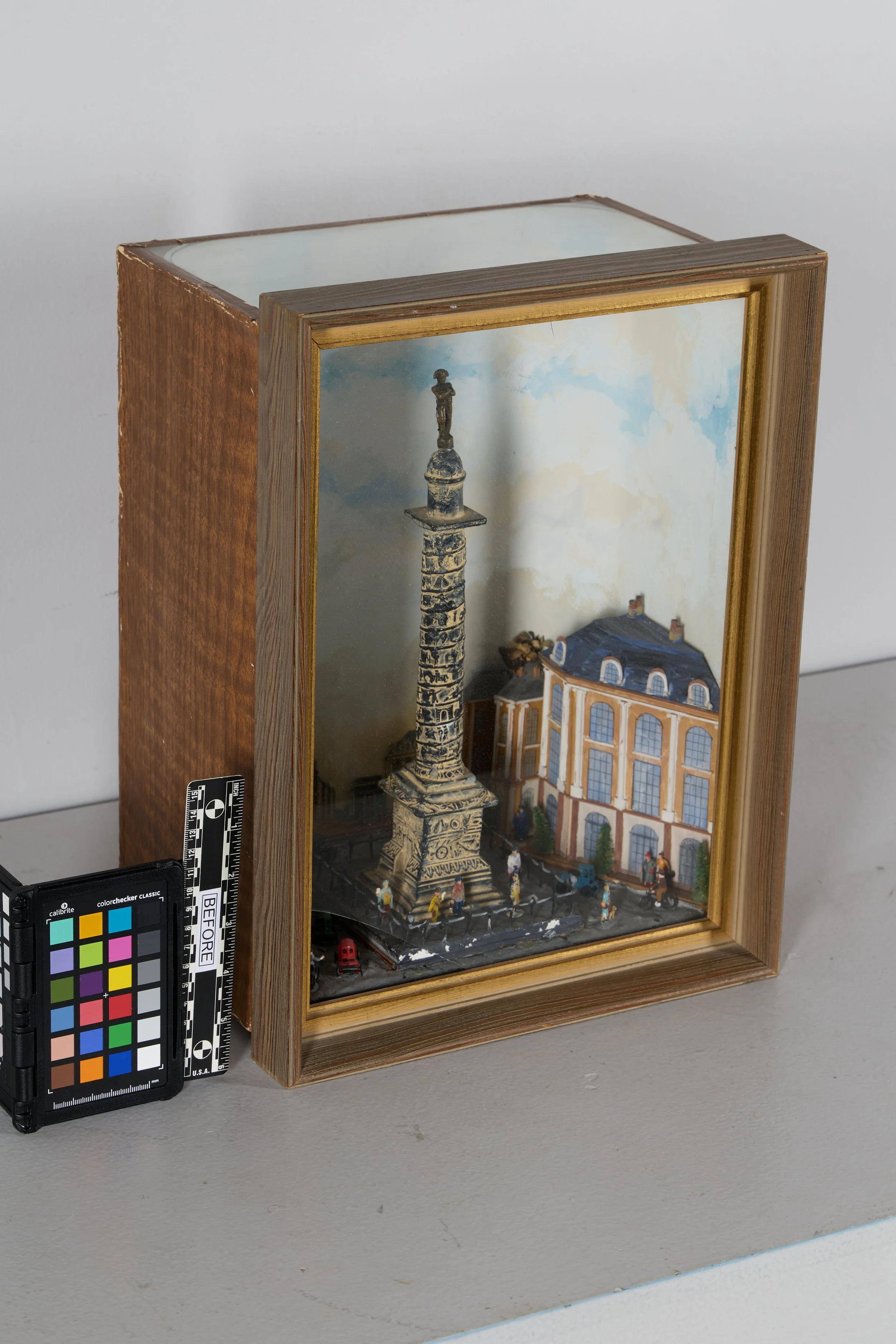
Before treatment.
The scene was housed within a paper-covered plywood case and protected by a framed glass front and glass top secured with screws and eyehooks, with cotton banding along the interior upper edge.
Before treatment.
Before treatment.
At the time of examination, the lower corner of the framed glass cover was broken, with a loose glass fragment resting behind the proper right building. The tip of the column exhibited a plaster loss, and the fenced base and walkway beneath the column showed severe lifting and flaking of the paint layer. The frame displayed minor abrasions. The paper covering on the exterior case showed abrasions, lifting, distortion, delamination, and surface grime, particularly along the edges, as well as age-related discoloration. The white paint at the upper edge of the sky was actively flaking.
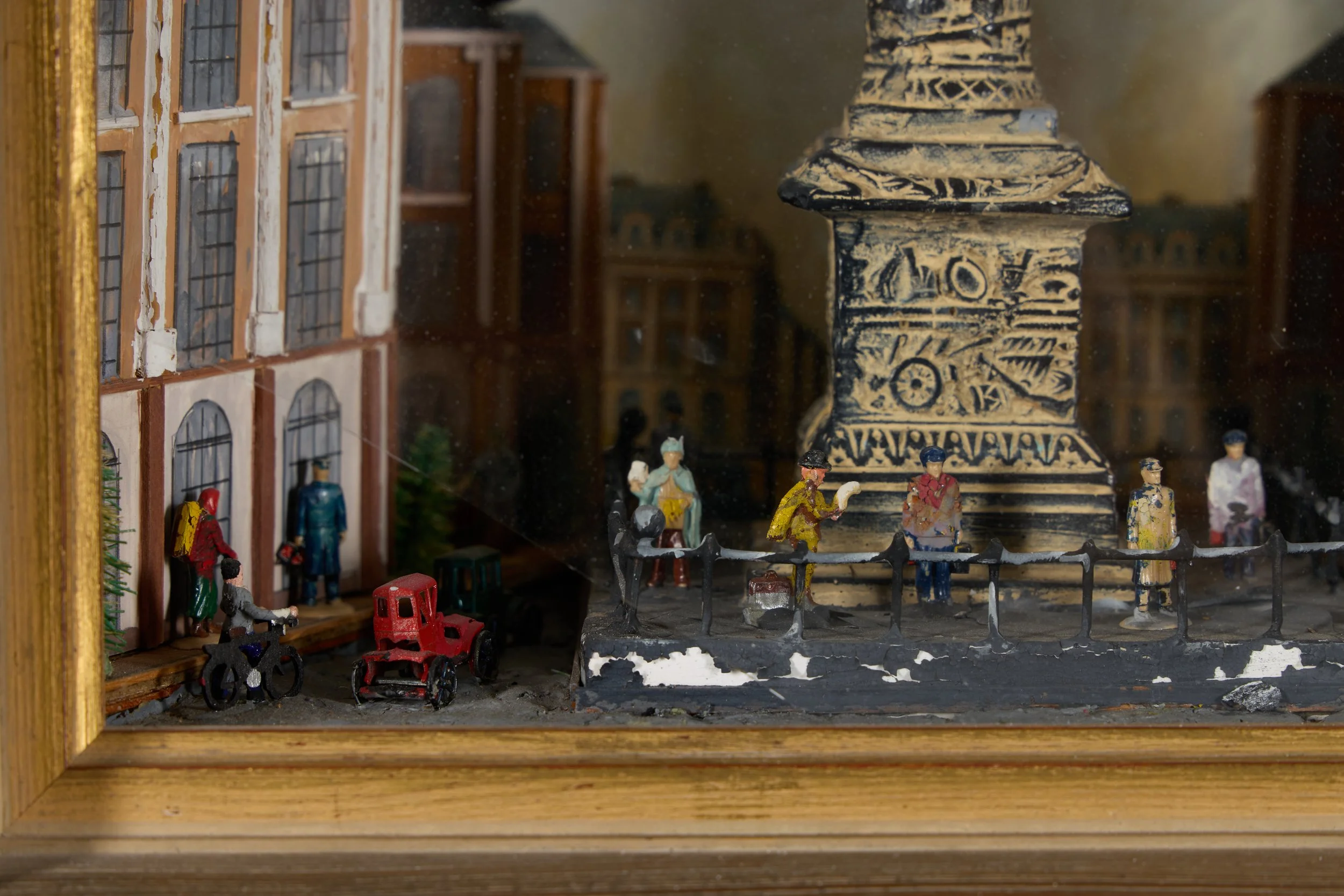
Before treatment.
To stabilize the miniature and address these condition concerns, treatment was carried out by senior objects conservator Josh McCauley and focused on securing fragile surfaces, reintegrating losses, and restoring the integrity of the protective housing. He first removed the framed glass cover from the case, and the broken glass pane was carefully extracted. Minor abrasions to the frame were inpainted. Lifting paint on the fenced base and walkway was consolidated using a reversible, solvent-based resin, and associated edge losses were filled. The loss at the tip of the column was filled and sculpted to reintegrate the form.
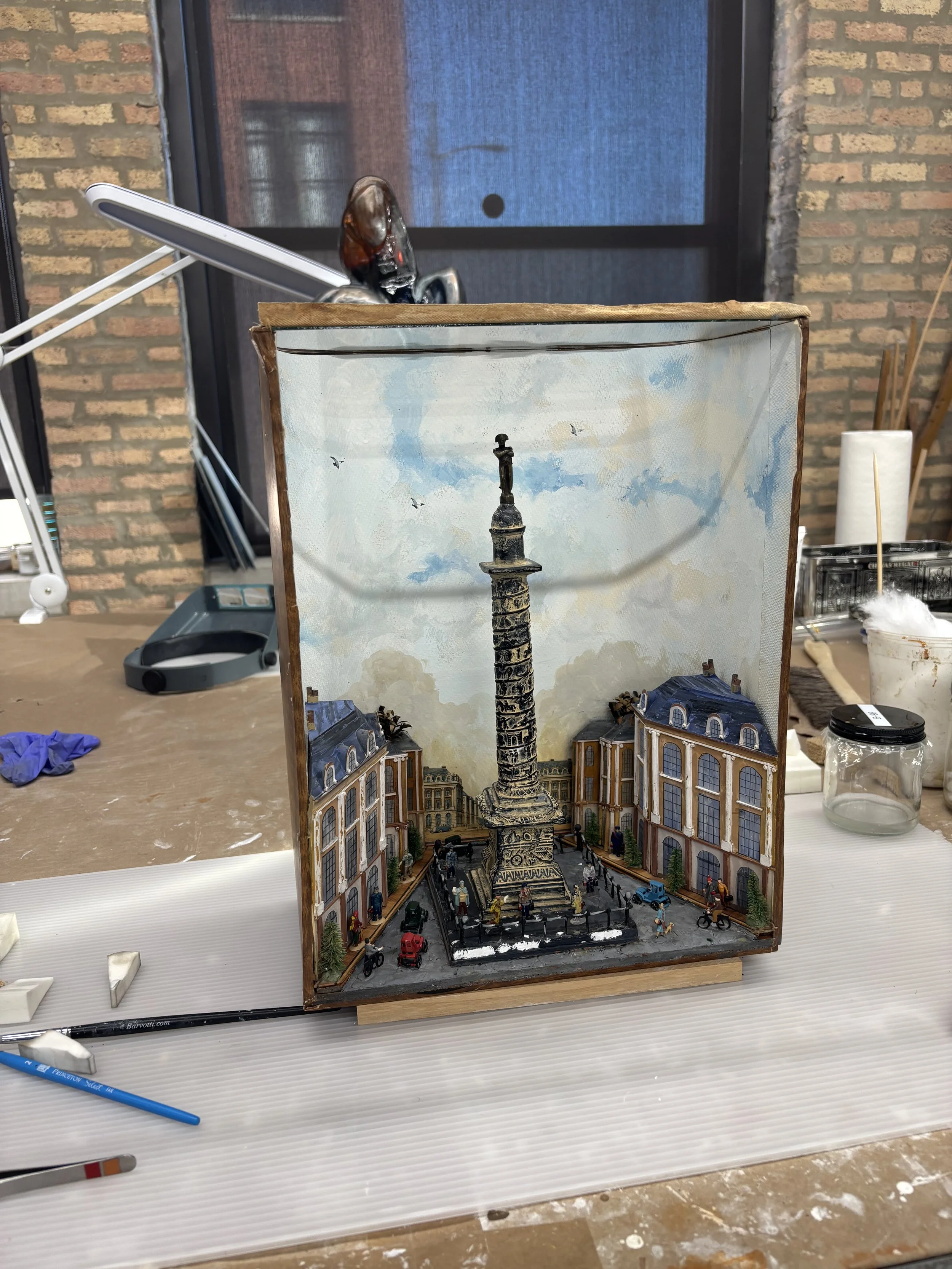
During treatment.
The interior surfaces were gently cleaned using dry methods, and fills were inpainted with conservation-grade watercolors. Lifting areas of the exterior paper covering were consolidated with an acrylic adhesive where possible, and abrasions and losses were toned to reduce their appearance. The exterior of the case was surface cleaned using appropriate conservation methods. The broken glass was replaced with Conservation Clear glass, a conservation-grade glazing that provides protection from ultraviolet light.
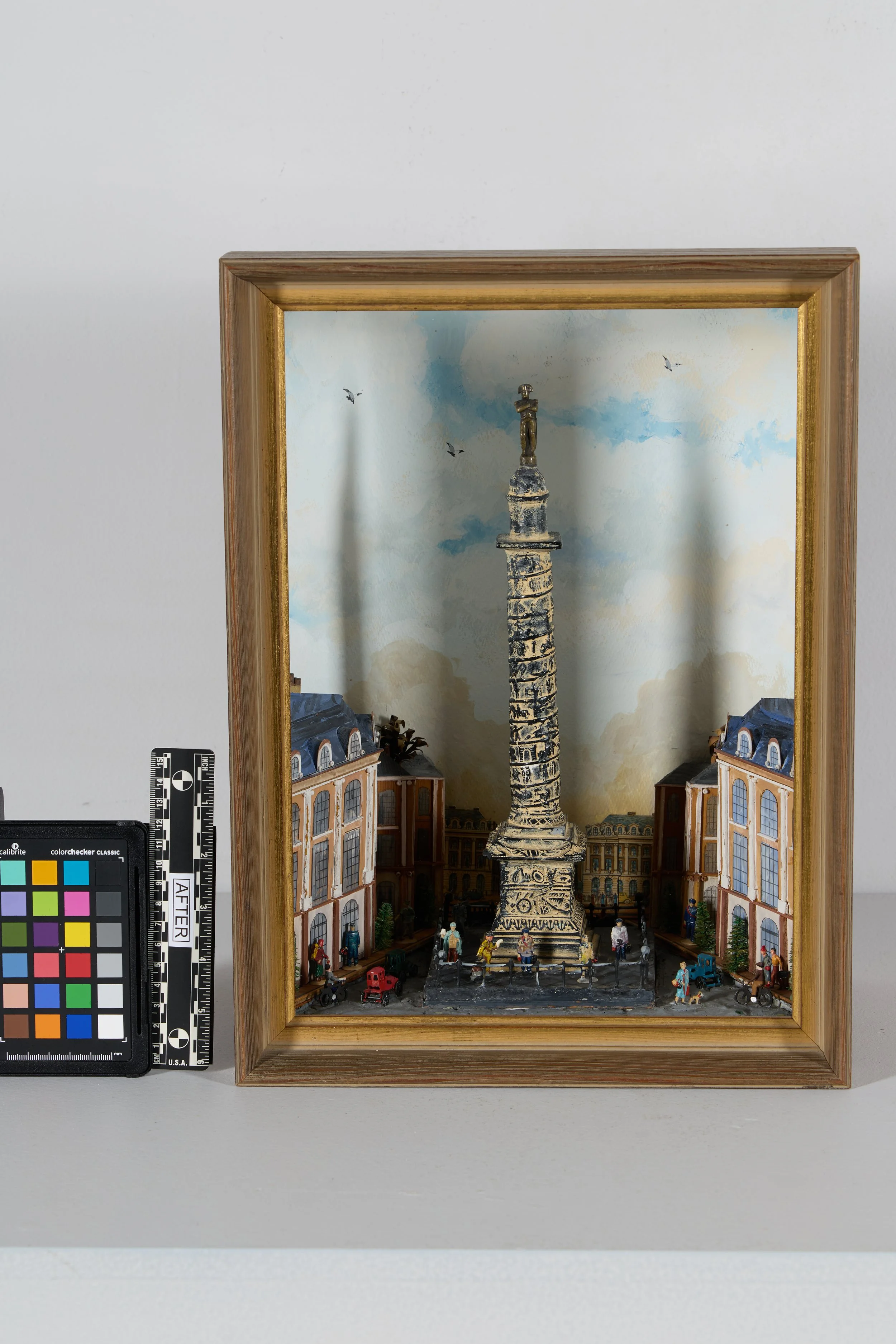
After treatment.
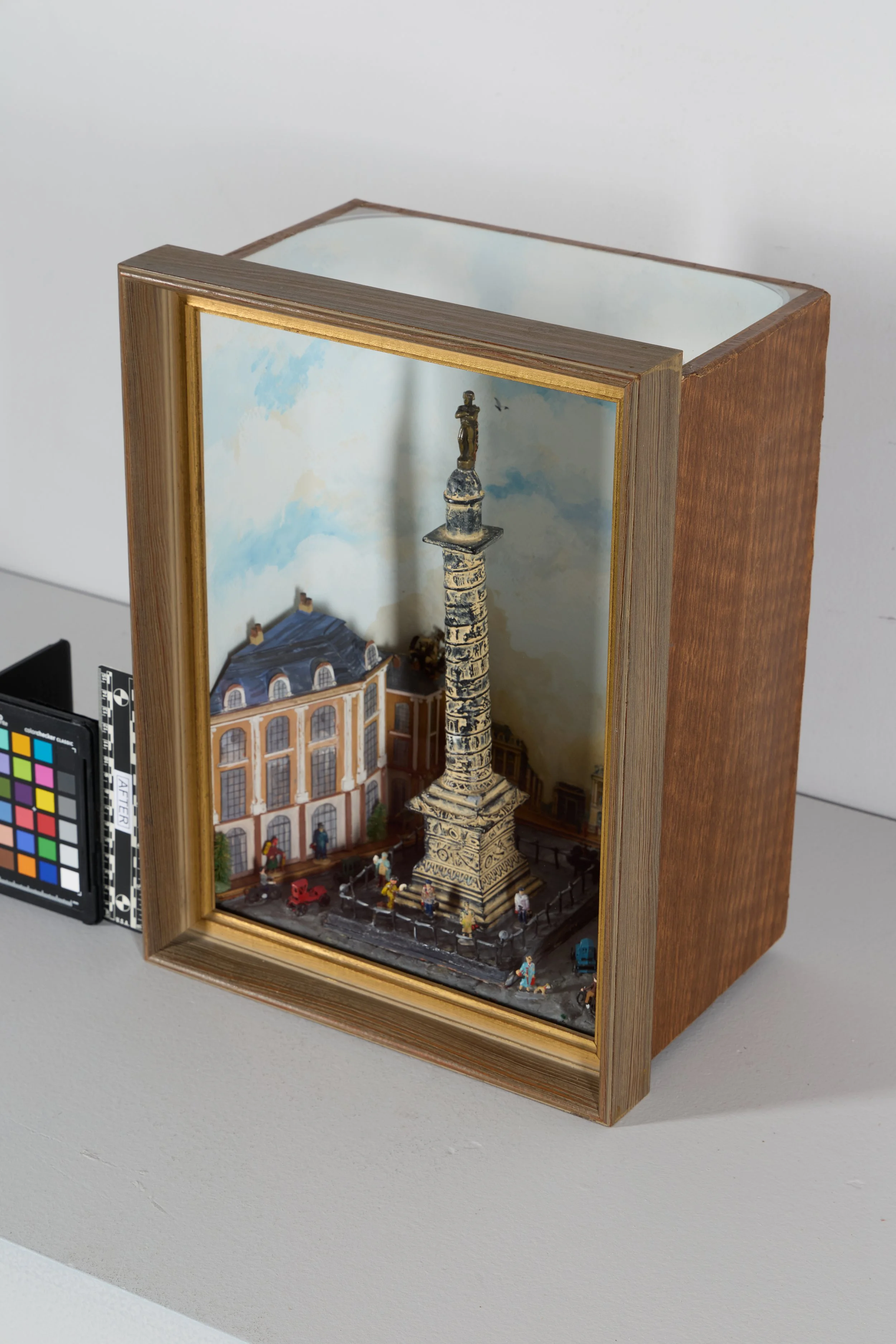
After treatment.
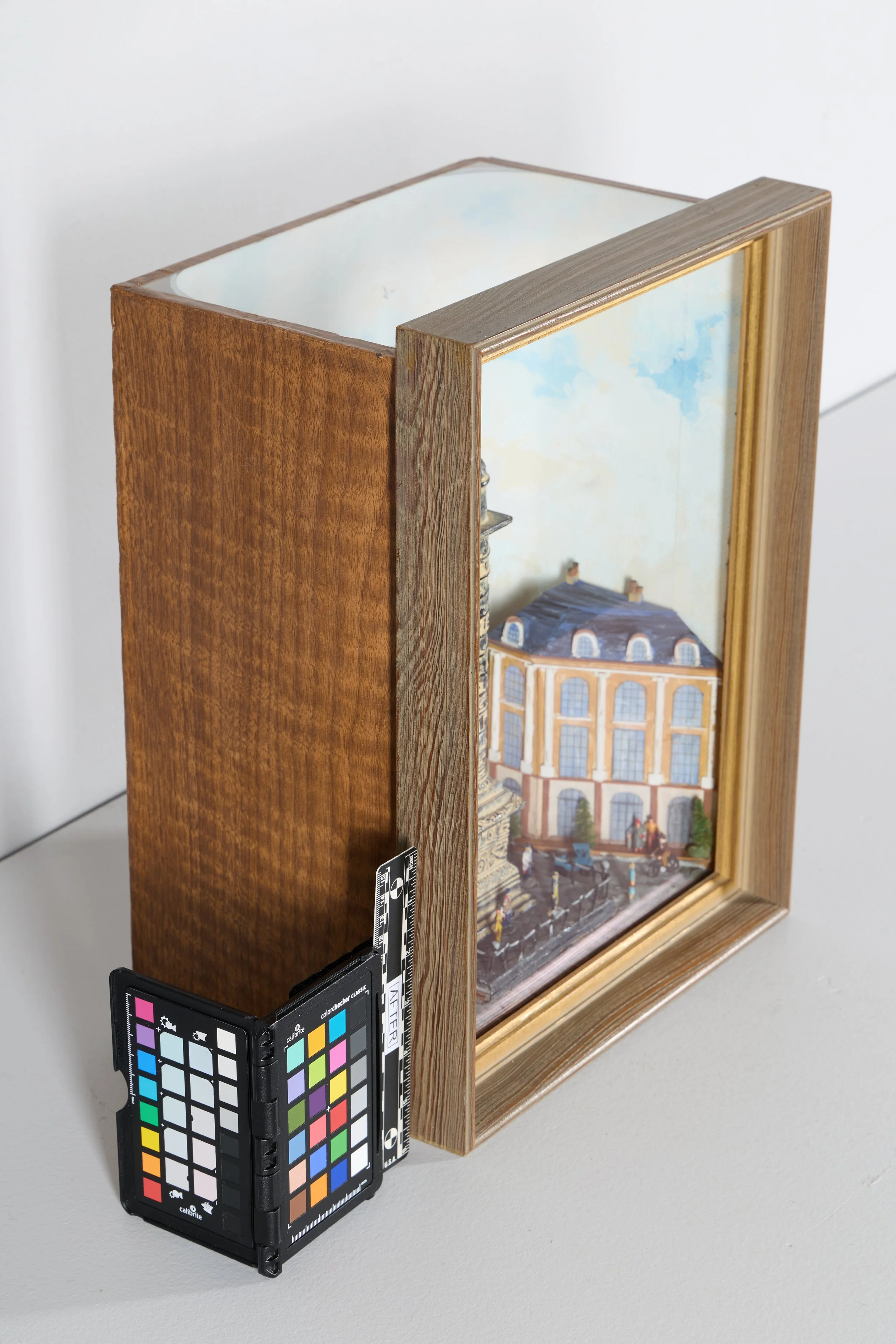
After treatment.
Executed at an exacting scale, Place Vendôme, Paris demonstrates that care and craftsmanship do not diminish with size. Its conservation preserved both the physical integrity of the miniature and Narcissa Niblack Thorne’s deliberate commitment to precision, underscoring the lasting significance of even the smallest worlds.
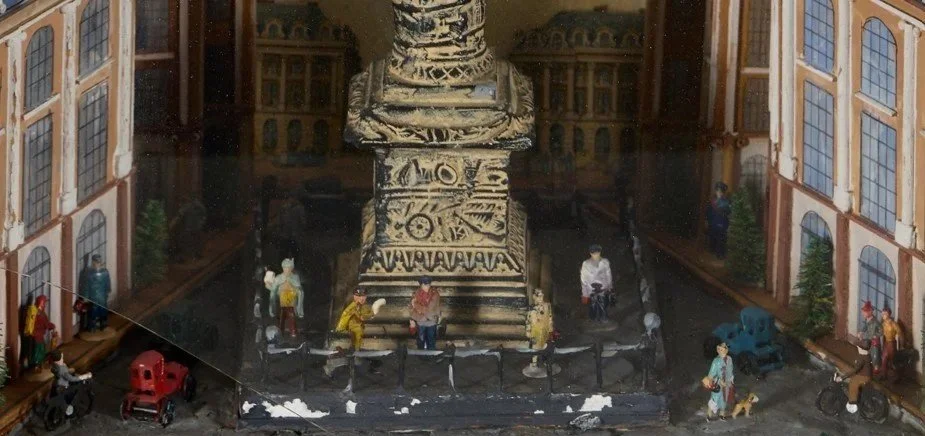
Sources:
https://www.dailyartmagazine.com/the-throne-miniature-rooms/
https://phxart.org/collection/thorne-rooms/
https://mymodernmet.com/thorne-miniature-rooms-phoenix-art-museum/
https://berkshirefinearts.com/12-01-2012_wes-anderson-s-moonlight-kingdom.htm
https://lithub.com/on-the-art-and-artifice-of-the-miniature/
