At The Conservation Center, we are often entrusted with family heirlooms that have been passed down through generations. Caring for these objects is both our responsibility and our privilege, and when a treatment is undertaken as a surprise gift, the project carries special meaning.
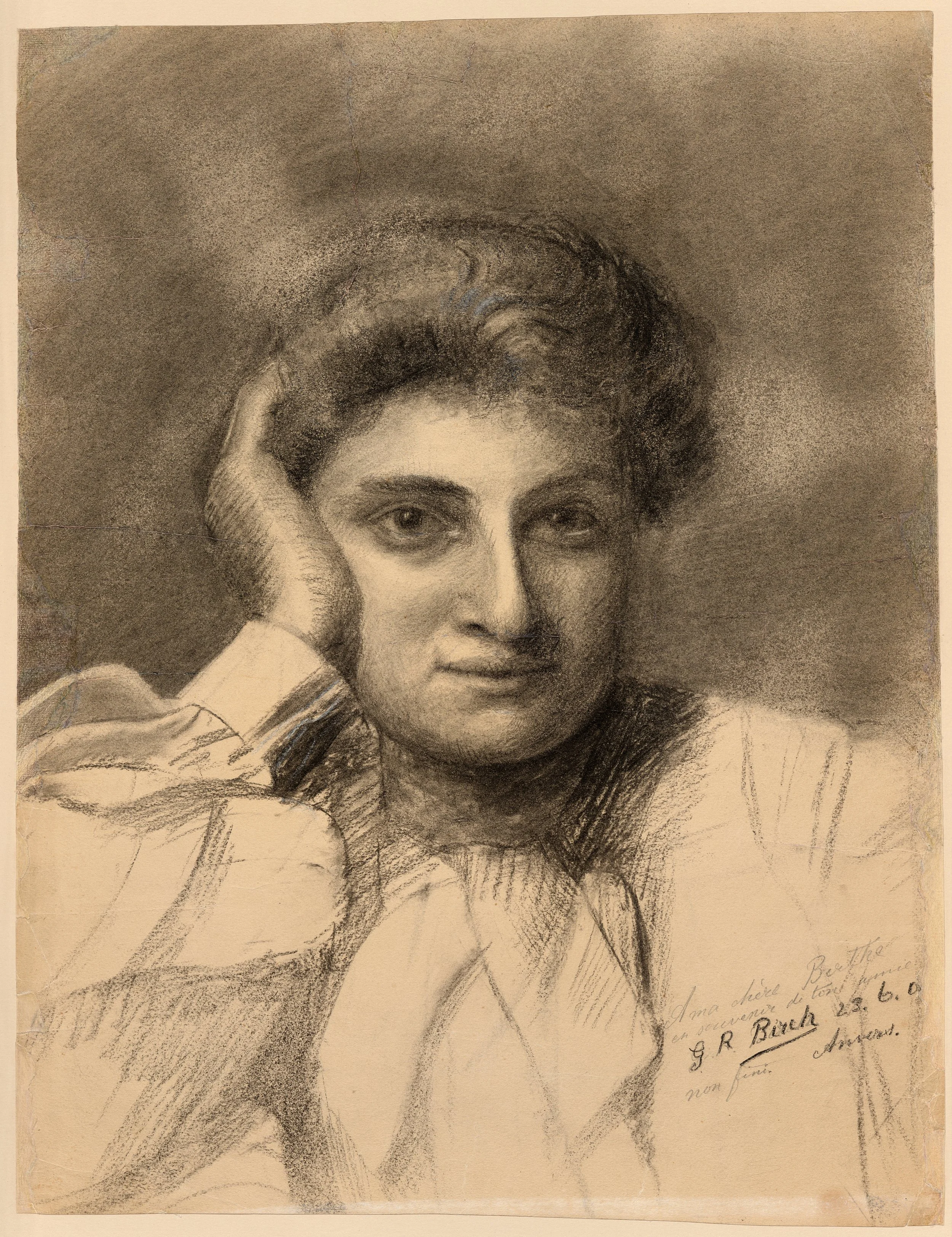
This portrait drawing of Berthe Tolkowsky by G. R. Birch was created by our client’s husband’s grandmother and conserved as a gift to commemorate a 50th wedding anniversary. For many years, the drawing had been stored rolled in a tube. While rolling may seem like a practical storage solution for works on paper, long-term rolling can lead to significant structural damage.
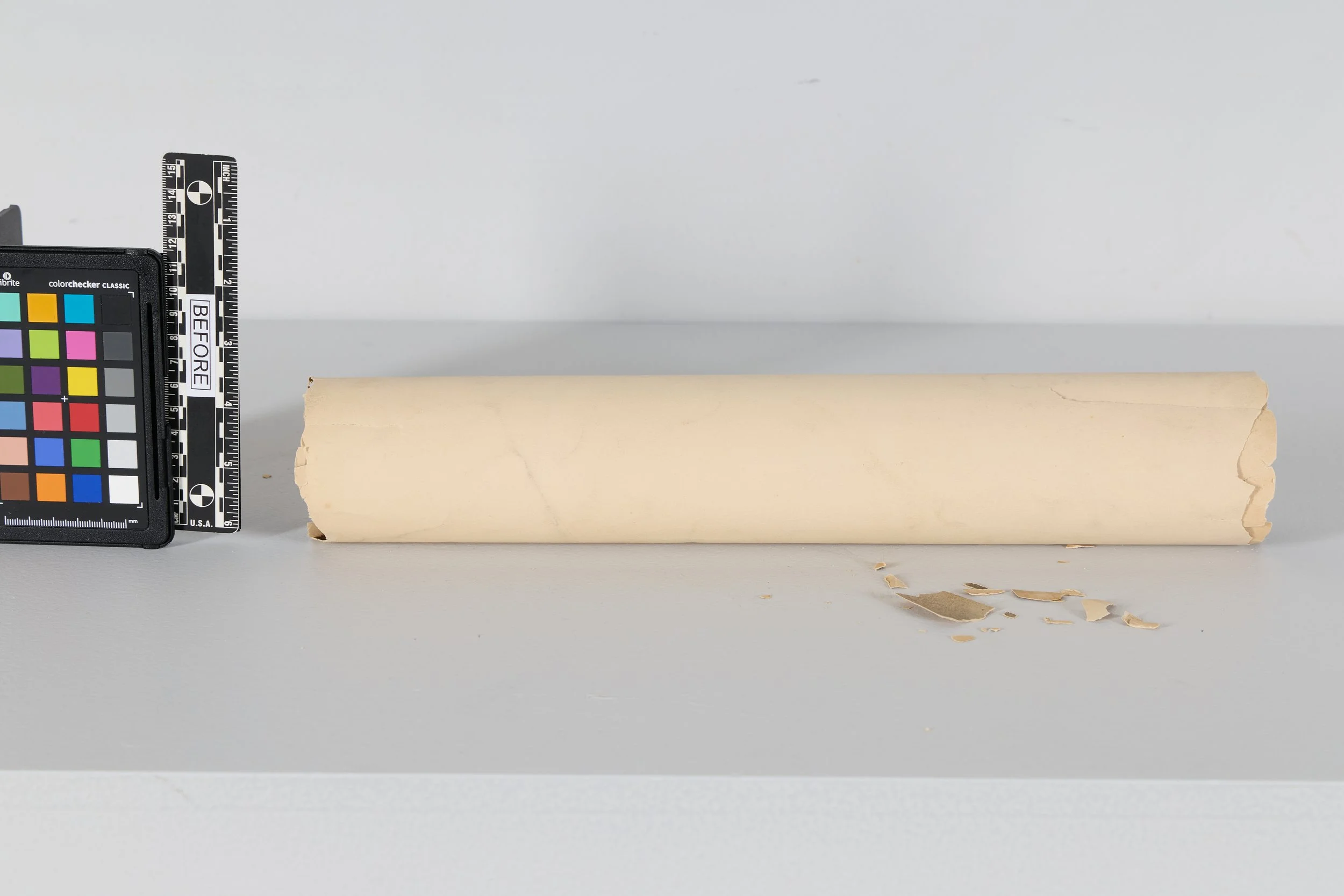
Before treatment.
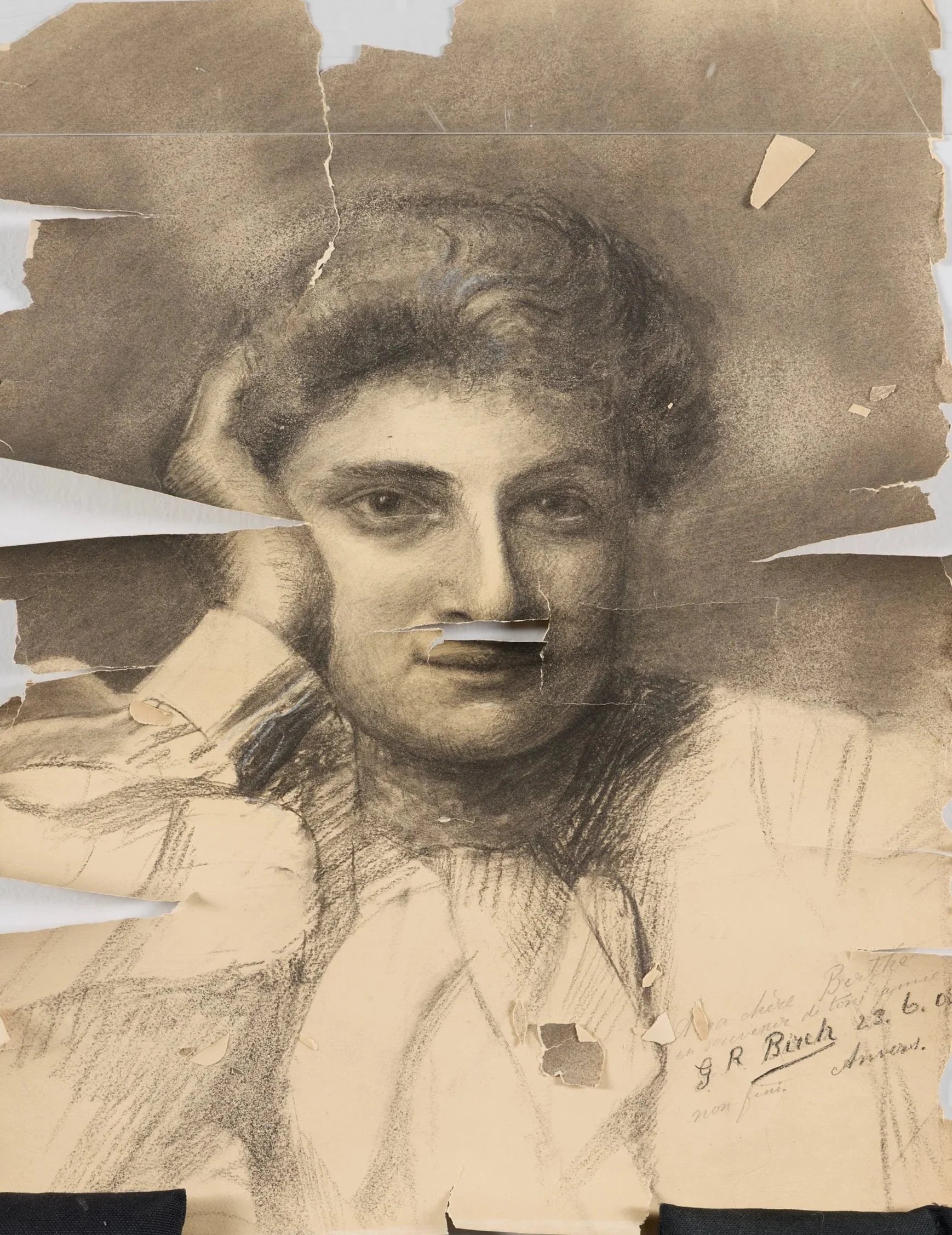
When the portrait arrived at The Center, the paper had darkened and became embrittled due to age and prolonged storage. Tight rolling had caused severe overall distortion and pronounced creasing across the sheet. Multiple tears and areas of loss were present, including losses affecting the text in the lower right corner. A layer of surface grime further obscured the finer details of the original drawing.
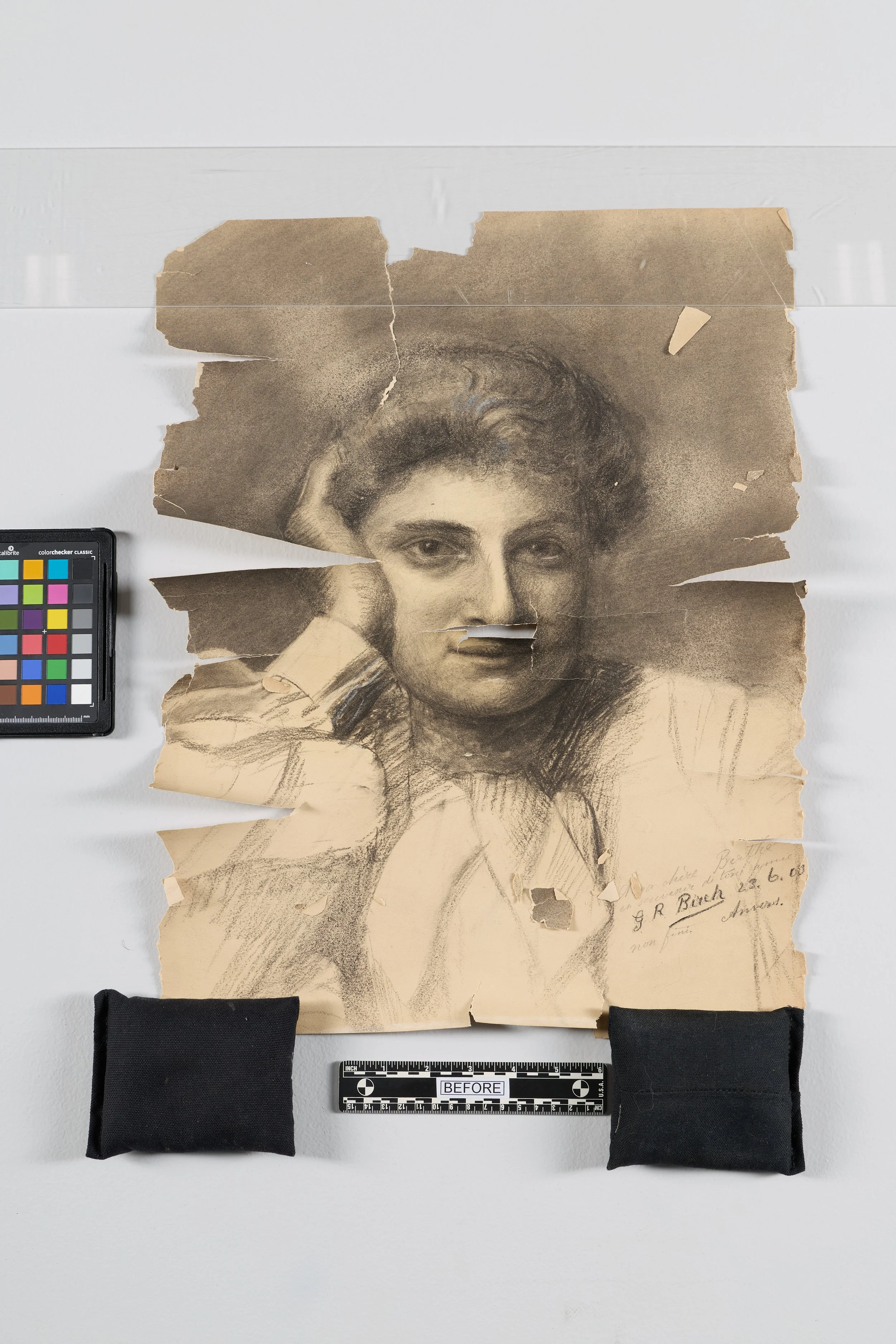
The portrait unrolled, before treatment.
These condition issues are common in older works on paper that have been stored without proper support or environmental control. Brittle paper is particularly vulnerable to tearing during handling or unrolling, which makes careful stabilization an essential first step in treatment.
Watch a short video of the treatment by our associate conservator of works on paper, Katrina Flores, below — then scroll down to read about the process in more detail:
Treatment began with thorough photographic documentation to establish a record of the drawing’s condition. Surface grime was then selectively reduced using appropriate dry cleaning methods, allowing details that had been obscured over time to become more visible.
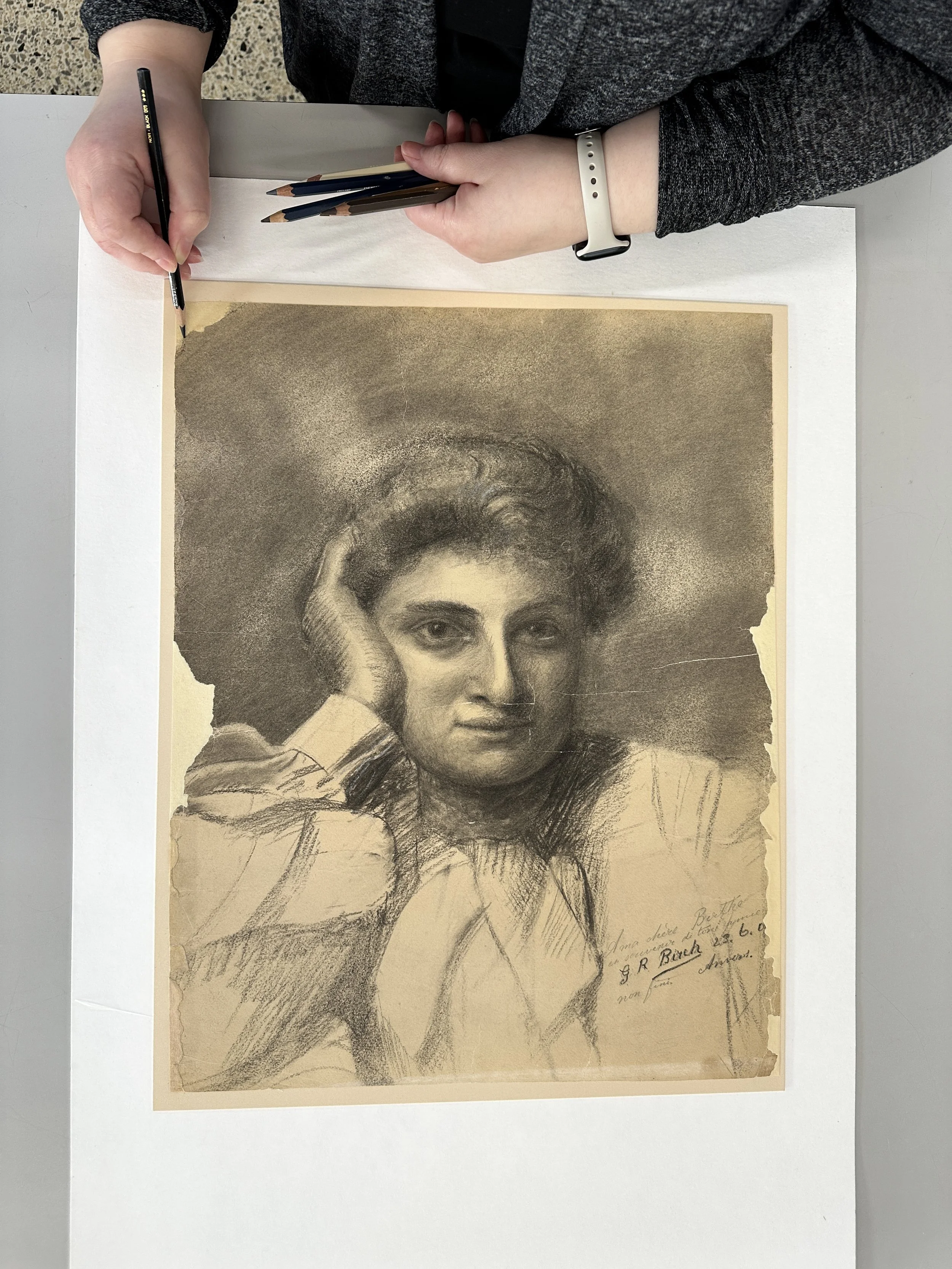
To address the overall distortion, the drawing was carefully flattened by humidification in a controlled chamber that slowly and gently relaxed the paper by introducing humidity. Tears were repaired with Japanese tissue and wheat starch paste, materials chosen for longevity and the reversibility. Areas of loss were filled with carefully selected mending papers and visually integrated to reduce distraction while remaining legible on close inspection.
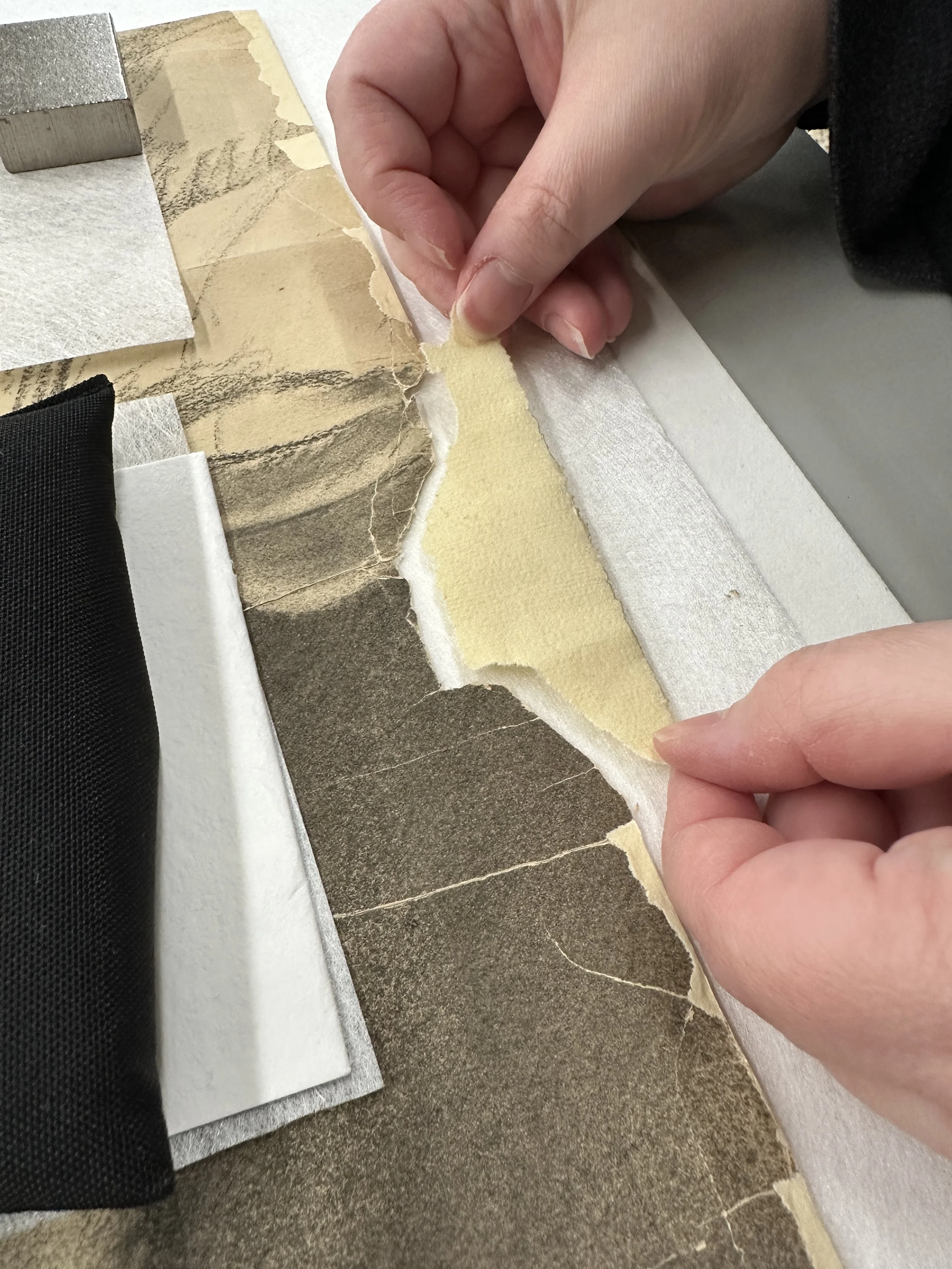
Repairing tears.
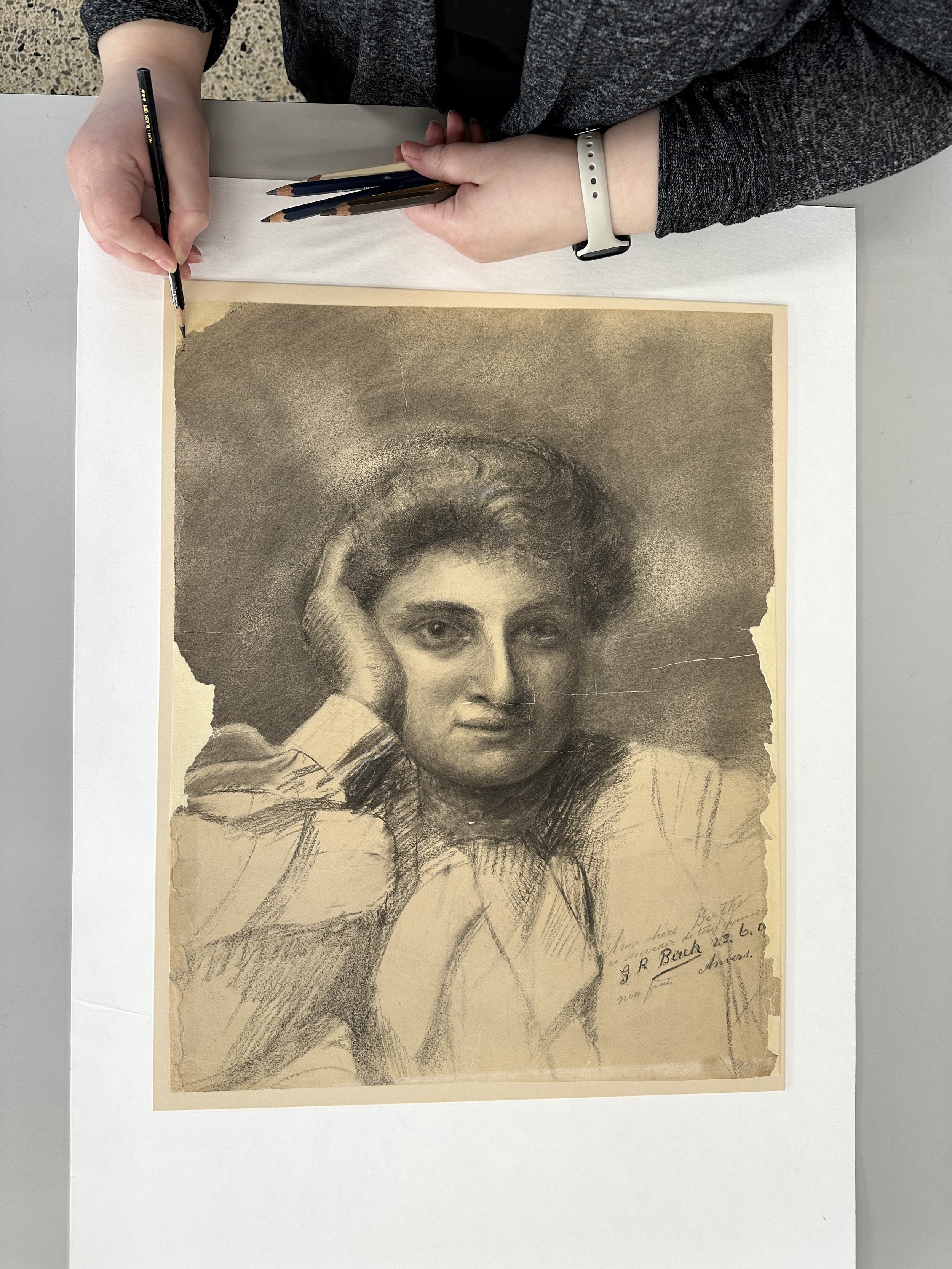
Integrating areas of loss.
Creases and repaired tears were supported from the reverse to strengthen weakened areas of the sheet. To provide consistent overall support and reduce the risk of future damage, the drawing was fully mounted to an archival four-ply board using reversible heat-set tissue.
In addition to stabilizing the original artwork, the portrait was digitally captured at high resolution, and two archival-quality prints were produced. These files allow the family to view, share, and reproduce the image without handling the fragile original, while the conserved drawing can be safely preserved.
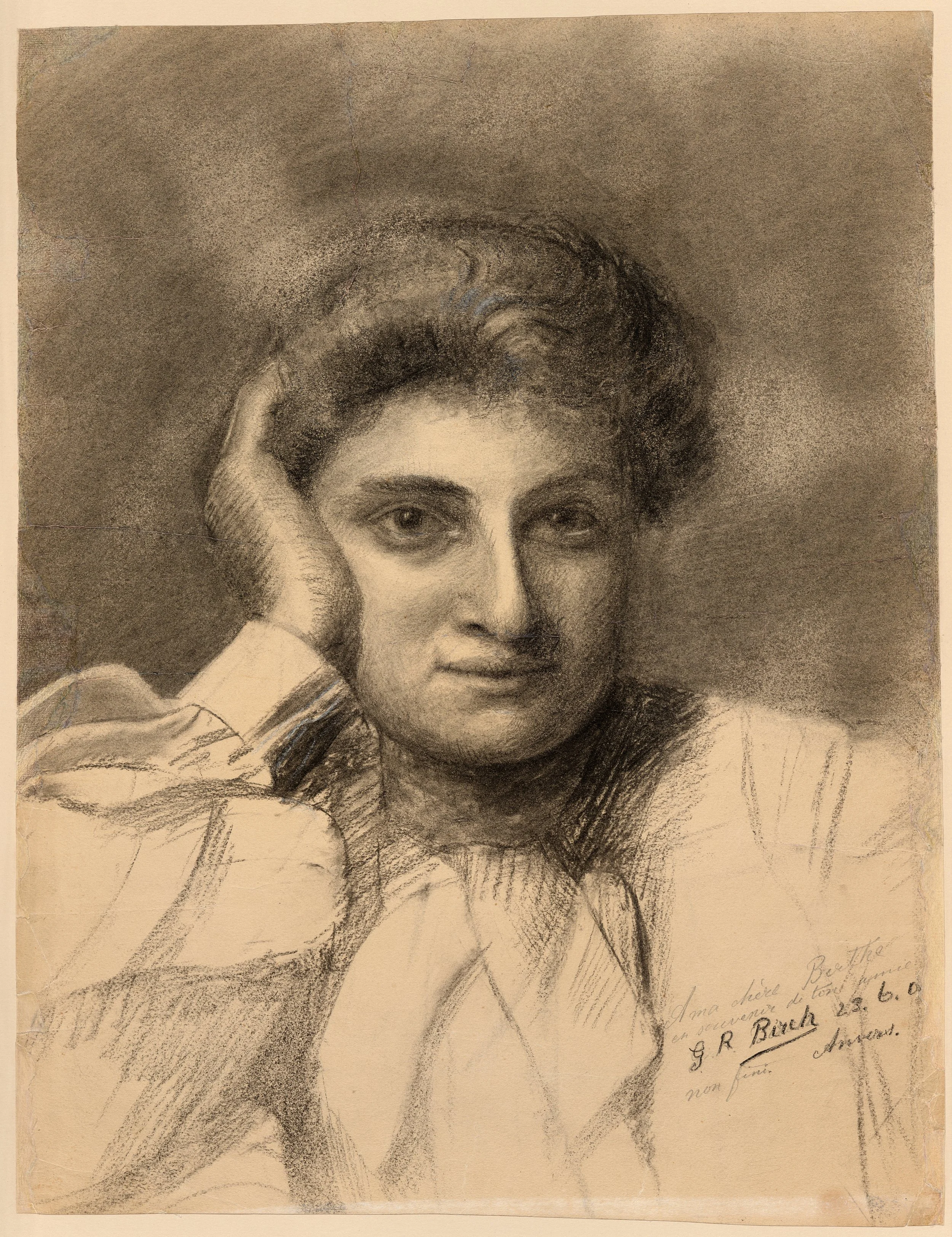
The portrait after treatment.
Family heirlooms like this portrait often hold a significance that goes beyond monetary value. Through thoughtful conservation and responsible stewardship, these works can remain part of living family histories rather than objects kept out of sight.
At The Conservation Center, we are honored to help preserve these personal legacies so they remain visible, tangible, and meaningful for generations to come.