Frederick Douglass changed the course of history with his powerful writing and moving speeches. An escaped slave, Douglass devoted his life to the abolition movement and even became involved in the movement for women’s rights. Douglass also published his own newsletter called the North Star and wrote numerous autobiographies.
À la Modigliani: Portrait of Lunia Czechowska
Amadeo Modigliani was an Italian painter who lived and worked during La Belle Époque. Like many other artists during this period, he resided in Paris where he created some of his most famous sculptures, drawings, and paintings. Although Modigliani was prolific and created hundreds of pieces, he was destitute for most of his tragically short life. The artist is well-known for his portraits, which depict faces influenced by the Baule masks and figures from the Ivory Coast. His distinctive style is characterized by long necks and faces, and by his signature small, hazy eyes. We recently encountered one of his drawings in need of minor treatment and cleaning.
Shattered in Shipment: Saving a Work from Broken Glass
At The Conservation Center, we are acutely aware that accidents happen, so that is why we offer our services at EXPO Chicago every year. Our team of art handlers and conservators prepare annually to assist in every way possible as hundreds of pieces of art are installed in Navy Pier over two short days. This year we assisted with a piece that suffered damage from international shipment. Somewhere along the way, the glass shattered and the paper piece underneath was in need of a quick rescue.
A Cabinet of Curiosities: Framing a Robert Rauschenberg
Robert Rauschenberg is frequently remembered for his series of work created in the 1950s and 1960s that combined aspects of both painting and sculpture. Rauschenberg himself called them "Combines", a term he invented to describe a work that is neither a sculpture nor a painting, but rather a hybrid of the two. The artist was always one to experiment and fuse, often creating something entirely new from two entirely different substances.
Treating the Surreal: Giving New Life to a Water-Stained Dalí
Although he is widely recognized for his paintings, Salvador Dali completed a number of series featuring lithographs and etchings. When one of such works came to The Center for care, we were excited to work on such a special piece. This print, titled "Dalinean Prophecy", is number 8 of 25 in a series called “Imagination and Objects of the Future”.
Displaying Waterbodies: A Look into Conservation Collaboration with former Chicago Bear, Israel Idonije
It seemed like any other Wednesday in September at The Center. Things were relatively quiet after a previously hectic week at EXPO CHICAGO, and the Client Services team was expecting an appointment with Israel Idonije who had a large watercolor piece that needed display options. When the client arrived with the watercolor, the team quickly realized that “display options” was an understatement. The Conservation Center prides itself on interdepartmental collaboration and the consultation soon included several conservators from many departments, all of whom were ready to Bear Down and tackle the task at hand.
A Six-Panel Screen and a Panel of Conservators
Whether ancient, contemporary, or any time in between, there are countless types of artwork of all styles and ages that challenge conservators. Every piece of artwork has its own nuances and characteristics that are the result of the artist’s technique, the materials used, and the conditions the artwork experiences over the years. When it comes to conservation there is probably no type of artwork as commonly complex as traditional Asian screens. Typically constructed of paper decorated with paints, gilding, and stretched over a wooden support, Asian screens are a type of object that can require consultations including conservators in many different specialties. Collaboration between paper, furniture, painting, and gilding conservators can be critical to determine the appropriate treatment and achieve successful results when treating Asian screens.

Not Made to Last: A Look at Advertising Banners
Much like newspapers, advertising materials have a definite and distinct shelf-life. Products come and go, and for those companies that do stick around for many years, marketing slogans and styles will change with the times, thus deeming periodic updates to advertising campaigns a necessity. As a result, vintage advertising materials were not made to last for very long: they were constructed with low cost materials and quick reproduction methods that make their survival a rarity. That’s why it is so astounding when items like these banners make it decades remarkably intact. Here’s a look at four advertising banners that have come through the doors at The Center over the years.
When Lake Michigan was Lac des Puans: The Cartographic Origins of the Great Lakes
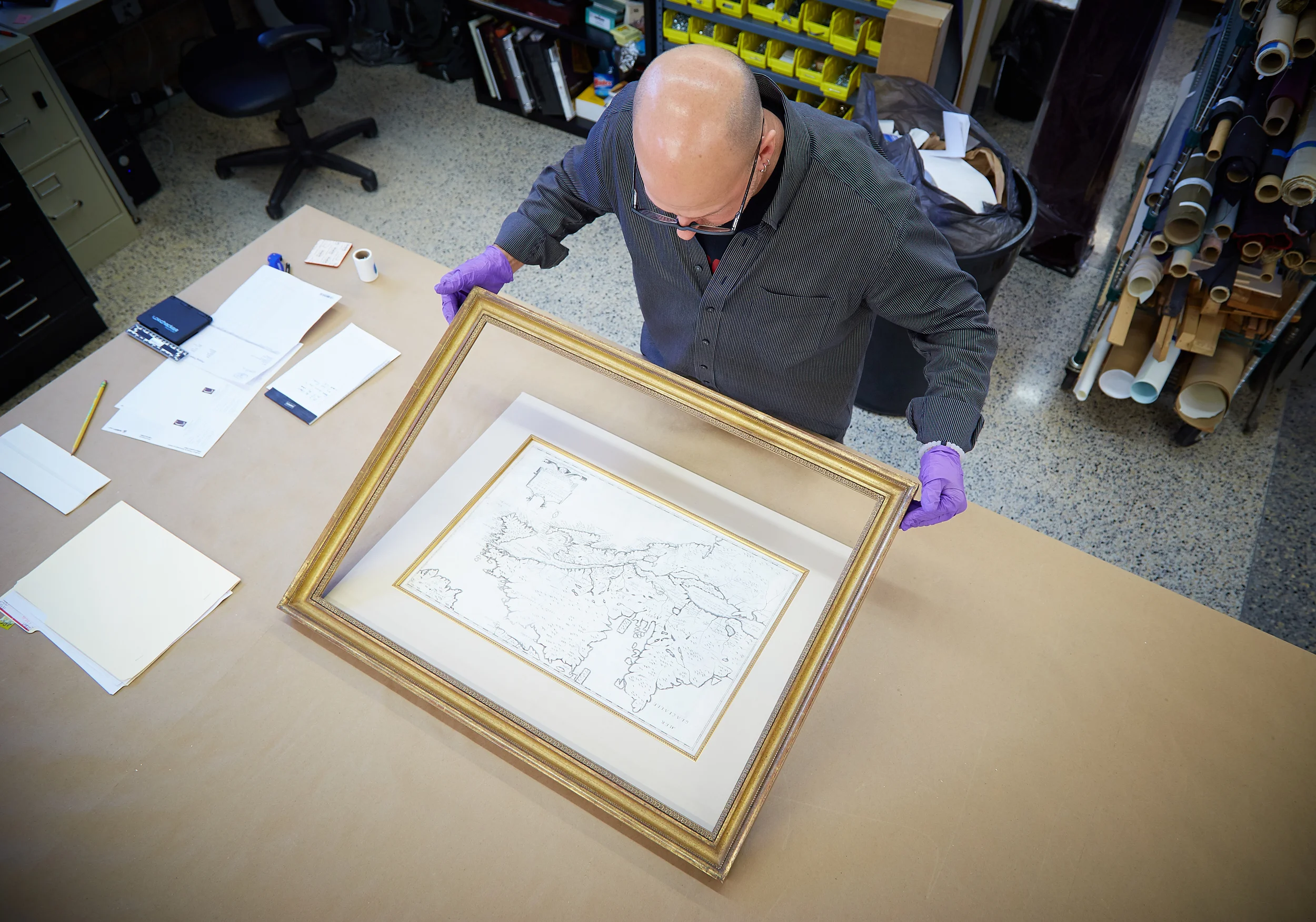
When Greg brought his map into The Center, he wasn’t seeking conservation work - the map was already in great condition. What it needed was quality framing to properly display it in Greg’s home and keep it safe for another 373 years. That’s right - dating back to 1643, this map of the Great Lakes by Jean Boisseau may not be helpful for travel these days, but will take you on an interesting trip to the past.
Protecting Paper: An Illustrated Guide to Sink Mats
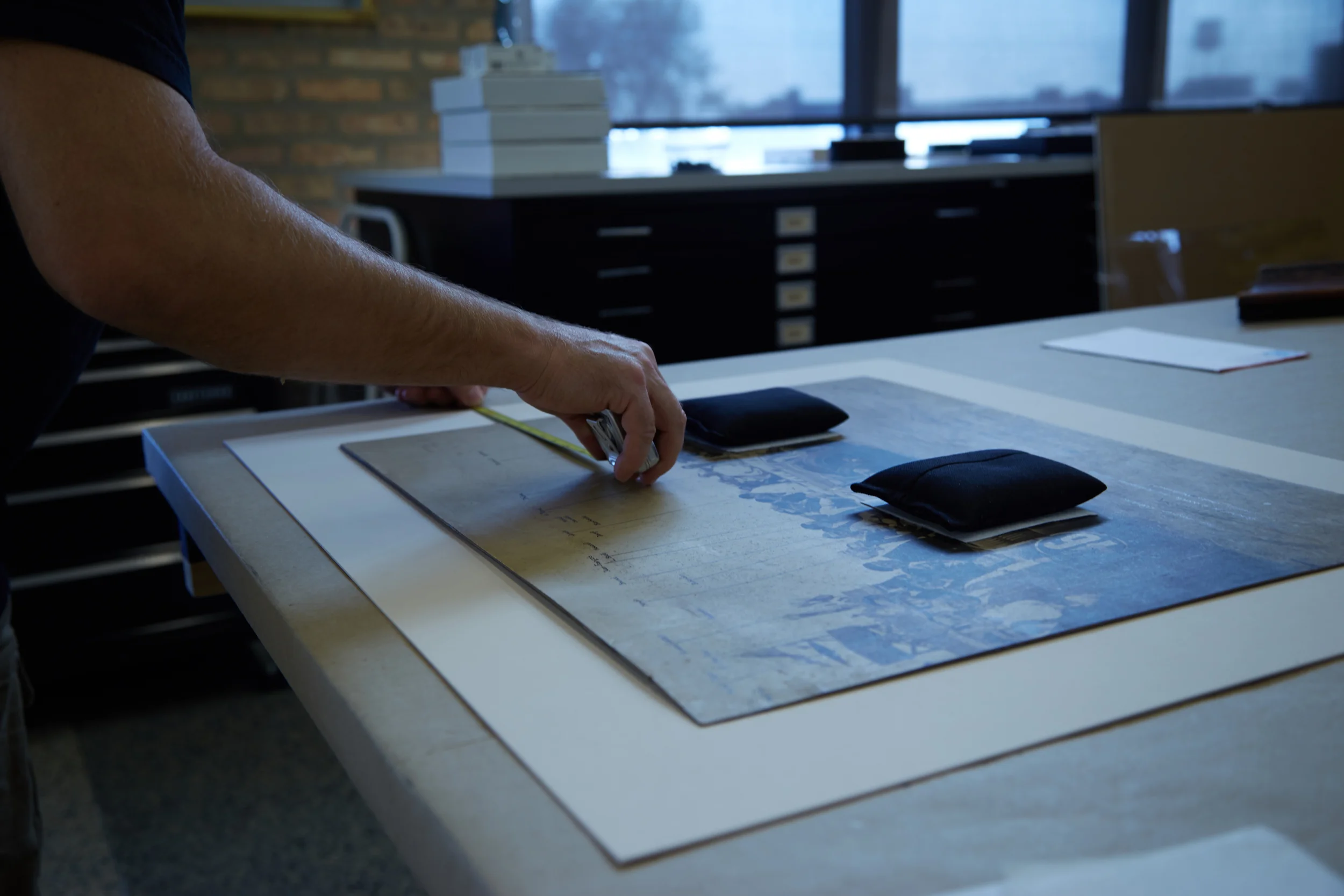
A housing technique commonly used at The Center: Creating a sink mat to house paper pieces. Below, Toby Joyce, Director of Conservation Framing, demonstrates the technique:
The paper piece is carefully situated on top of the supporting mount board with an engaged stepped mat. Weights are used to hold down the paper, and ensure that the piece is centered through to the final step.
Conserving an 1100-Year Old Codex: Part Two
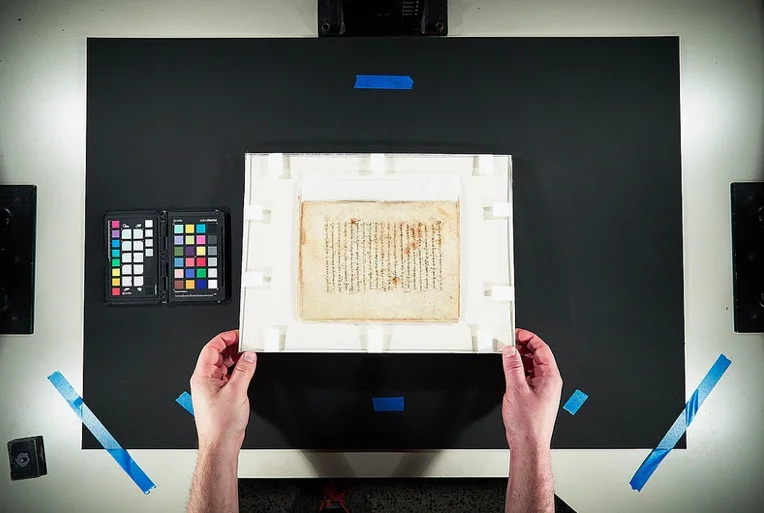
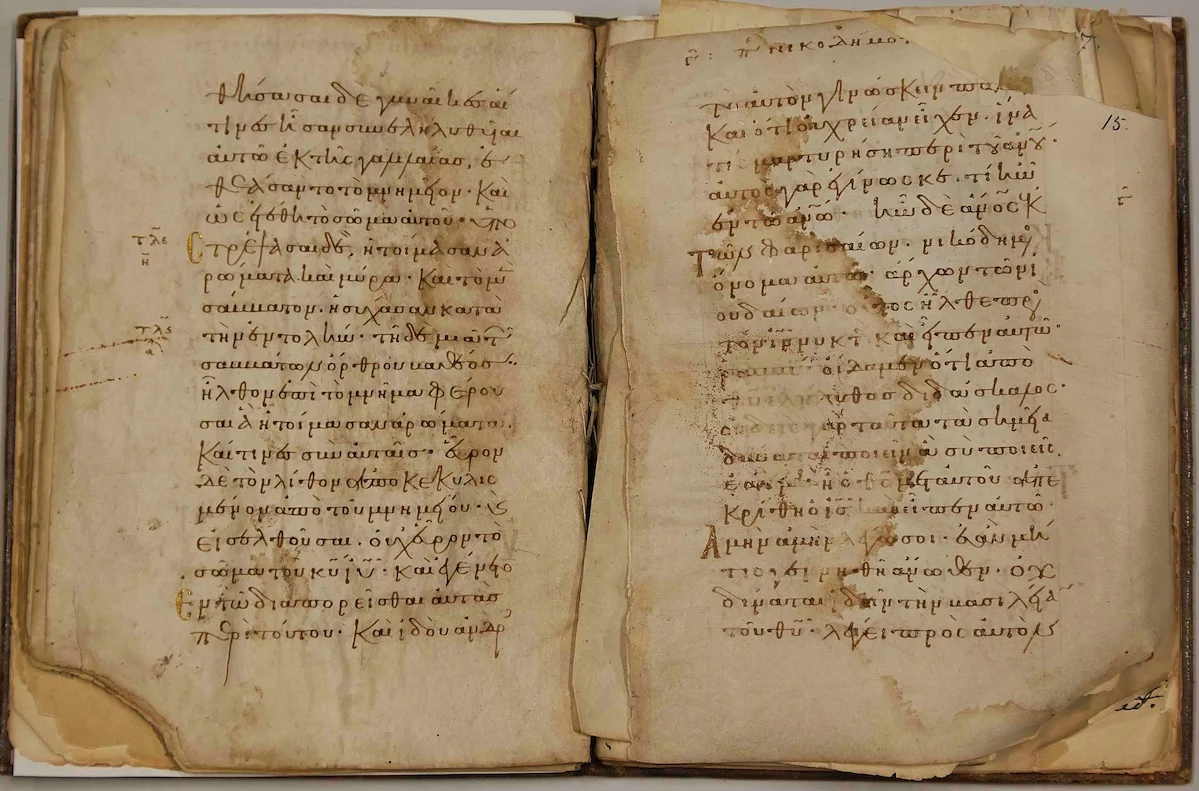
Readers of our newsletter may remember a story that was published in December 2014 about a 10th century Greek Codex we had received from The Center for Adventist Research at Andrews University in Michigan. The Conservation Center was proud to be given the assignment of conserving this precious work. The codex—a rare book containing portions of the Gospels According to Luke and John—was crafted on pages of parchment, written in iron gall ink, containing decoration in gold leaf and bound in leather. Our paper and rare books conservators joined forces and poured many hours of hard work into assessing the damage and researching the appropriate treatment solutions. Additionally, a treatment plan was designed and implemented, to protect this rare volume from further damage in the future.
The Importance of Heirloom Conservation
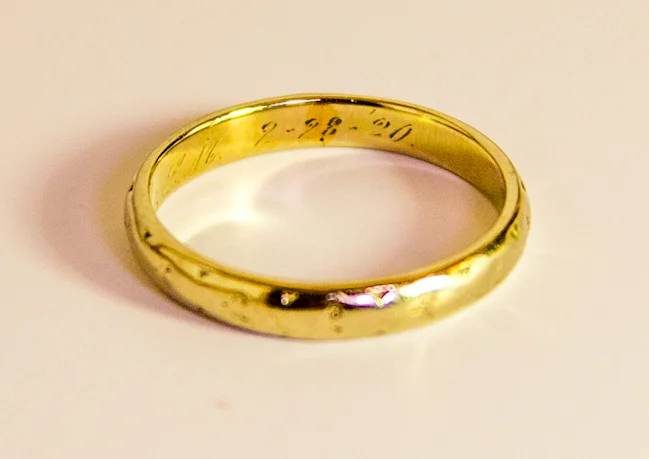
One of the misconceptions concerning work performed at an art treatment facility such as The Conservation Center is that an object or a piece of art must have significant value on the market to qualify for professional care. This is simply not the case. While many of our clients have high-end pieces that belong to large-scale collections and museums, our conservators also specialize in treating family antiques and heirlooms that have sentimental value.
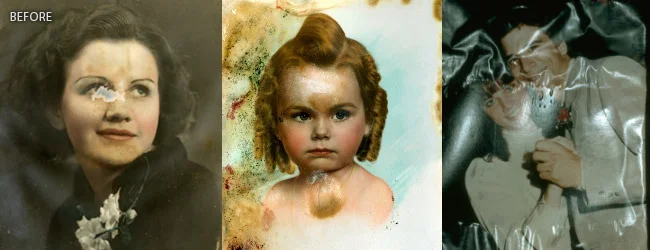
Family heirlooms connect generations in a deep, personal way. From the handed down bible and grandmother’s knitted quilt, to a late 1800s baptismal gown and photos of a relative going off to war—anyone who has found or kept historic pieces in the family knows how moving they can be. These treasured items, passed down through the decades, provide insight into the lives of our ancestors and a richer understanding of our family's history.
Don't Do It Yourself: Cautionary Tales of At-Home Art Treatments
There are few rites of spring more satisfying than the annual clean. And while spotless living spaces make a house a home, many of us unfortunately have to use harsh chemicals and solvents to achieve that goal. The application of products found under the kitchen sink can lead to chemical reactions on the surface of art objects that can prove to be quite serious, resulting in detrimental losses that are usually so much greater than the reward of a home cleaning approach. When it comes to caring for your art and antiques while freshening up around the house, we strongly advise our readers to adhere to the “DDIY” rule—Don’t Do it Yourself—and leave the job to professional art conservators.
A Cherished "May Milton" Lithograph by Henri de Toulouse-Lautrec Dances Back to Life
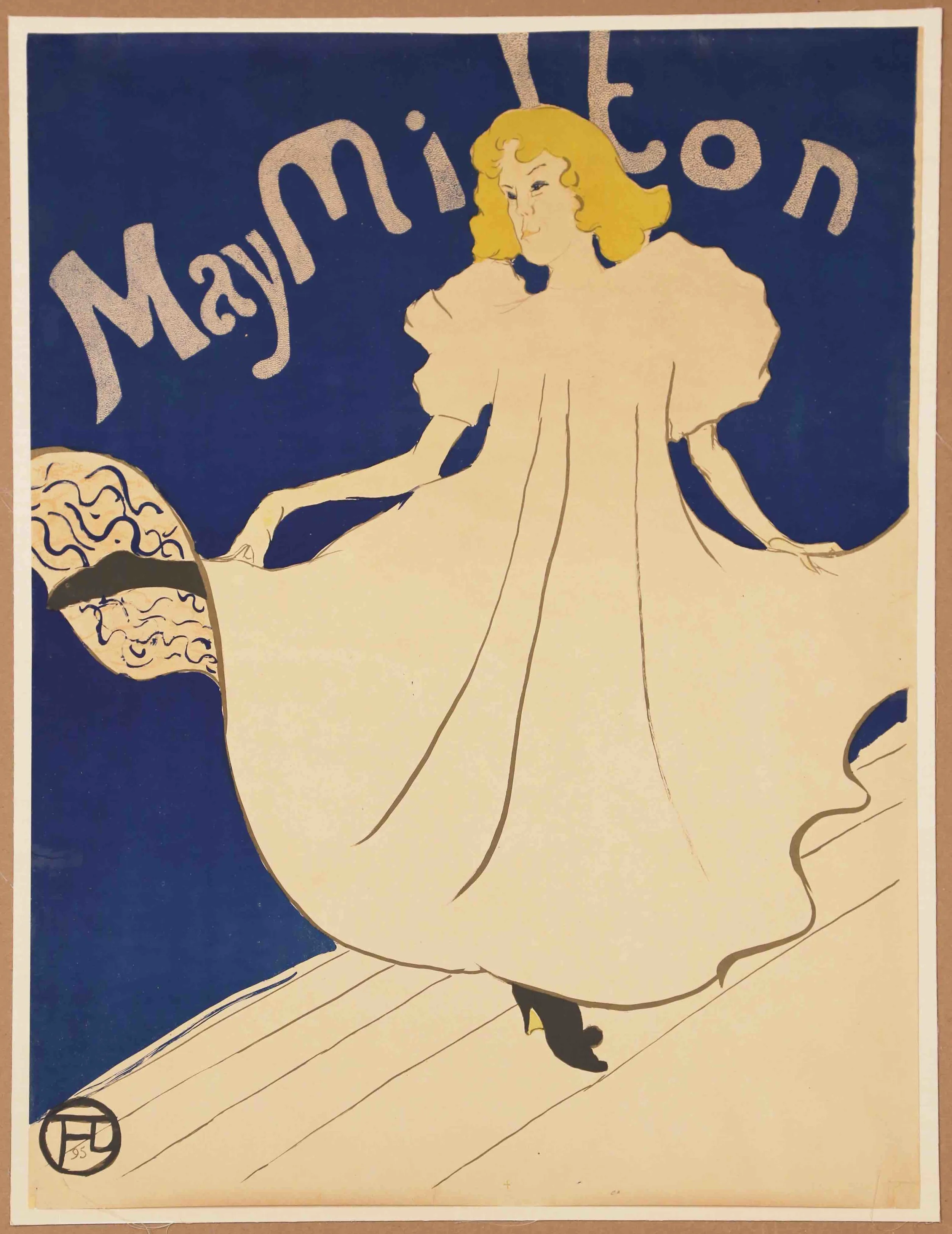
Sometimes a singular work of art can inspire an entire collection. When this is the case, the collector cherishes that first piece above all others. When a client of The Conservation Center brings in a work that we can actually see the joy and affection brought on by it, those feelings are contagious. This is what happened recently when Bruce Romick, a private collector from Indiana, contacted us about one such treasured item. Mr. Romick and his wife had acquired a lithograph of May Milton by famed Post-Impressionist artist Henri de Toulouse-Lautrec in 1978. While it was in very good condition when purchased, after 37 years, some degradation was to be expected. Our Paper Department was in charge to bring “May” back to life so it would continue to bring the Romicks the same joy for many years to come.
Saving A 10th Century Greek Codex From Water Damage
After more than three decades of preserving fine art and heirlooms at The Conservation Center, we now have an impressive answer to one of the most the frequently asked questions by our clients and visitors: “What is the oldest piece that The Center has ever conserved?” Recently, a 10th century Greek Codex—which contains portions of the New Testament Gospels of Luke and John—arrived at our conservation lab, and we, admittedly, are truly impressed. This rare book belongs to Andrews University in Berrien Springs, Michigan, a Bible-based university supported by Seventh-day Adventist Church.
Piecing Back Together A Family Heirloom, and Learning About The Past
Here at The Conservation Center, we strive to protect and preserve objects that hold intrinsic value to individuals and families, not just monetary value. During treatment, we often uncover forgotten details about a piece, and it can mean so much more to our clients when this information relates to their own family members and heritage. In this way, we approach each and every object with the highest level of care and attention. Recently, Naomi Steinberg, an Associate Professor of Religious Studies at DePaul University in Chicago, brought us a badly torn ketubah that was believed to belong to her paternal grandparent’s. Our conservators were able to meticulously piece this document back together, and through this process, Naomi also uncovered a slice of family history.
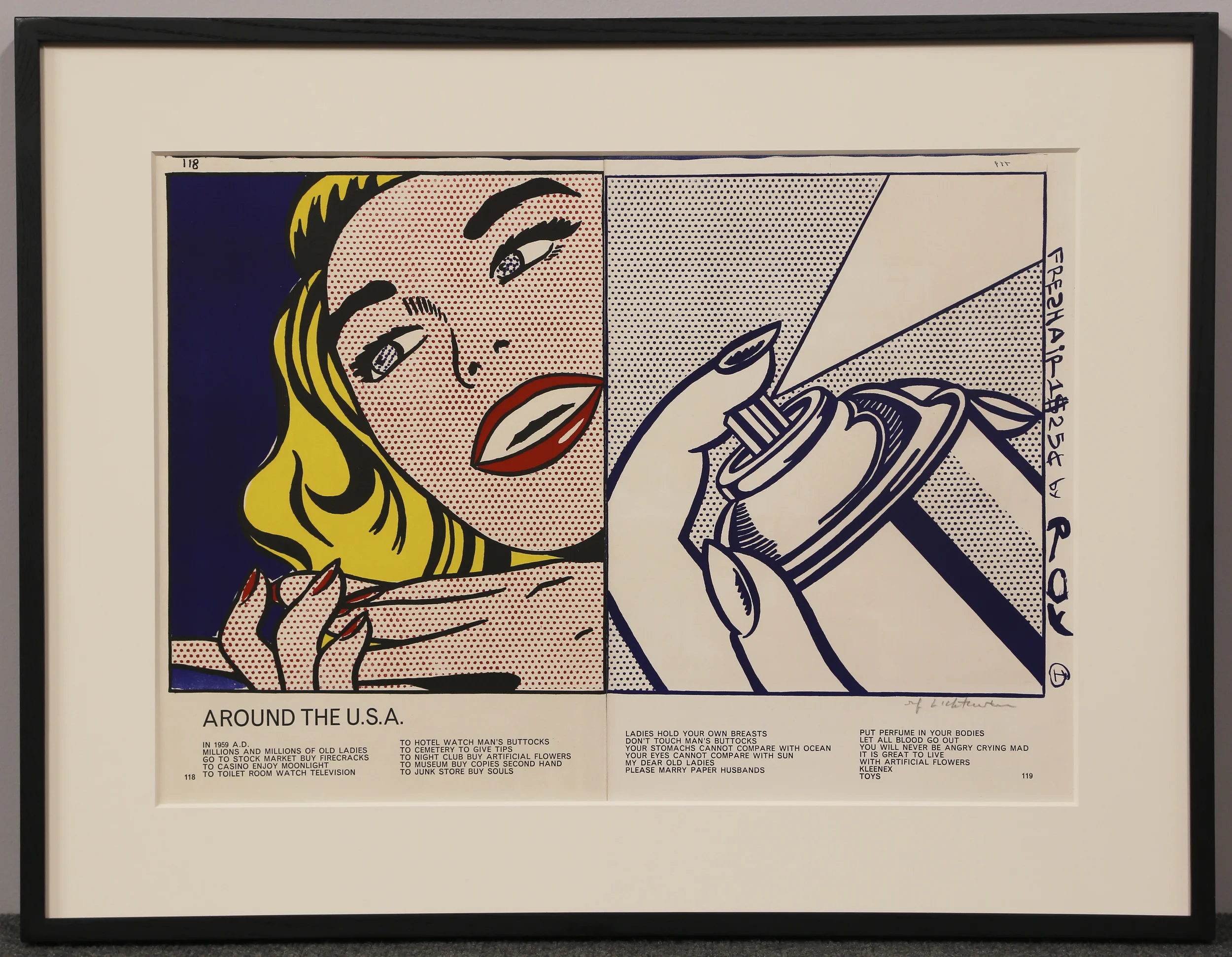
EXPO CHICAGO/2014 Highlight: "Girl with a Spray Can" by Roy Lichtenstein, 1963
Girl with a Spray Can was first printed in Wallace Ting’s book 1¢ Life, often viewed as a compact visual manifesto of the sixties. Pop artist Roy Lichtenstein’s color lithographs were printed on pages 118-119. This piece offers a unique juxtaposition. The right panel of the diptych consists of a reference to the simple printing process of using Ben-day dots (which dates back to 1879). The left side of the diptych consists of a small segment of a comic-strip imagery for which Lichtenstein became quite famous. This piece is the first instance of Lichtenstein featuring a blonde girl in his works, iconography which now is considered some of the most desirable in his oeuvre.
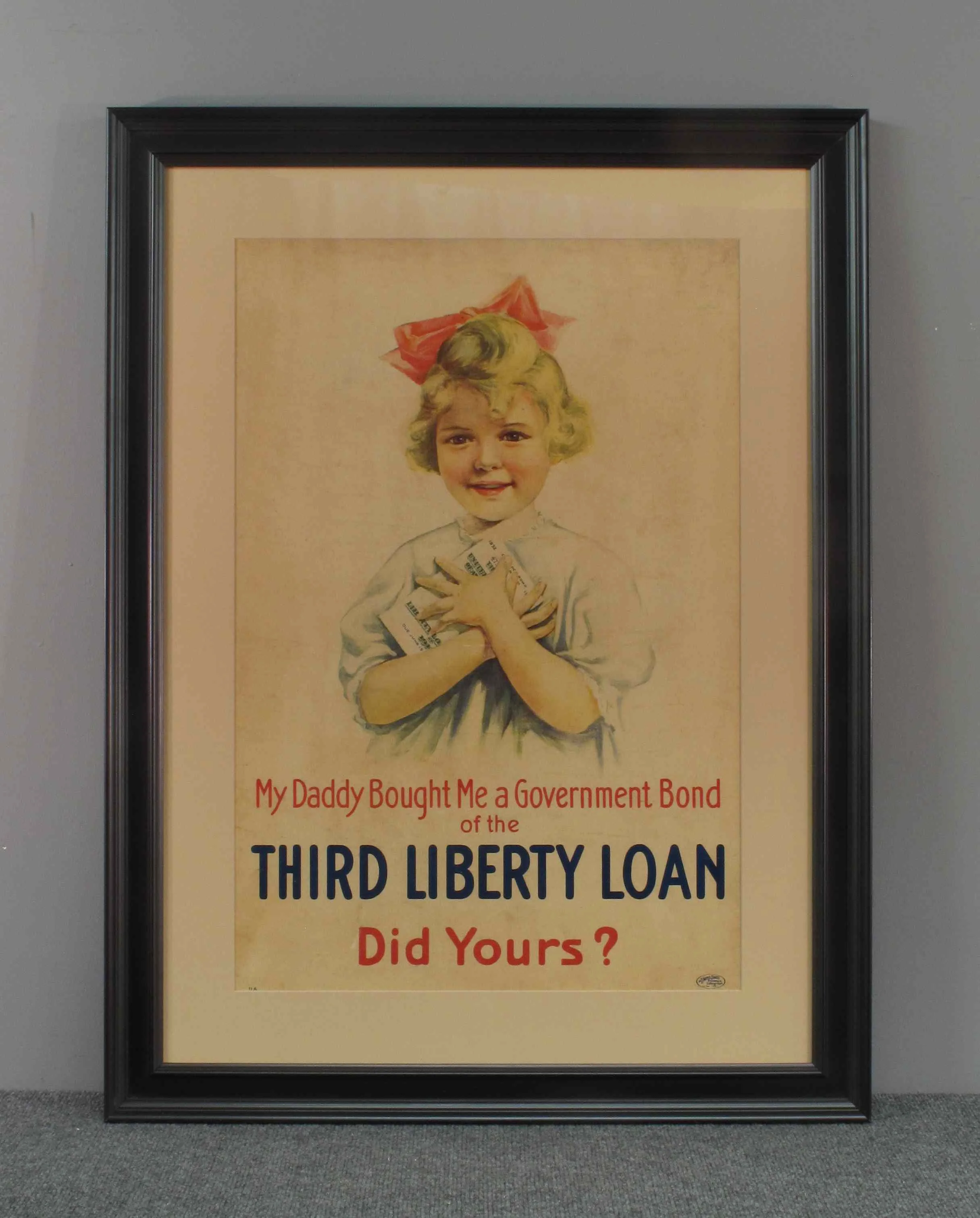
Uncle Sam Wants You: Conserving a Collection of Wartime Posters for Chicago's Federal Reserve Bank
The Federal Reserve Bank of Chicago (FRBC) owns a stunning collection of 44 war bond posters that were created in the 1910s and in the 1940s to encourage public support of American troops. This collection serves as a reminder of the Chicago Fed’s important part in coordinating the sale of war bonds. In recent months, these vintage posters were cared for by The Conservation Center in preparation for a special exhibition mounted on the occasion of the FRB’s centennial anniversary.
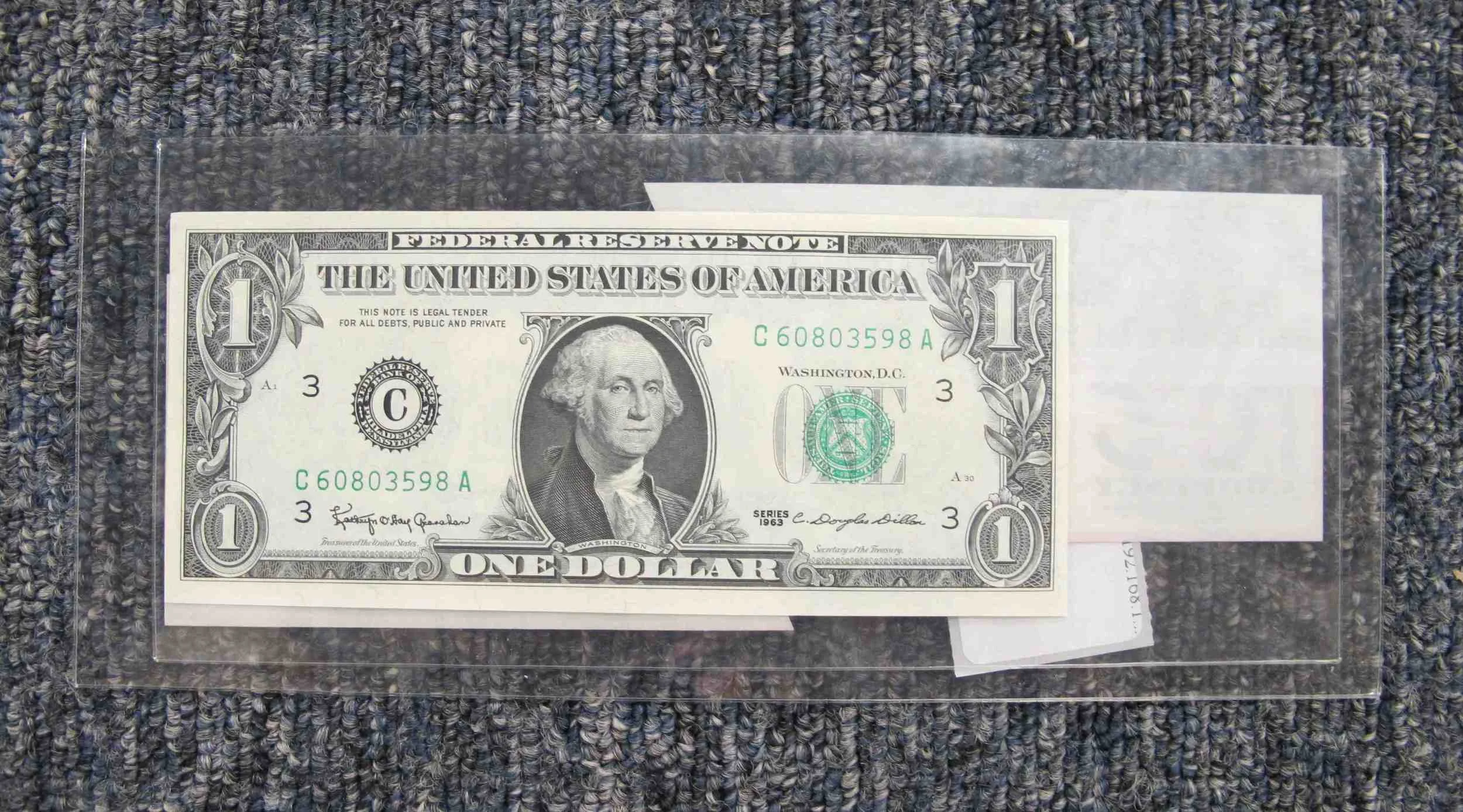
Not Your Everyday Dollar: Removing Adhesive Remnants From a Rare Bill
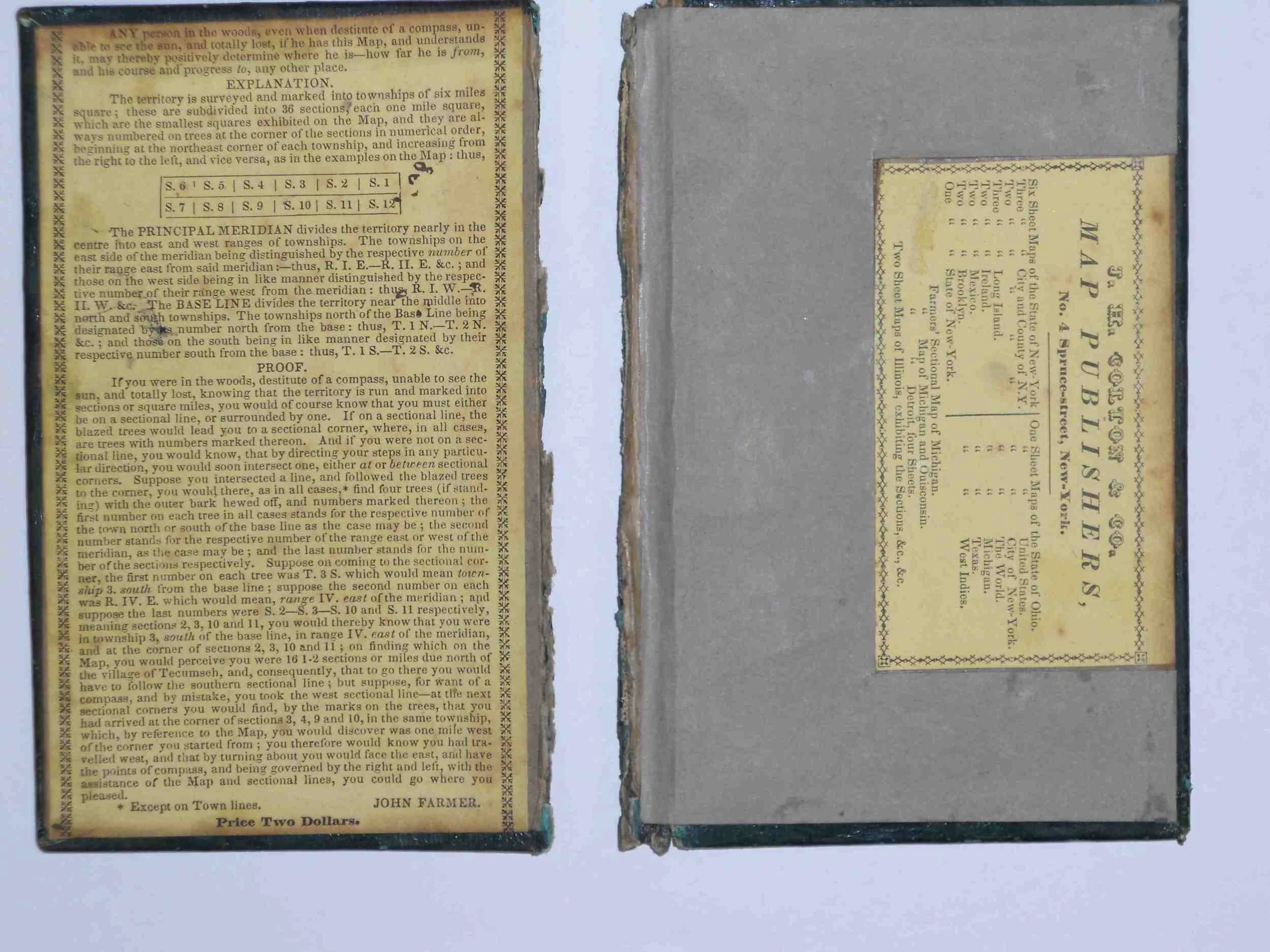
Pure Michigan: Framing an 1836 John Farmer Map
Sometimes an artwork is not merely an expression of the artist—rather, it is a legal document, or perhaps a blueprint, or even a map. At The Conservation Center, we enjoy coming across pieces that are not only beautiful, but also informative. This was just the case with a piece recently treated for Battle Creek-based private collector, Greg Allen. The said piece is by John Farmer (1798–1859), who is recognized for his cartography of early 19th century Michigan. What makes his maps so incredible is that they serve as primary sources of history for this region.