
The Christmas Tricycle

The Christmas Tricycle

As we move through the holiday season, our focus turns to family dinners, quiet snowfalls, and the joyful challenge of finding the perfect gift; the gift that will be treasured for years to come. And when the years take their toll on those items, we here at The Conservation Center consider it a special privilege to help in preserving those family treasures. This holiday season, we share with you an item brought to The Center by Mary, who reached out to see if it would be possible to restore one of her favorite childhood Christmas gifts: a circa 1964 Murray tricycle.
Oak Park Snow Scene

Oak Park Snow Scene

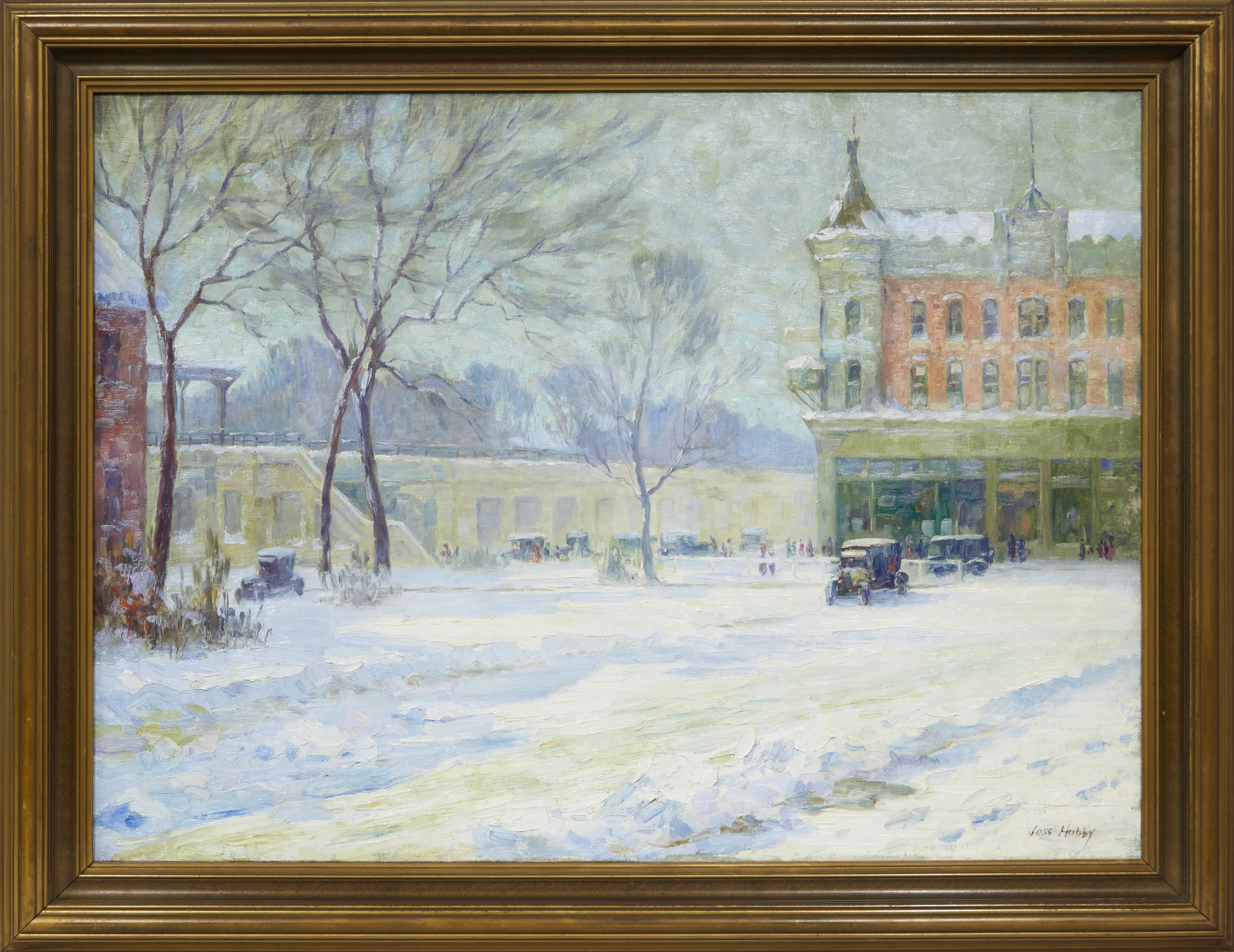
Although Chicago may be without the standard layer of snow for this time of the year, we here are The Conservation Center are lucky enough to have beautiful images around to remind us of a pristine snowfall. A client recently brought in just such a painting, though it wasn’t quite the impeccable snow scene it once was. Years of grime build-up and thick, discolored varnish had turned the crisp white snowfall into a dingy, brown landscape. But with some time, patience, and careful chemistry, Senior Paintings Conservator Amber Smith was able to bring the original colors back to this Oak Park snow scene.

A Stitch in Time

A Stitch in Time

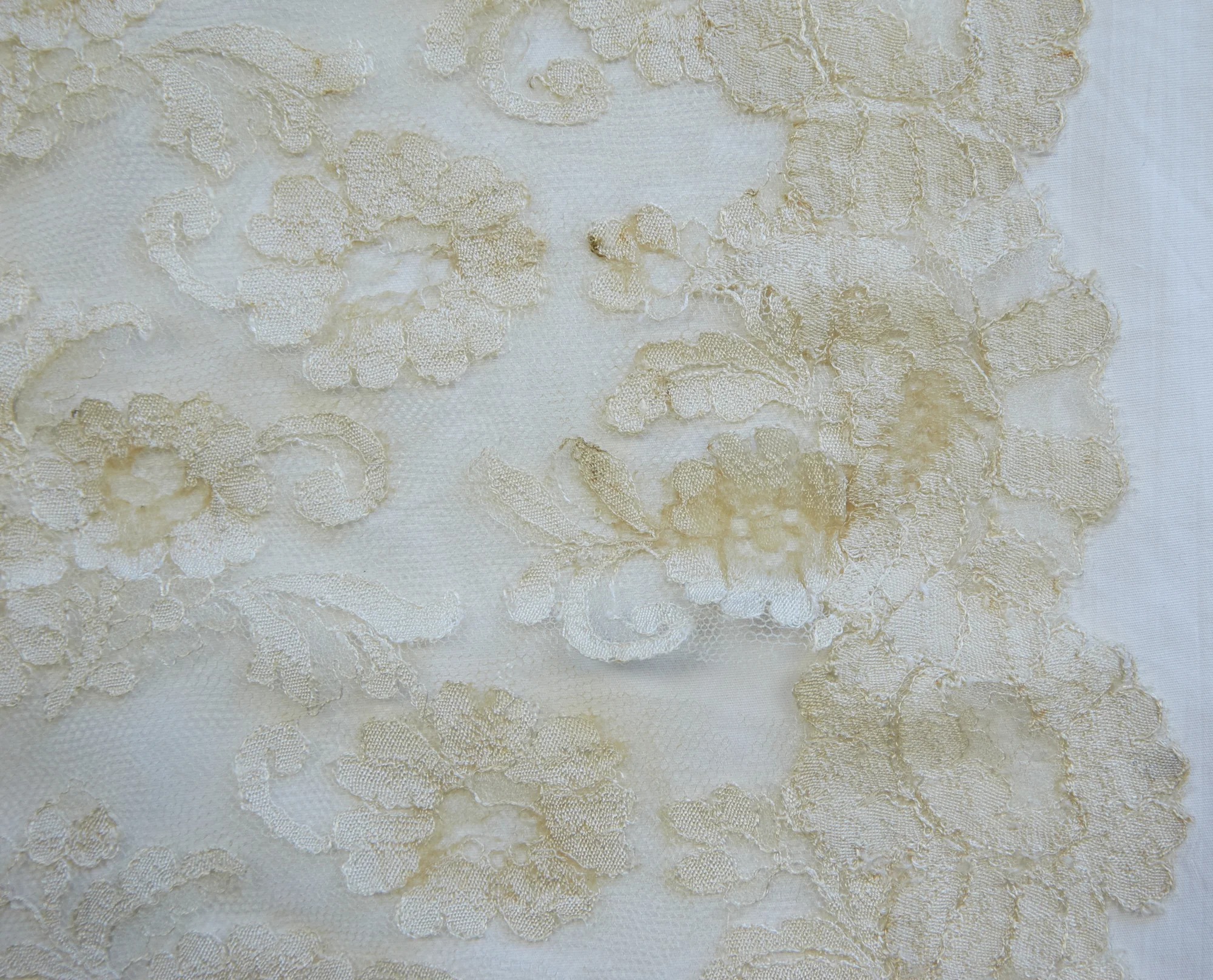
When extraordinarily fragile pieces are treated by The Center, often the conservators recommend handling the pieces as little as possible to preserve their longevity.  So when Gloria Diaz brought in a delicate lace mantilla and expressed that she would like it to be functional for future ceremonies, we knew we had our work cut out for us.  

At the time Gloria brought in her mantilla, it had been used by three generations in twenty-four weddings, ten baptisms, on “Taking of the Veil,” and one First Communion.  Since the lace garment had been both well-loved and well-used, it exhibited inevitable signs of wear.  As Gloria noted, “I realized that the mantilla was near the end of its life if we did not do something to improve its condition.  Because of its special place in our family, we wanted the mantilla to be something that existing and future generations would use.”

A Note from Heather Becker, CEO

A Note from Heather Becker, CEO

On November 13th, I gave a presentation on disaster preparedness at the Association of Registrars and Collection Specialists (ARCS) conference in New Orleans.  The audience included nearly 700 museum registrars, collection managers, conservators, consultants, appraisers, and art shippers.

Common Culprits of Damage: Causation and Prevention 101

Common Culprits of Damage: Causation and Prevention 101

Given The Conservation Center’s history of treating artworks that have succumbed to fire and flood damage, it may surprise you to know that a few of the most common culprits of damage are poor materials, framing, and storage techniques. Luckily, with proper foresight and preparation, most of this damage is preventable. In this article we will examine some of the common "red flags" to look for in consideration of your own framed art and heirlooms.

Preserving "Regulations for the Army of the United States, 1913"

Preserving "Regulations for the Army of the United States, 1913"

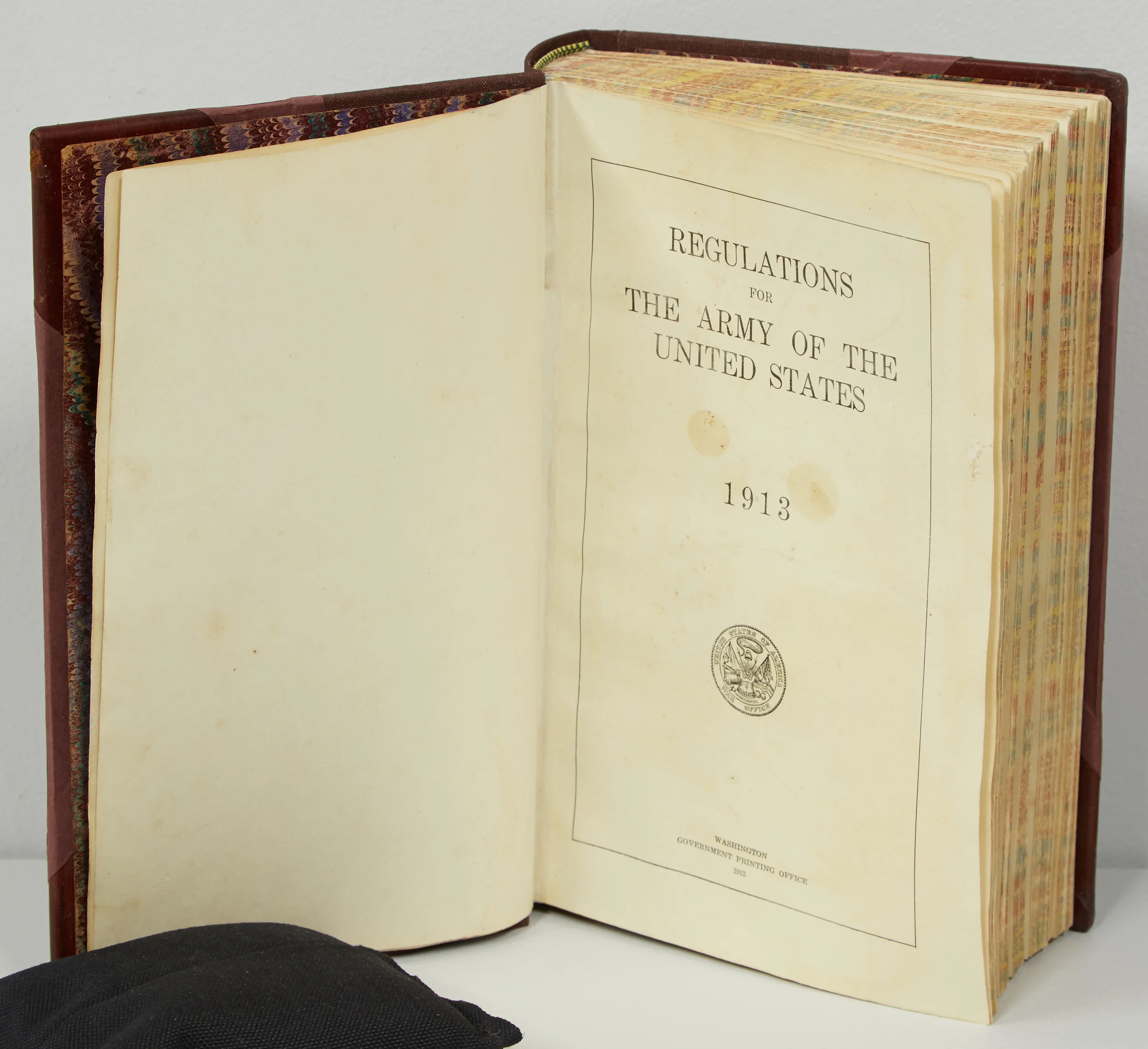
The Conservation Center recently had the pleasure of working with Bill Hartel to treat “Regulations for the Army of the United States,” a 1913 U.S. Army military handbook.


Bill is an avid collector of rare books and acquires those that, in his opinion, “changed the world.” Highlights of his collection include a 1776 British first edition of Thomas Paine’s “Common Sense,” complete with handwritten defamatory comments about King George, and “Round the Moon” by Jules Verne, circa 1895, signed by the commander of the first actual voyage around the moon, Frank Borman. Bill is also an author and published the Chicago Tribune Best Seller “A Day at the Park” about Wrigley Field. Given the depth of his collection, a well-worn copy of an army handbook with a missing leather spine, fragile textblock, and water damage may seem like an anomaly. However, the book’s value lies in the role it played during a difficult time in Bill’s life.

Protecting Paper: An Illustrated Guide to Sink Mats

Protecting Paper: An Illustrated Guide to Sink Mats

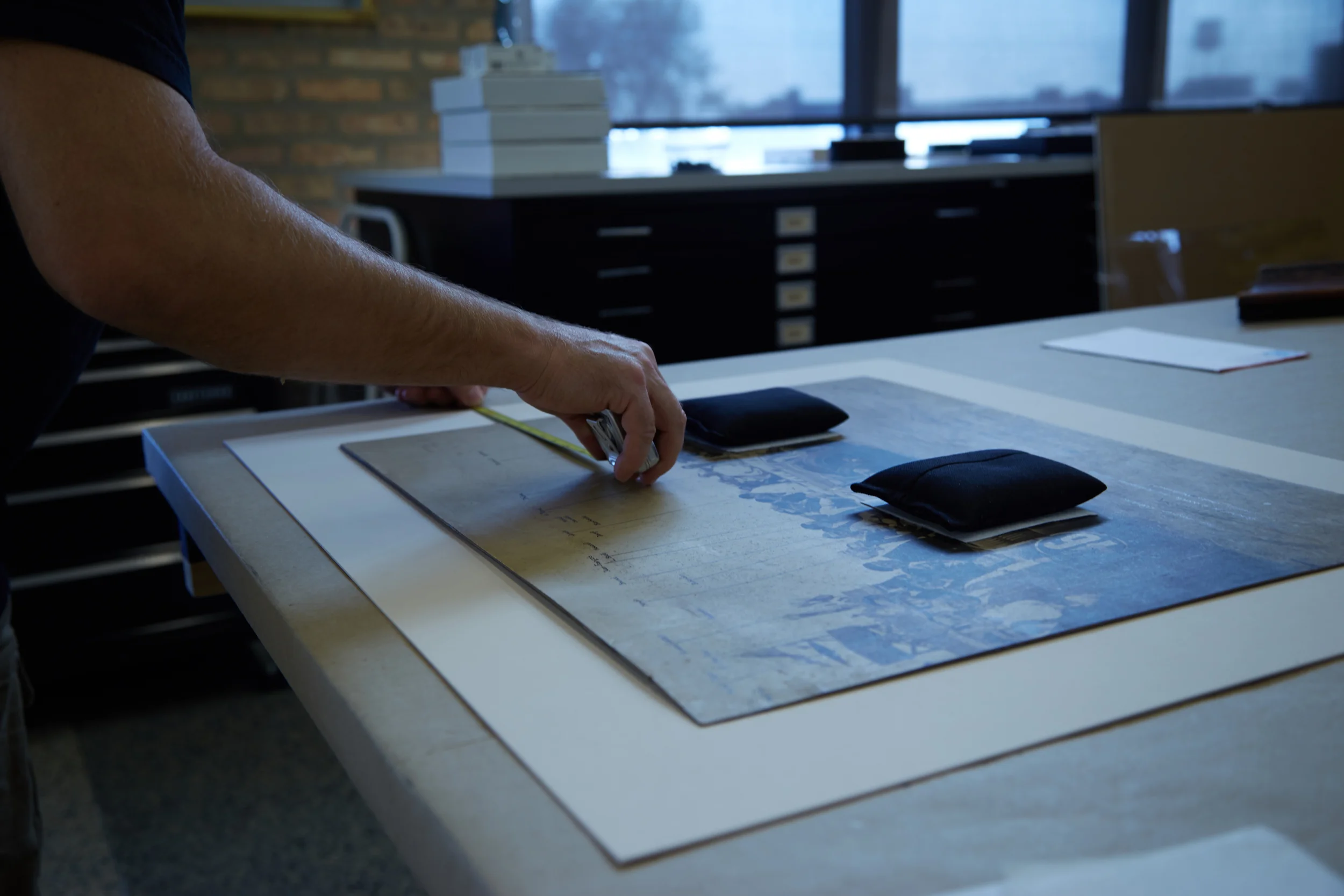
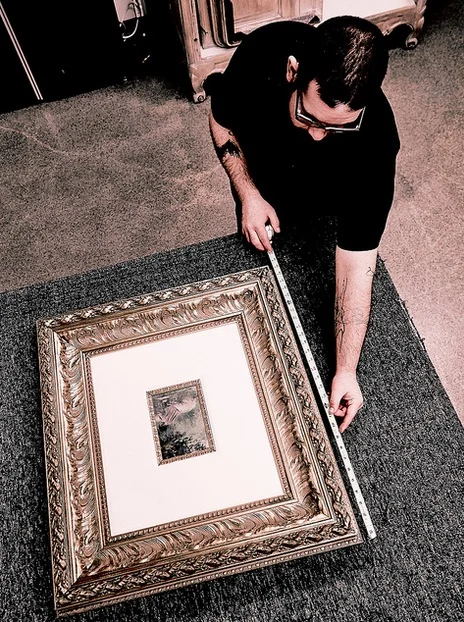
A housing technique commonly used at The Center: Creating a sink mat to house paper pieces. Below, Toby Joyce, Director of Conservation Framing, demonstrates the technique:  

The paper piece is carefully situated on top of the supporting mount board with an engaged stepped mat. Weights are used to hold down the paper, and ensure that the piece is centered through to the final step. 

How Photo Conservation and Digital Restoration Reawakened a Family's History

How Photo Conservation and Digital Restoration Reawakened a Family's History

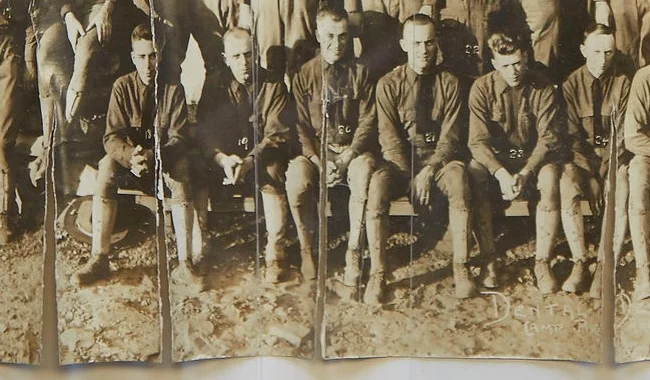
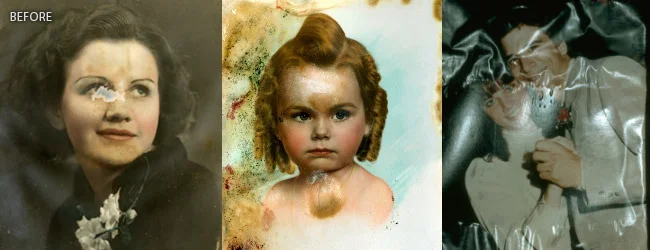
For most people, the top drawers of their bedroom dressers are reserved for mismatched socks, so it was a delightful surprise for Rick Eisenstein to find a 97-year-old photograph rolled up in his father's old dresser drawer. "When he was in the hospital, I was looking for some clothes to take to him and came across this rolled up picture," Rick explained. "His parents were very important to him--with that being said, he was not a very sentimental person and kept very few things from his younger days." This photograph, however was special: his father kept it for nearly 60 years. Rick made a decision to bring the picture to The Conservation Center for examination and conservation.

Painting With Wine: A Romantic French Work Conserved

Painting With Wine: A Romantic French Work Conserved

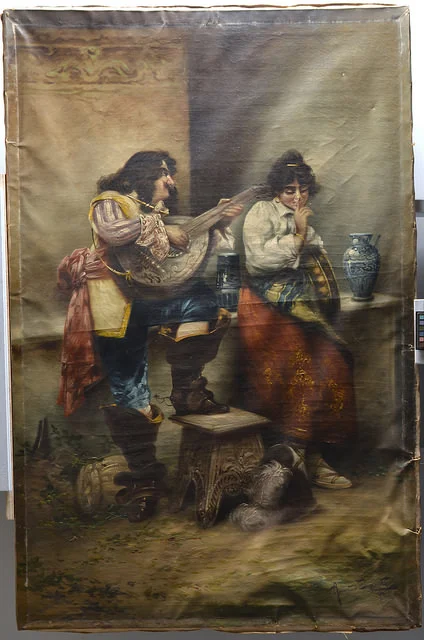
Recently, The Conservation Center was introduced to a little-known, yet charming, oil painting entitled The Musician by a French artist named Louis-Armand Dupont. "I believe Dupont started an art school. I don't know his other artworks; all I know is he loved to paint," shared Alice Morales, the painting's owner, as she discussed the background of the work she brought to us. "I discovered he was actually a wine producer." With a little research, we found the winery is still active and has a portrait of Louis-Armand proudly displayed on the wall. Located in the Pays d’Auge region of Normandy, the Louis Dupont Family Estate is run by the living descendants of Dupont, though their research found records of their family in the area as far back as 1703. 

Conserving an 1100-Year Old Codex: Part Two

Conserving an 1100-Year Old Codex: Part Two

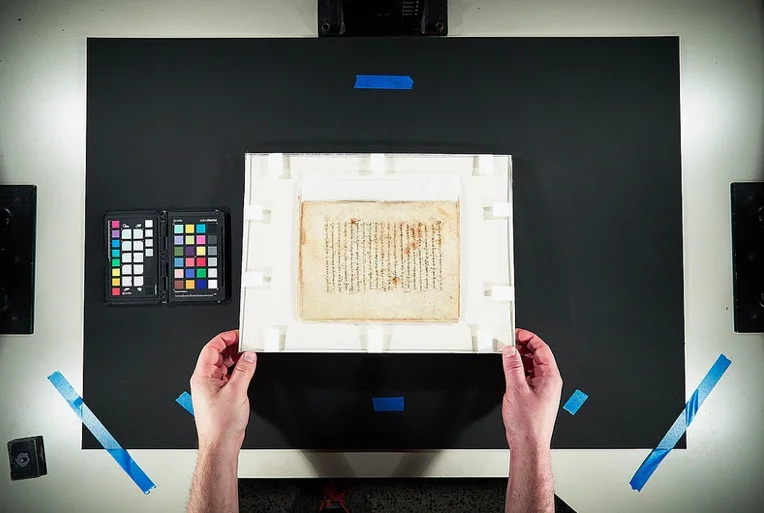
Readers of our newsletter may remember a story that was published in December 2014 about a 10th century Greek Codex we had received from The Center for Adventist Research at Andrews University in Michigan. The Conservation Center was proud to be given the assignment of conserving this precious work. The codex—a rare book containing portions of the Gospels According to Luke and John—was crafted on pages of parchment, written in iron gall ink, containing decoration in gold leaf and bound in leather. Our paper and rare books conservators joined forces and poured many hours of hard work into assessing the damage and researching the appropriate treatment solutions. Additionally, a treatment plan was designed and implemented, to protect this rare volume from further damage in the future.  

From Russia With Love: Portrait of a Military Officer

From Russia With Love: Portrait of a Military Officer

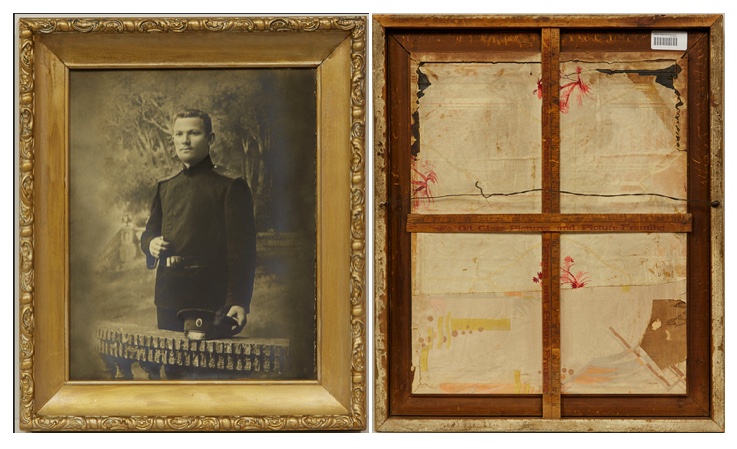
“This is an important piece of our family history,” commented Cindy Egoroff Alexander while discussing a portrait of her grandfather, Emil Egoroff. Cindy and her family recently entrusted The Conservation Center to treat and reframe a black and white photograph of Emil. “We know very little of our grandfather’s life in Russia,” she explained, emphasizing how precious the few details they uncovered were to understanding and remembering her family’s past. Cindy graciously shared the history passed down through the family with our team, shedding light on the story behind this handsome portrait.

The Importance of Heirloom Conservation

The Importance of Heirloom Conservation

One of the misconceptions concerning work performed at an art treatment facility such as The Conservation Center is that an object or a piece of art must have significant value on the market to qualify for professional care. This is simply not the case. While many of our clients have high-end pieces that belong to large-scale collections and museums, our conservators also specialize in treating family antiques and heirlooms that have sentimental value. 

Family heirlooms connect generations in a deep, personal way. From the handed down bible and grandmother’s knitted quilt, to a late 1800s baptismal gown and photos of a relative going off to war—anyone who has found or kept historic pieces in the family knows how moving they can be. These treasured items, passed down through the decades, provide insight into the lives of our ancestors and a richer understanding of our family's history.

Don't Do It Yourself: Cautionary Tales of At-Home Art Treatments

Don't Do It Yourself: Cautionary Tales of At-Home Art Treatments

There are few rites of spring more satisfying than the annual clean. And while spotless living spaces make a house a home, many of us unfortunately have to use harsh chemicals and solvents to achieve that goal. The application of products found under the kitchen sink can lead to chemical reactions on the surface of art objects that can prove to be quite serious, resulting in detrimental losses that are usually so much greater than the reward of a home cleaning approach. When it comes to caring for your art and antiques while freshening up around the house, we strongly advise our readers to adhere to the “DDIY” rule—Don’t Do it Yourself—and leave the job to professional art conservators.

Unzipped: Solving an Issue with a Jean Paul Gaultier Prêt-à-Porter Piece

Unzipped: Solving an Issue with a Jean Paul Gaultier Prêt-à-Porter Piece

It is not very often that the Textiles Department at The Conservation Center resembles the racks of a high fashion atelier, so when Columbia College Chicago contacted us regarding an iconic piece of French fashion from its Fashion Study Collection, our interest was immediately piqued. Instantly recognizable because of its cone-shaped corset top, the dress, designed by Jean Paul Gaultier, arrived at our laboratory with a damaged zipper that posed a threat to the integrity of the outfit as a whole. Because this dress belongs to an academic institution and is used as part of an active study collection, even something as seemingly minute as a damaged zipper could render it useless as a teaching device. As our textiles conservator began to work, she quickly understood that, due to the very technical method in which it was hand-tailored, repairing the zipper was not going to be an easy task.

A Cherished "May Milton" Lithograph by Henri de Toulouse-Lautrec Dances Back to Life

A Cherished "May Milton" Lithograph by Henri de Toulouse-Lautrec Dances Back to Life

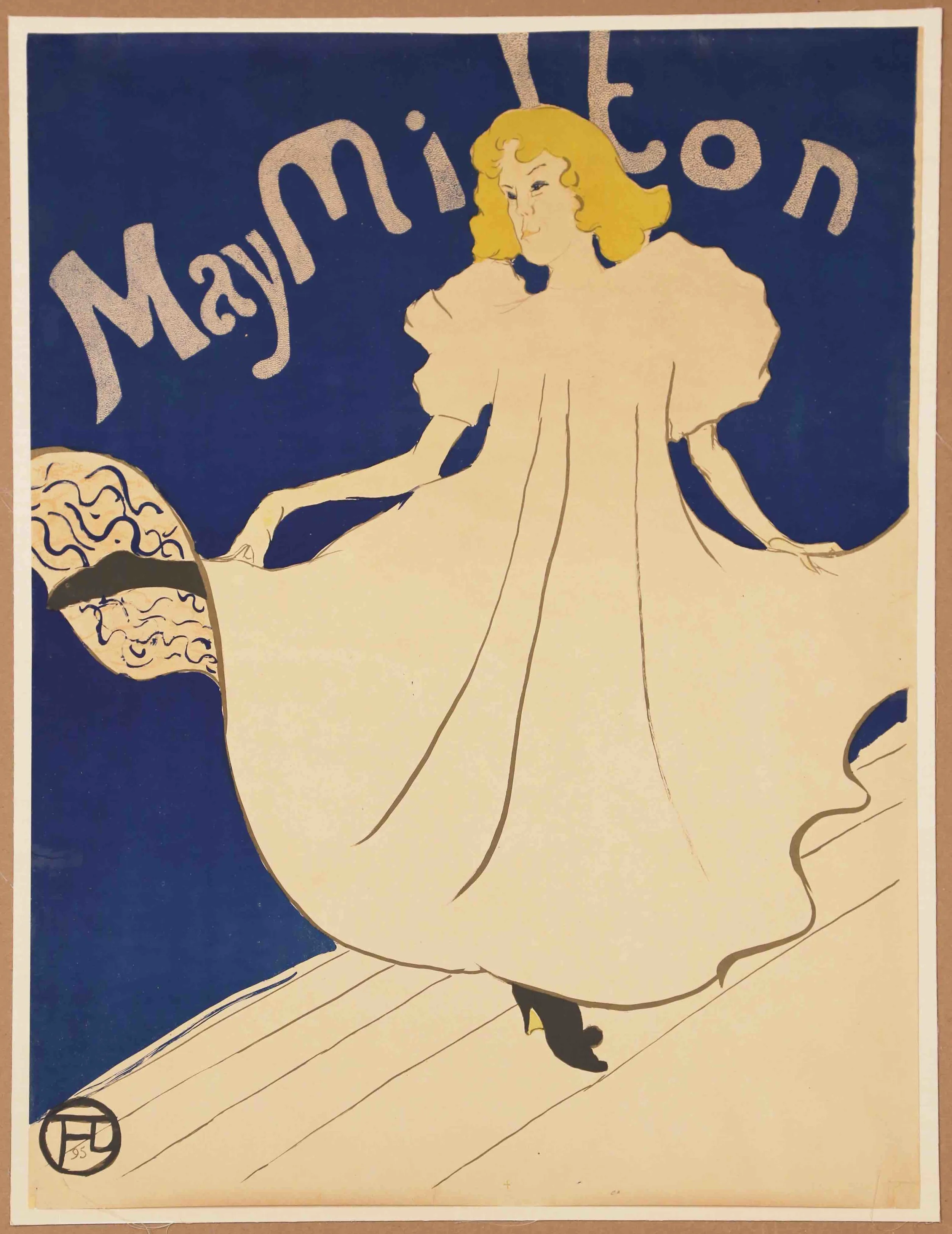
Sometimes a singular work of art can inspire an entire collection. When this is the case, the collector cherishes that first piece above all others. When a client of The Conservation Center brings in a work that we can actually see the joy and affection brought on by it, those feelings are contagious. This is what happened recently when Bruce Romick, a private collector from Indiana, contacted us about one such treasured item. Mr. Romick and his wife had acquired a lithograph of May Milton by famed Post-Impressionist artist Henri de Toulouse-Lautrec in 1978. While it was in very good condition when purchased, after 37 years, some degradation was to be expected. Our Paper Department was in charge to bring “May” back to life so it would continue to bring the Romicks the same joy for many years to come.

Conserving a Modern Mural for a Jewish Temple

Conserving a Modern Mural for a Jewish Temple

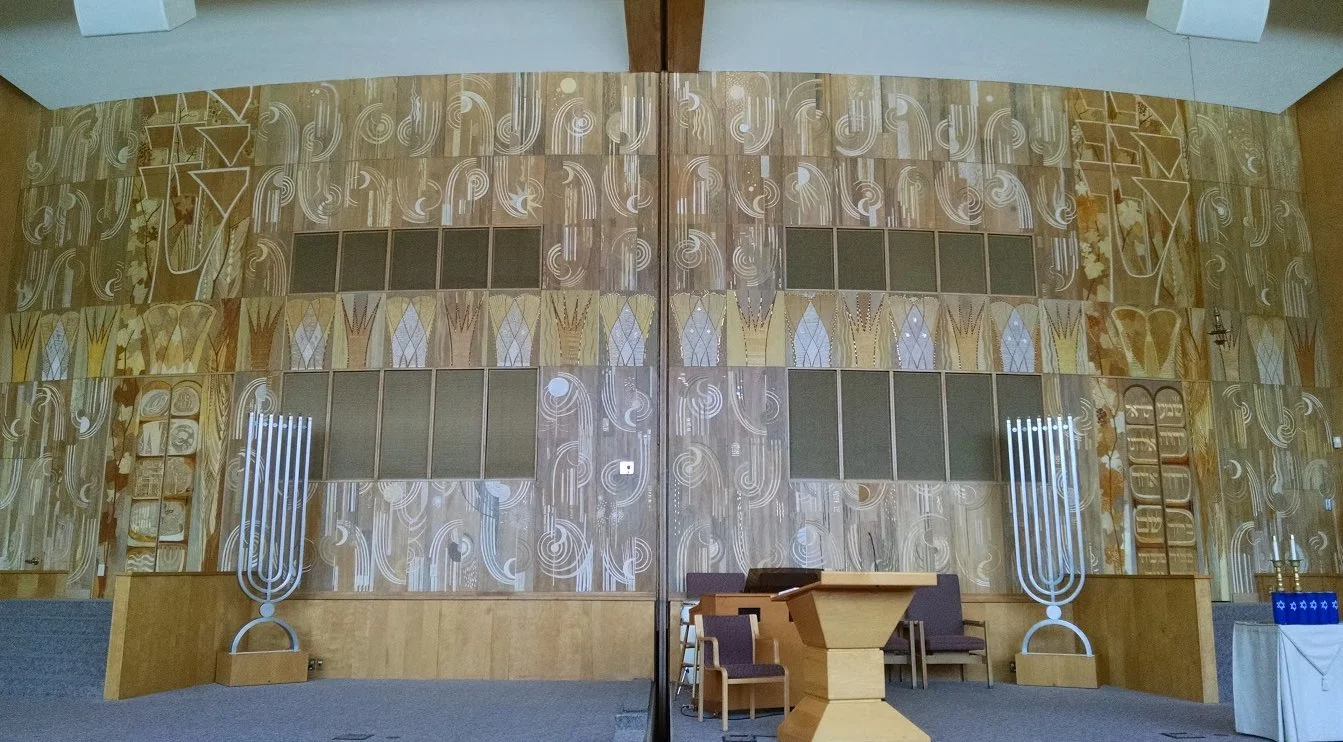
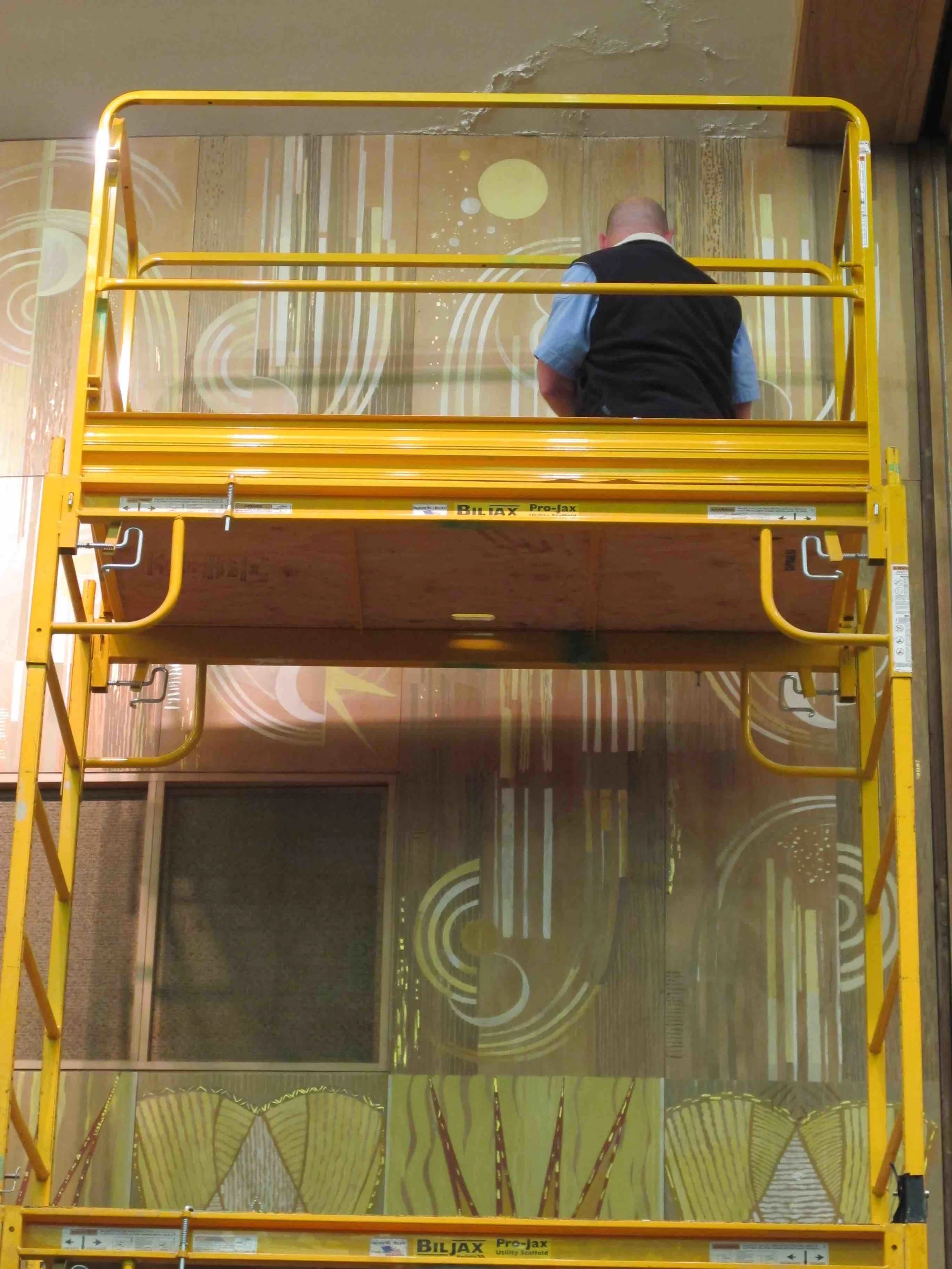
In honor of Pesach (Passover) earlier this month, we’re highlighting a major conservation treatment for Temple Emanuel, located in Grand Rapids, Michigan. The Conservation Center’s team worked tirelessly on-site and in our laboratories to help restore a massive 1,000 square-foot mural that covered the entire expanse of the rear wall of the synagogue. Painted on multiple lightweight wood panels by the Swiss-born American artist Lucienne Bloch (1909–1999), this modern mural stands as a testament to a dynamic time in religious architecture that aimed to keep up with societal trends in art and construction.

I Can See Clearly Now: Bringing a Family Heirloom Painting Back to Life

I Can See Clearly Now: Bringing a Family Heirloom Painting Back to Life

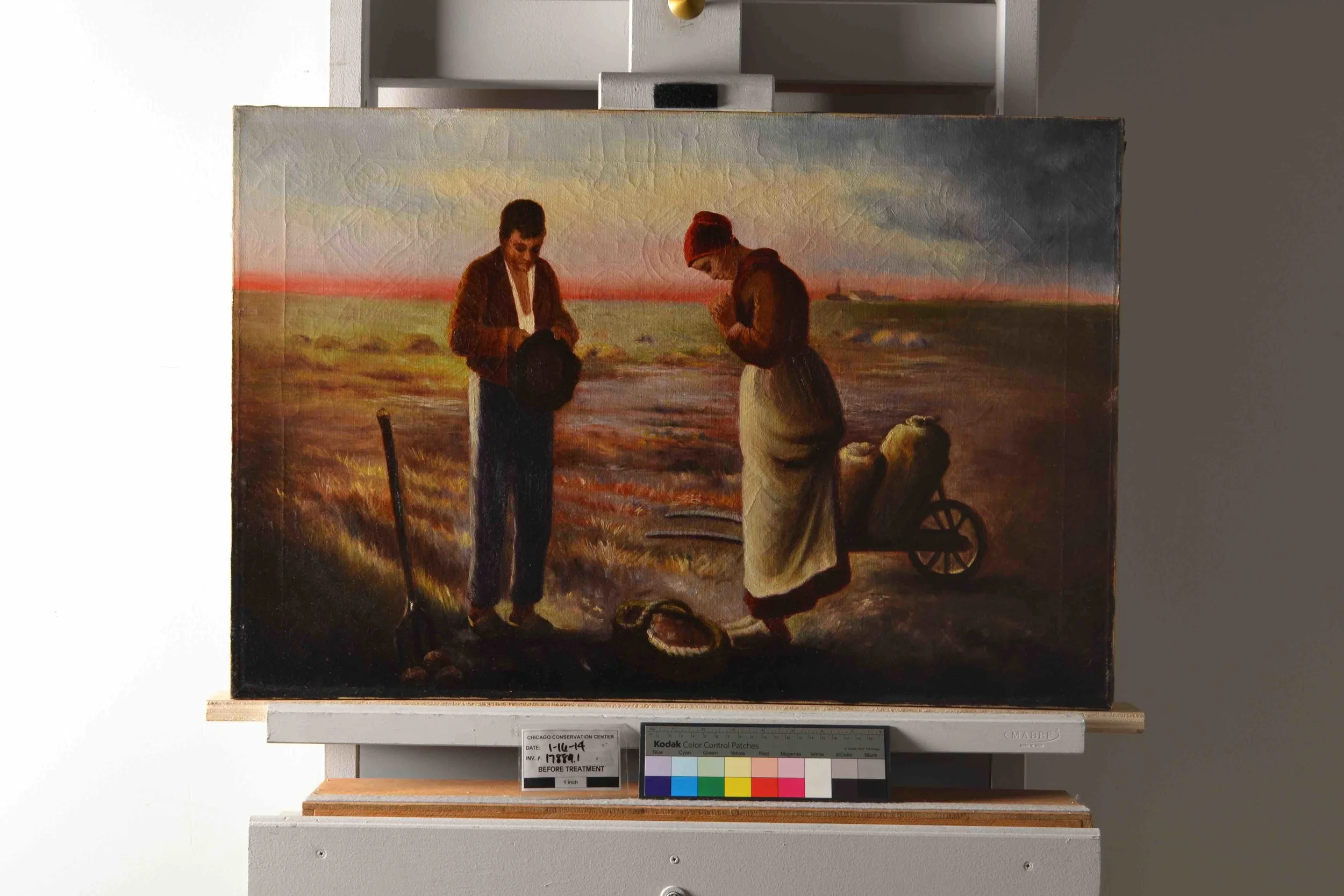
When The Conservation Center encounters an heirloom that has extraordinary sentimental value to our client, we always like to learn more about its history and the meaning of the piece for the family. Recently, Mary Anne Keane brought us a reproduction of Jean-François Millet’s (1814–1875) The Angelus that was on display in her living room. “Ever since my childhood, I’ve always had fond memories of this painting hanging in my grandparents’, and eventually my parents’ home,” said Mary Anne. “After finally inheriting The Angelus, I realized that if I didn’t take good care of the artwork now, though it had made it a century so far, it would not be around much longer for my family to appreciate.” Mary Anne also began investigating its provenance to better understand the origin of the piece.

Slide Show: Deinstalling and Examining Lucienne Bloch's Epic Mural

Slide Show: Deinstalling and Examining Lucienne Bloch's Epic Mural

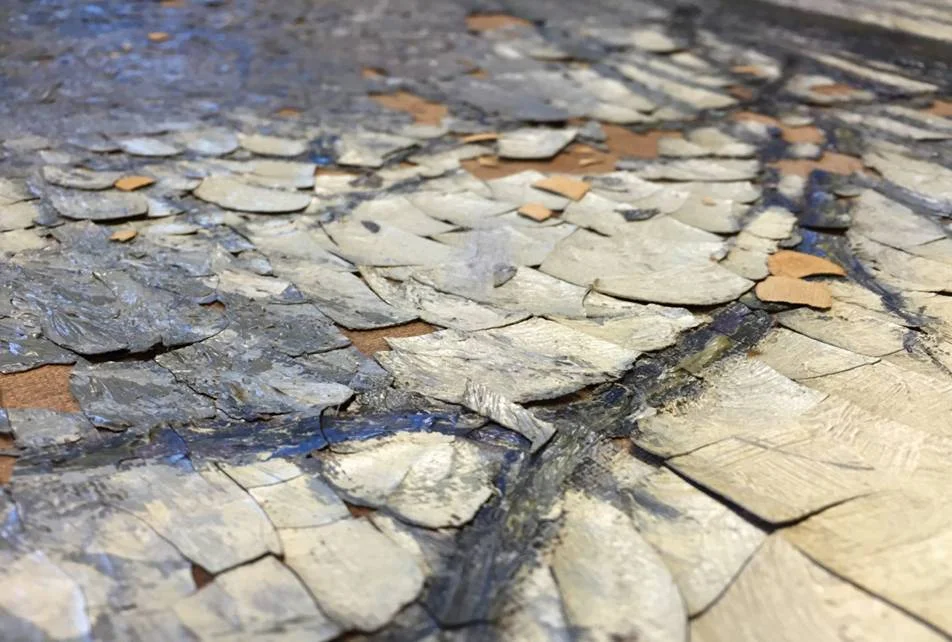
In 2012, significant leaking from the roof caused severe water damage of the plywood panels, causing extreme warping, staining, and delamination of the veneers from the panels. The mural itself, which was painted using water-soluble paints (something similar to gouache), started to drip down across the panels as soon as water entered the space. Devastated, Temple Emanuel contacted The Conservation Center to perform an on-site assessment to best determine how to conserve Bloch’s work. Years of constant use and handling of the doors and tracks around the mural had also caused issues beyond the water damage—fingerprints had darkened and smudged areas of the paint, to the extent that there were significant losses that needed to be addressed. There was also a thin layer of grime that needed to be removed from the panels. However, because of the nature of the paint used, most methods of cleaning would strip away the design. Eventually, six panels came back to The Center’s lab in Chicago to undergo treatment.

Preserving a Vintage Barber Pole

Preserving a Vintage Barber Pole

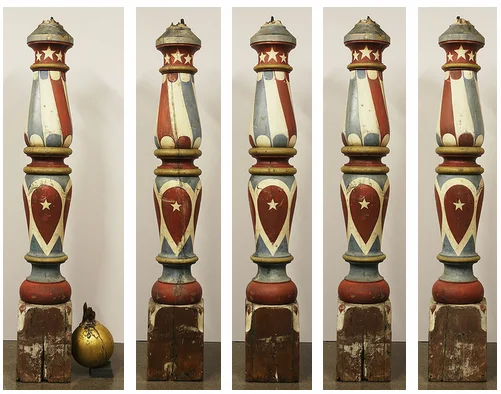
In preparation for a new exhibition entitled By All Accounts: The Story of Elmhurst, The Conservation Center recently joined forces with the Elmhurst Historical Museum to help get a few artifacts in its archives in tip-top shape. This innovative exhibit contains numerous photographs, artifacts, art objects, and informational materials from the last 165 years showcasing the growth and development of Elmhurst, a Chicago suburb. After an on-site assessment at the museum, The Center identified a few objects that needed our conservation team's attention--notably a vintage barber pole, dated from the turn of the 19th century. Presumed to be from a local barbershop, the all-wood, painted barber pole was found in a local resident's barn, and came to the museum by way of a donation in 1983.

Ready, Set, Hang: The Conservation Center's Shipping and Installation Team

Ready, Set, Hang: The Conservation Center's Shipping and Installation Team

Usually in our monthly newsletter, we often highlight the extraordinary art and heirloom pieces that The Conservation Center has cared for. And while we couldn’t fulfill the company’s mission without our expert conservators, they are in fact only a part of our whole team. Equally important—and often billed as the “gears and the grease” that keep the company running—to what we do here is The Conservation Center’s expert Shipping and Installation team: the skilled professionals whom we trust with valuable pieces, who spend most days out in the field with their boots on the ground, and who are instrumental in cultivating on-site relationships with our clients.

CONTACT US
312.944.5401