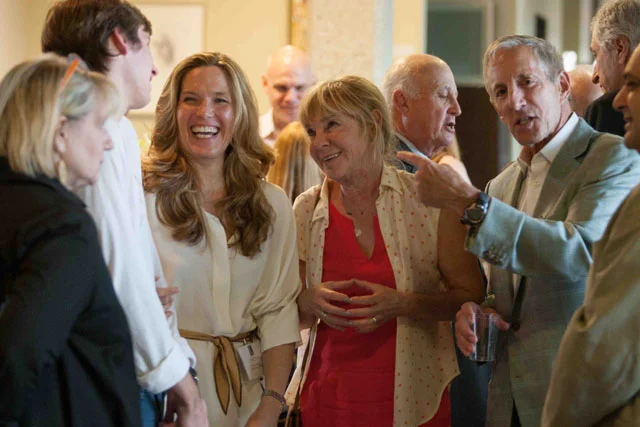
The Conservation Center's private reception on September 12 welcomed such esteemed guests as Roxanne Decyk, Christie Hefner, Richard Hunt, Tony Karman, Steve Koch, Arlene Semel, and Joan Steel to help celebrate our three decades of achievements. We'd like to thank all who attended and made our event a huge success!

Accolades from TCC's Advisory Board Members and The Center's Founder
Three decades of art restoration and preservation for clients and collections around the country is a pretty big deal, so we’ve taken this opportunity to have our distinguished Advisory Board members and founder say a few kind words about The Conservation Center and why they’re proud to be involved with us.
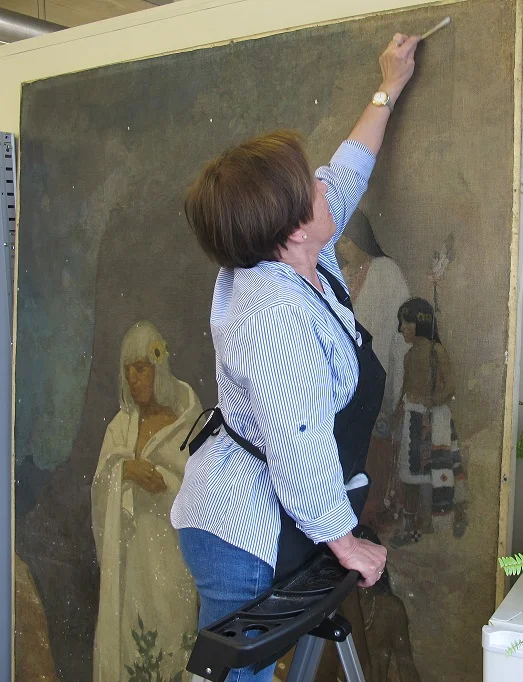
TCC Restores a Treasured Cliff Dwellers’ Painting
John Warner Norton, a charter member of The Cliff Dwellers, became one of the most accomplished and sought-after muralists in Chicago and across the United States by 1920. Earlier, however, in 1910 as Norton’s career and The Cliff Dwellers were both newly beginning, one of his first commissions titled "Navaho" became one of the private club’s earliest acquisitions of art. "Navaho" was recently conserved by The Conservation Center.
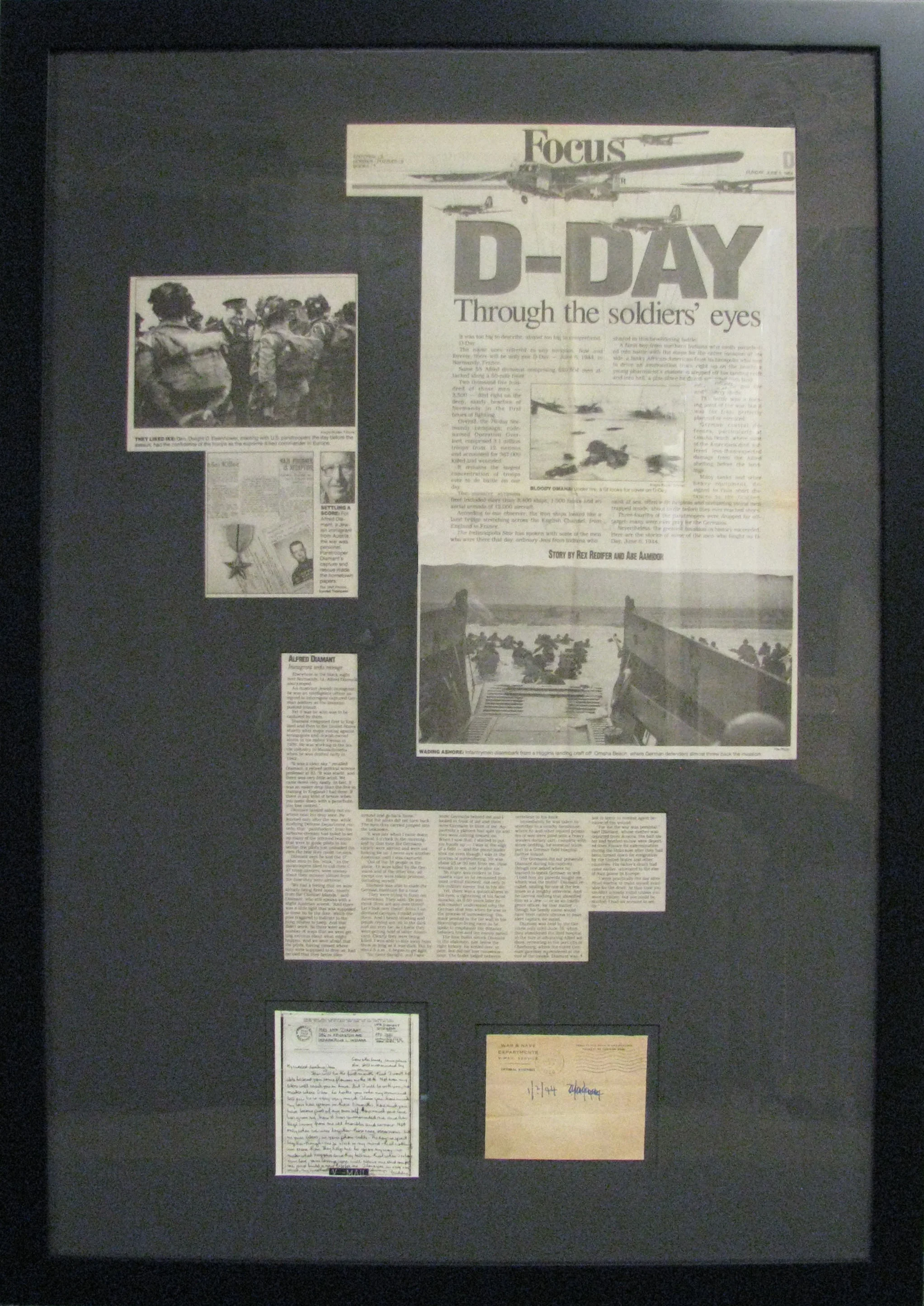
Celebrating a Heroic Father's Legacy
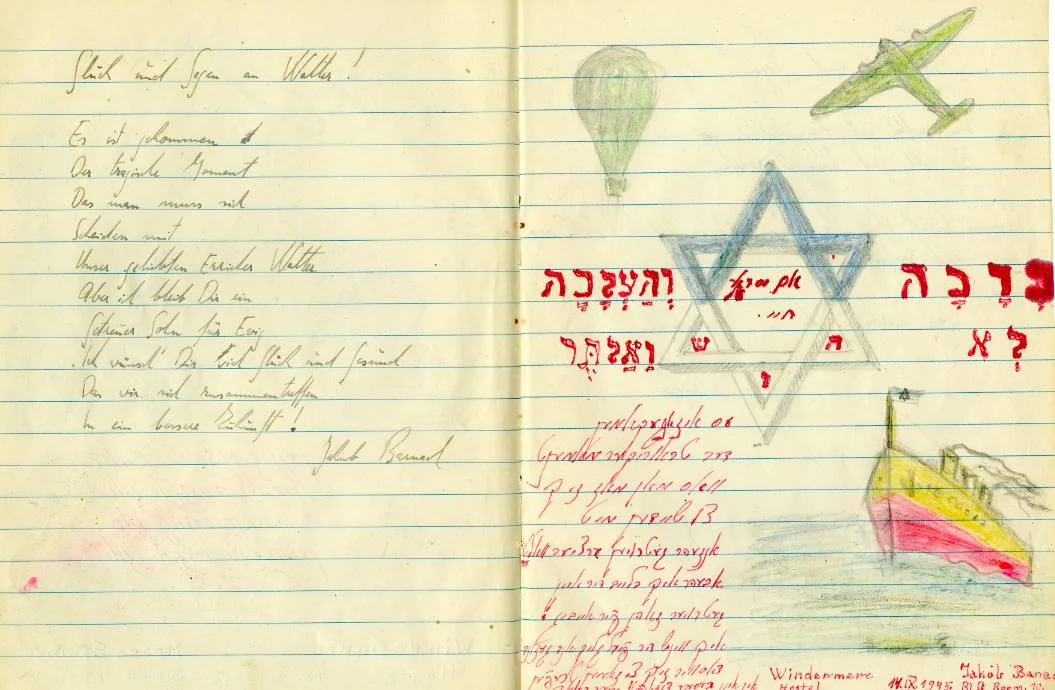
Two Holocaust Journals - A Father's Impact on Children of the War
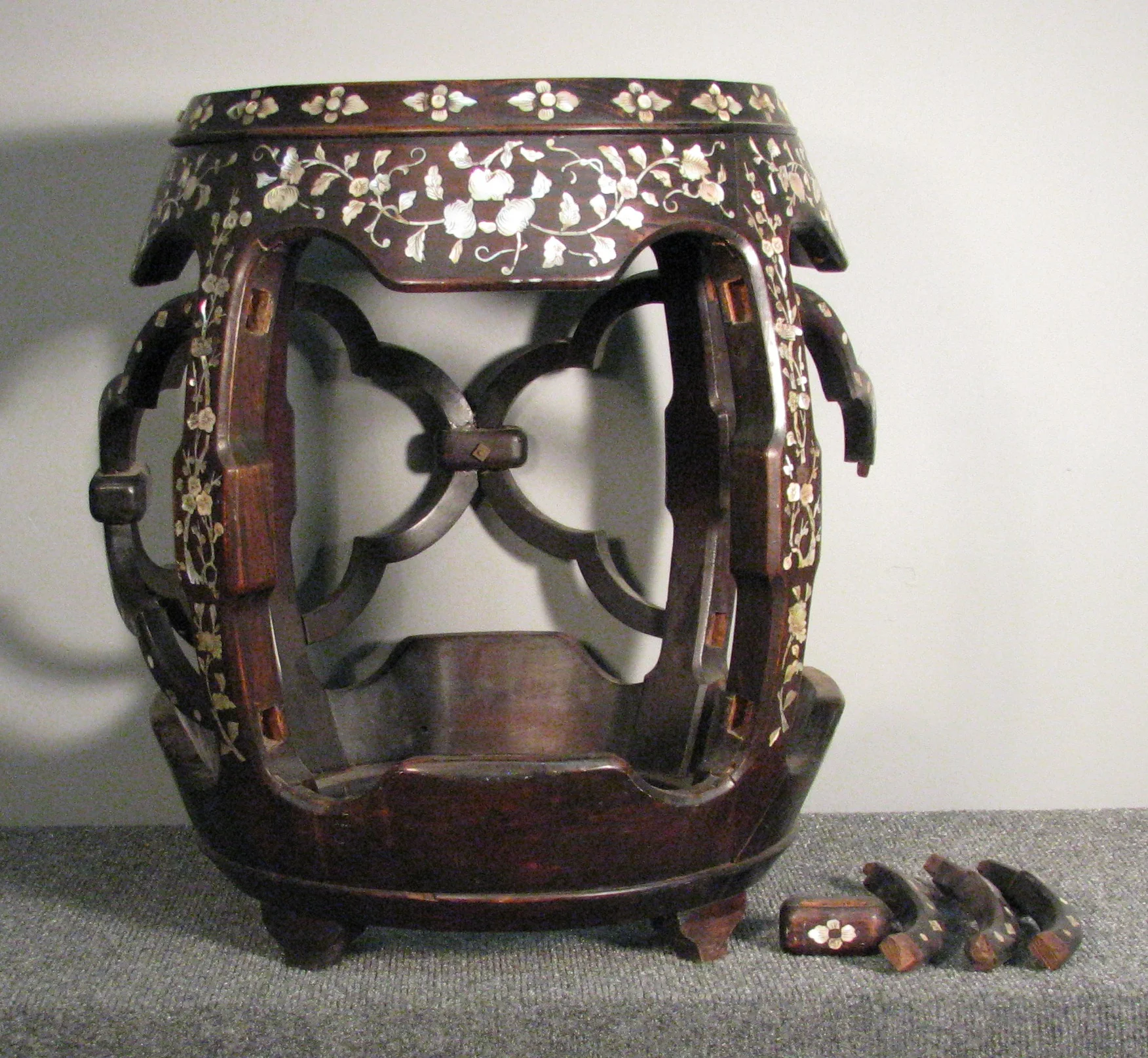
The Occasional Table
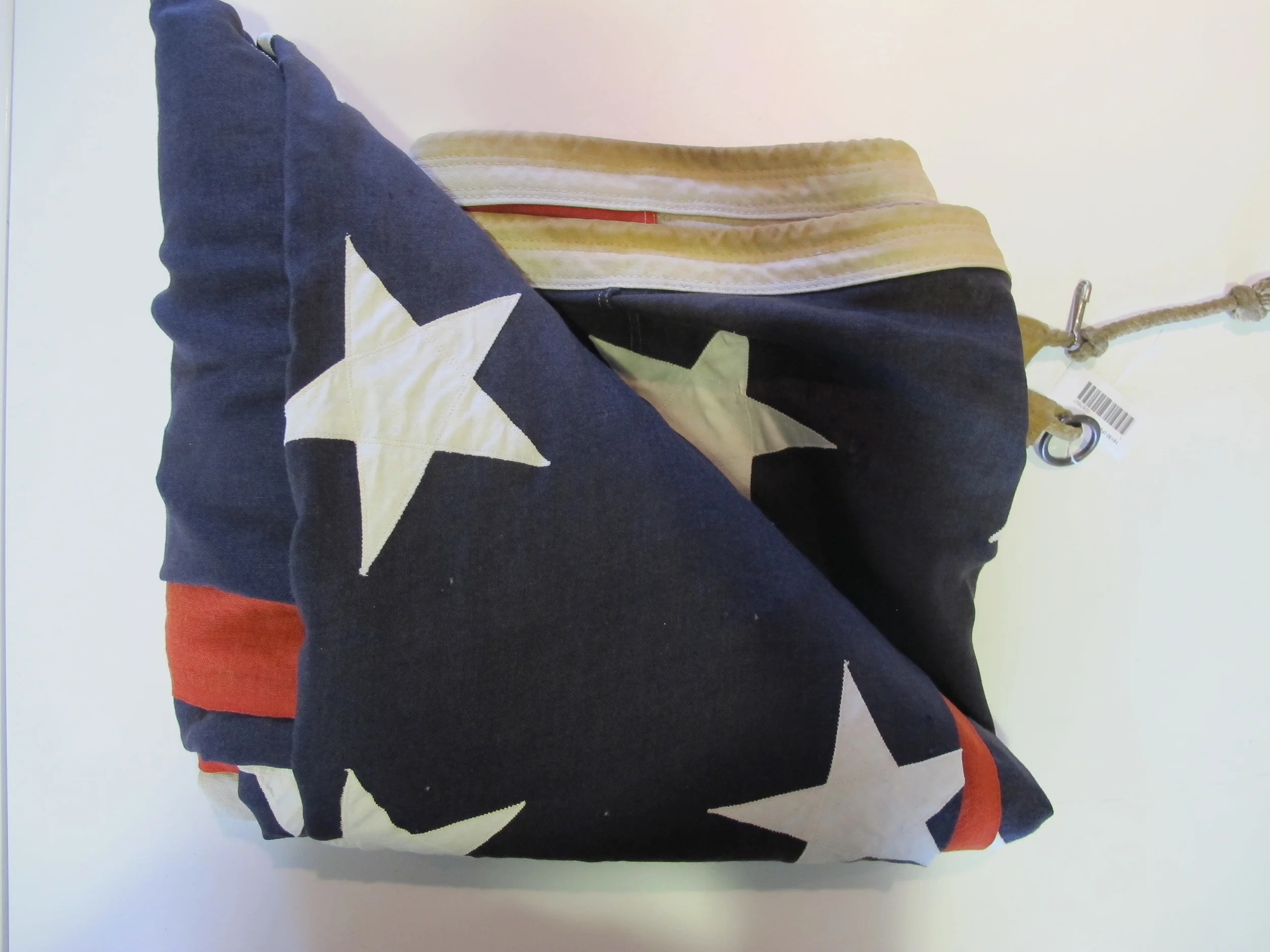
American Flag from the Fauerbach Brewery
At The Center, we treat items of great worth, historical artistic significance and shared cultural value. But perhaps some the most rewarding work we do is in preserving family heirlooms. These items very greatly from paintings to furniture and can be extremely valuable or purely sentimental, but all hold stories with meaning to the owners. We feel honored to assist families with preserving these items for future generations, and allowing their stories to carry on, and would like to share a recent story from one of our clients.
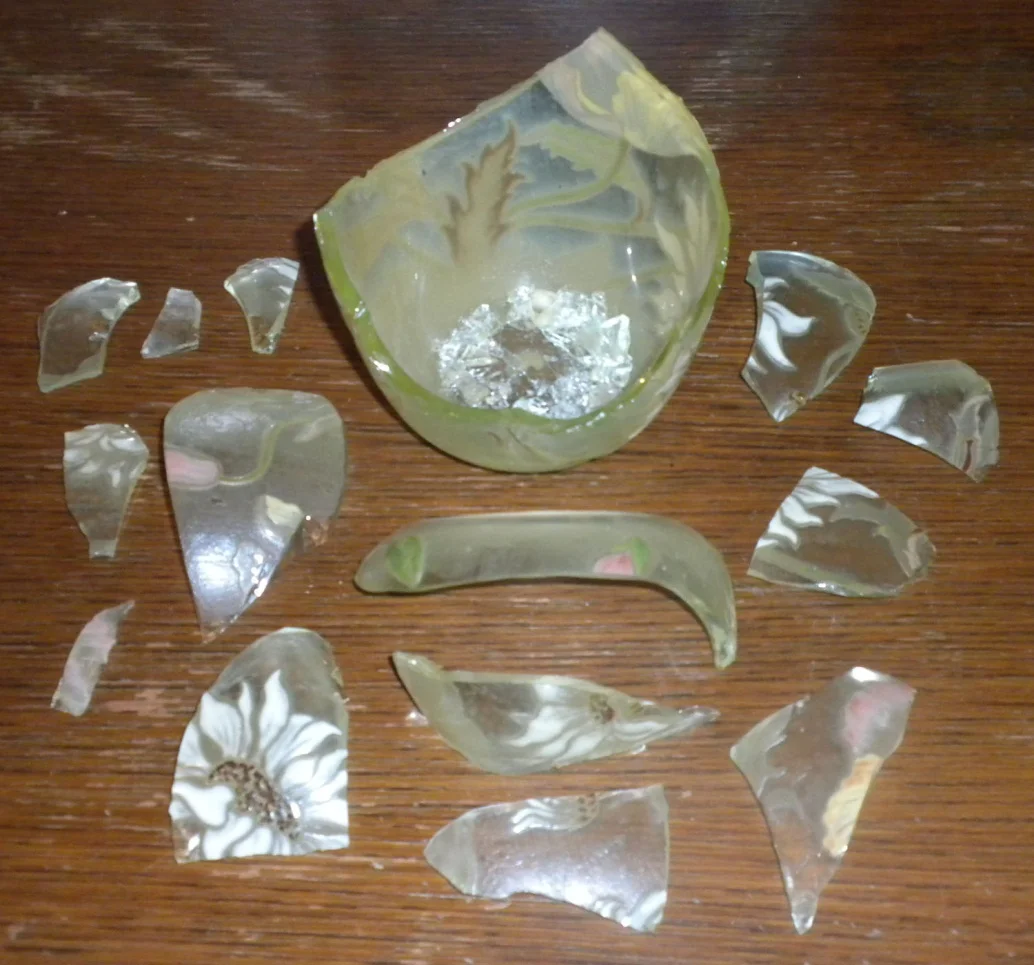
Shattered Emile Galle Vase of The Glessner House Museum
A delicate glass vase by French artist Emile Galle (1846-1904), owned by the Glessner House Museum was brought to The Center after it was accidentally damaged and shattered. The vase broke into discrete fragments with extensive associated losses along the break edges, including an area of significant loss around the rim. There were also two running cracks as a result of a fracture.
Conservation of an Antique Gaming Table
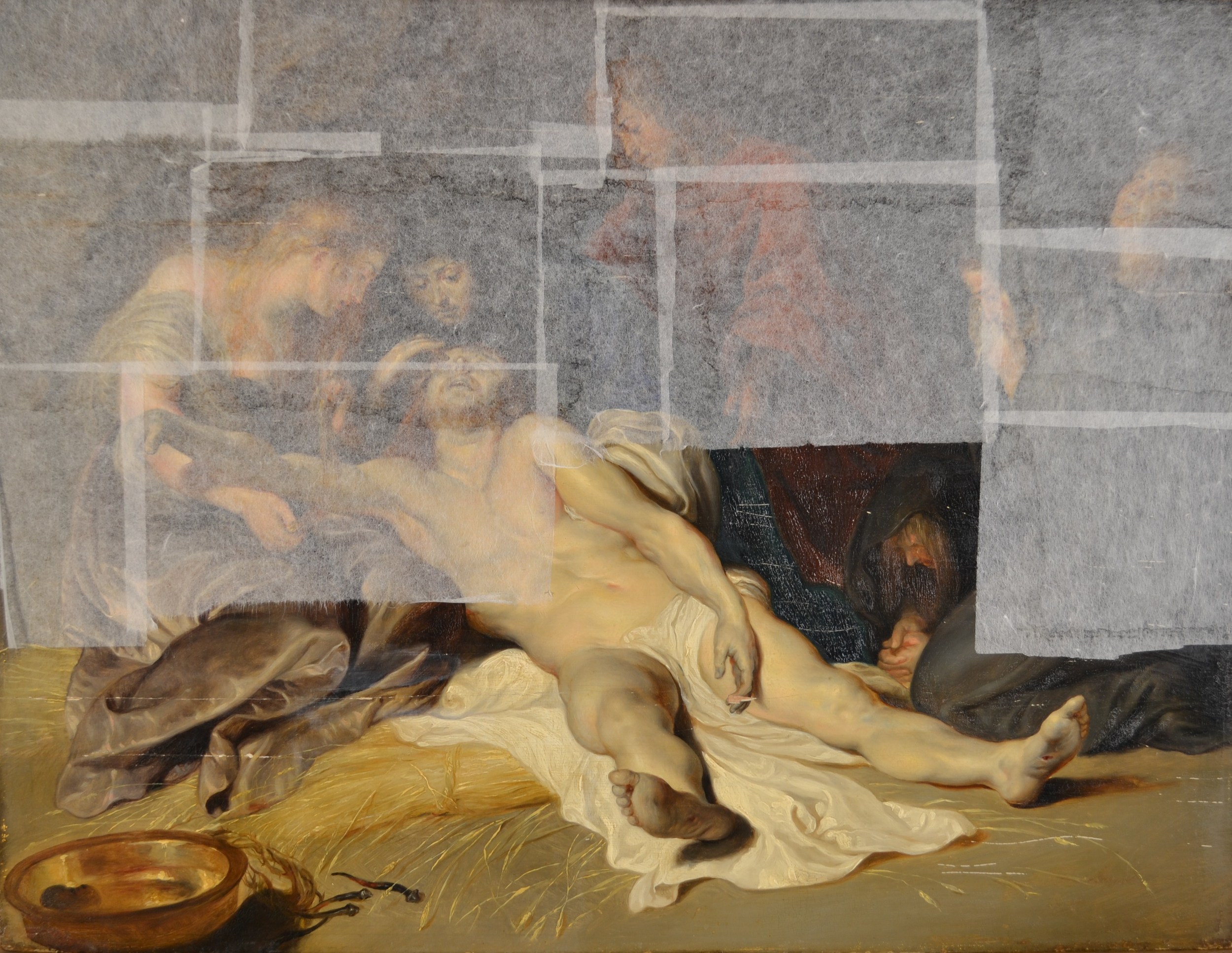
Consolidating a Flaking 17th Century Panel Painting
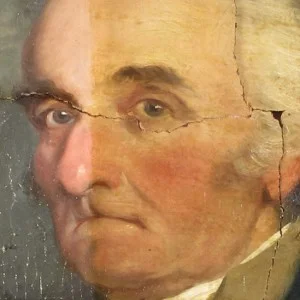
Portrait of Thomas Fox
Corporate Collections and The Center
Whether a corporation’s art collection is a curated investment, a donation from an art-loving CEO, an act of community connection, or a trove of archival material, keeping it in good condition requires the knowledge of experts. The Conservation Center has a long history of caring for corporate art holdings in four categories: disaster response, re-housing, storage, and display.
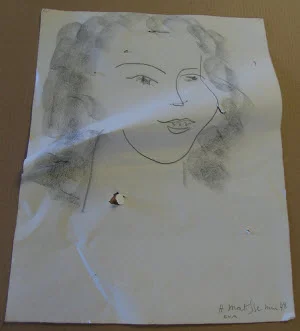
A Mangled Matisse
A Portrait with a Problem
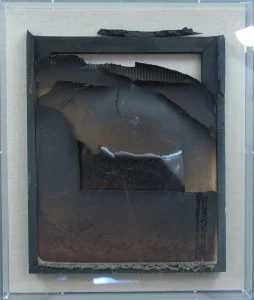
This portrait was one of a series of artworks brought to The Center after a destructive home fire. The painting showed signs of severe fire-related damage: the
ordeal left a heavy, dark layer of oily and acidic soot on the surface, obscuring the painted surface completely. Additionally, the stretcher had been charred, and undulations were present throughout the canvas.
Waxing Aesthetic: Historical Considerations in the Restoration of a Napoleonic Dragoon Helmet
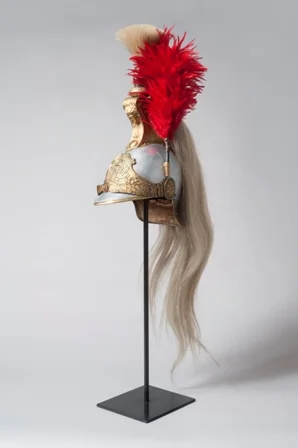
The Napoleonic Dragoon Helmet, an example of the Grecian-inspired helmets worn by specific members of Napoleon’s cavalry, was brought to The Center in need of restoration. The leather lining of the helmet was loose with several losses to the leather and the risk of further degradation. The proper right leather strap was loose as well, with both straps having been previously re-attached with blue putty. Furthermore, the skull of the helmet exhibited several shallow dents and the horse hair mane was tangled and messy. The top decoration was missing from the helmet completely. There were some scratches on the surface, as well as evidence of use and wear. The metal and hair elements were both coated with dust and grime. There was also some tarnish on the gilded areas.
A Portrait of Aretino: A Collaboration of Painting and Frame Conservation
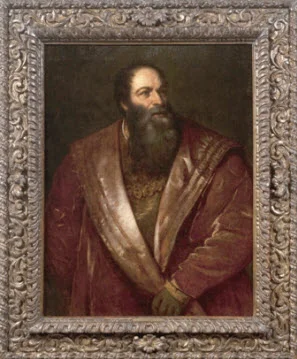
This painting was brought to our studio after having sustained fire damage. The work is an early, well executed copy, circa mid 19th century, after Titian’s “A Portrait of Aretino”. The original is housed in Palazzo Pitti, Florence. Pietro Aretino was a well known playwright, poet and satiric, who had significant influence on contemporary art and politics in Europe in the 1500s. Because of this influence, he became a close friend to Titian.
The Torah Mantle: Preserving a Cultural Treasure
This drapery is known as “pruchat aron”, and is used to cover the sacred cabinet that houses the Temple’s Torah, in the form of a massive scroll. Along the upper section are the main symbols of First Temple: The Torah Crown; a pair of wings belonging to the “karuvim”, or angels, who were believed to overlook the sacrificial altar; a seven-light Menorah (as opposed to the eight-light Hanukkah Menorah); the robe worn by the great “cohen”, or priest, who would be commanding the Temple; the tablets with the Ten Commandments; and the sacrificial altar. Collectively, these symbolize the holiest of the elements pertaining to the Temple.
The Importance of Packing for Long-Term Storage
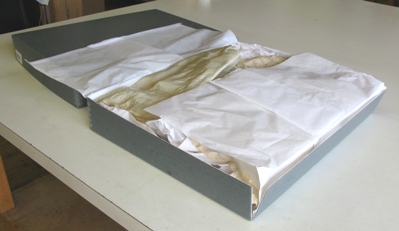
In the field of art conservation the terms archival, inert, stable, safe, etc. refer to materials or processing methods that are expected to allow items to be stored for extended periods of time without loss of quality. These materials should not degrade over time and should not contain volatile materials that will be emitted from the material, or ‘off-gas.’ Both degradation products and off-gassing materials can do serious damage to some art materials. Metal, paper, and shells are examples of sensitive materials that can be damaged irreversibly from proximity to ‘unsafe’ materials.
Conserving Antique Furniture: Common Issues with Veneer and Glue Failure
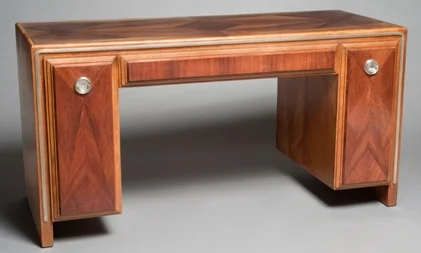
Loose, lifting and buckling veneer are common problems encountered with historic furnishings. Historic furnishings are constructed from various species of wood and are adhered almost exclusively with the natural adhesive animal hide glue. Various factors contribute to the delaminating and distortion of veneers. An ideal environment rarely experiences rapid and/or dramatic fluctuations in temperature or humidity. Housed in optimal environmental conditions, an animal adhesive will maintain its integrity for many years; however, such conditions are seldom the case.
Veterans Memorial Museum
Each time The Chicago Conservation Center is involved in a disaster relief situation, be it small or large, we are presented with new challenges in art handling and conservation. The Veterans Memorial Museum in Cedar Rapids, Iowa proved to be one of those situations in which ingenuity and quick-thinking was required to save their collection from the recent flooding of the Cedar River. In less than two days, and with crucial help of local volunteers lead by Michael Jager of Cedar Rapids, The Center’s Disaster Response Team was able to inventory and pack the entire collection of 425 military artifacts housed in the now toxic environment.